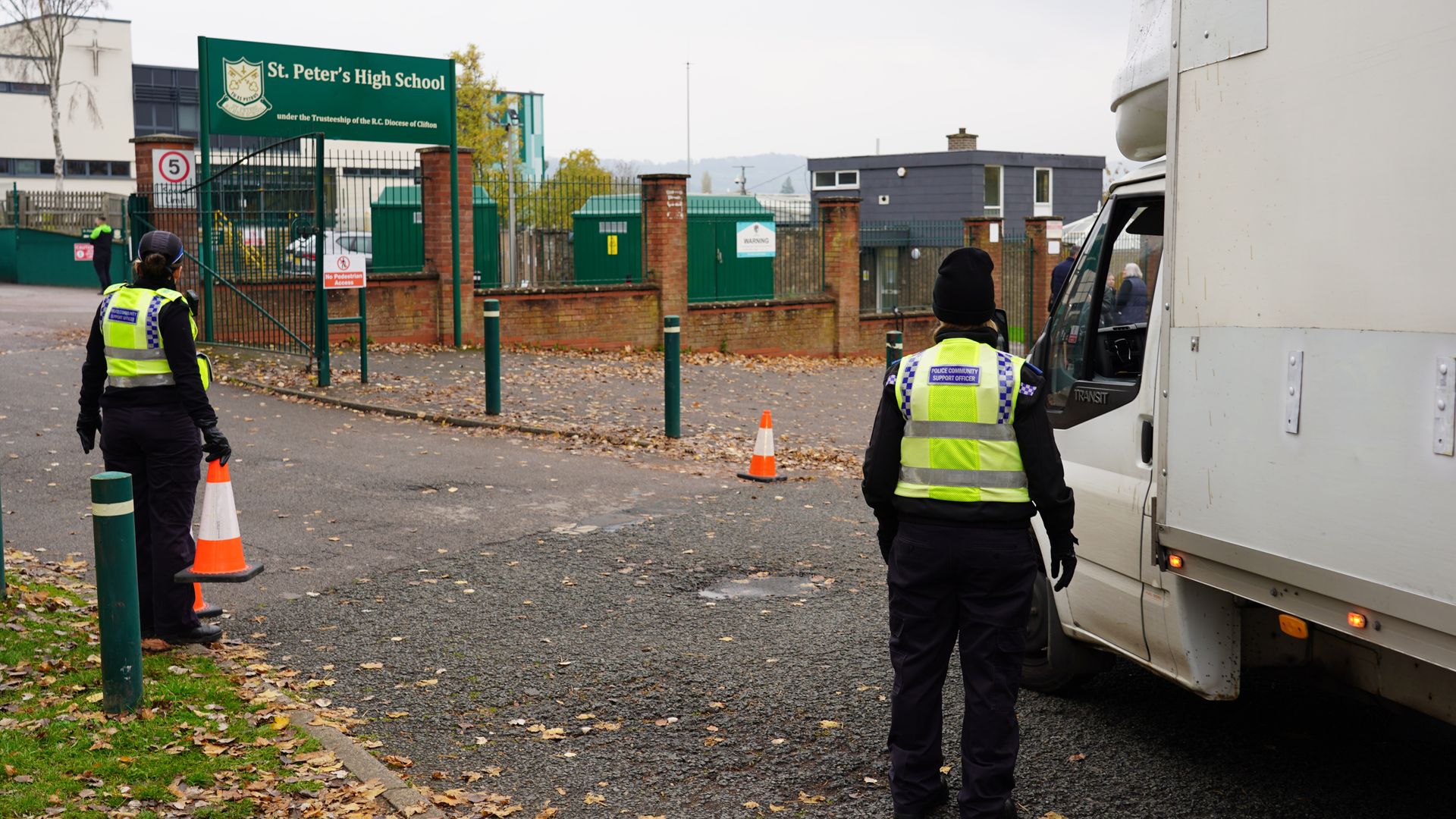
Two teenagers get arrested in Gloucester after chasing boys down the street with a sword, and the local press immediately runs the exact same copy-paste panic piece they have published a hundred times before.
Read the standard coverage and you know the script before you finish the headline. Two youths detained on suspicion of possessing an offensive weapon. Local residents express shock. A police spokesperson issues a boilerplate statement thanking the public for their vigilance and promising increased patrols in the area. Comment sections immediately fill up with demands for harsher prison sentences, complaints about feral youth, and calls to ban whatever sharp object made the news this week. If you found value in this article, you should read: this related article.
That entire framing is lazy, counterproductive, and guarantees the exact same incident will happen again next month.
When a teenager runs through a residential street in Gloucestershire waving a machete or a decorative katana, the weapon is not the root cause. The arrest is not a victory. The increased patrols are nothing more than expensive security theater designed to calm down anxious homeowners while leaving the actual mechanics of youth violence completely untouched. For another angle on this development, see the latest update from BBC News.
If you want to understand why incidents like the Gloucester sword chase keep happening—and why the standard law-and-order response actively makes things worse—you have to look past the steel and examine the systems failing long before anyone dials 999.
The Myth of the Weapon Ban
Every time a bladed article appears in a provincial British town, the knee-jerk consensus demands tighter legislation. People assume that if you make the blade illegal to buy, illegal to carry, and punishable by mandatory custody, teenagers will simply stop picking them up.
We have tested this theory relentlessly in the United Kingdom for over two decades, and the data exposes the flaw in that logic.
Under the Criminal Justice Act 1988, the Offensive Weapons Act 2019, and subsequent statutory instruments banning zombie knives and curved blades in private residences, the UK already possesses some of the strictest blade-control laws in the Western world. Yet police-recorded offenses involving knives or sharp instruments across England and Wales have remained stubbornly high, sitting well above pre-2015 levels according to Office for National Statistics crime data.
Why? Because legislation targets the supply of specific commercial items while ignoring the reality of adolescent psychology and household accessibility.
You do not need a black-market arms dealer to acquire a terrifying weapon in Gloucester. A significant portion of blades used in street confrontations are either cheap wall-hanger replicas bought online years ago before restrictions tightened, garden tools taken from an unlocked shed, or large kitchen knives pulled straight from a drawer at home. When Parliament bans one specific blade profile, manufacturers alter the geometry by half an inch, or teenagers simply grab whatever heavy metal object is closest to hand.
I have sat in youth offending panels and reviewed case files where a fourteen-year-old was arrested carrying a fifteen-inch blade. When you ask them why they had it, the answer is almost never "because the law wasn't strict enough to deter me." The answer is almost always fear.
Fear Drives the Blade, Not Malice
The mainstream media loves a clean villain. Painting two arrested teenagers as irredeemable monsters makes for easy clicks and righteous outrage. It also completely misdiagnoses the threat.
Criminologists who actually study youth violence—such as researchers involved with the Scottish Violence Reduction Unit and the Youth Endowment Fund—have repeatedly documented a counter-intuitive reality: the vast majority of teenagers who carry weapons do so out of hyper-vigilance and perceived self-defense, not predatory intent.
Let us trace how this works in practice. Imagine a scenario where a fifteen-year-old boy in a mid-sized city like Gloucester gets robbed or threatened on his walk home from school. He tells nobody because reporting it marks him as a target. Next week, he hears a rumor that the same group is looking for him. He does not trust that a police patrol will materialize within thirty seconds if he gets cornered in an alleyway. So he takes a blade from home and tucks it into his waistband.
Now introduce a second teenager operating under the exact same paranoia. They cross paths. Neither boy wakes up planning to commit a murder, yet both are armed, terrified, and desperate to project dominance so the other backs down first. The chase ensues. The blade comes out as a theatrical display of force meant to scare the rival off.
By the time Gloucestershire Constabulary arrives and makes the arrest, the public sees two violent thugs terrorizing a neighborhood. In reality, you are looking at an arms race driven by unaddressed trauma and localized terror.
Treating terrified, hyper-vigilant kids exclusively as hardened terrorists does not neutralize the threat. It validates their worldview that the world is hostile and that nobody is coming to save them.
Why Arrests and Tough Sentencing Backfire
Here is the uncomfortable truth that politicians refuse to say out loud: arresting teenagers and pushing them into the formal criminal justice system frequently increases the likelihood that they will reoffend.
This is not bleeding-heart speculation; it is a well-documented phenomenon in criminology known as labeling theory and criminogenic exposure.
When a teenager is arrested, processed, and handed a criminal record or placed in a Young Offender Institution (YOI), three predictable things happen:
- Social Exclusion: Schools routinely exclude or off-roll students facing serious weapon charges. Once a teenager is out of mainstream education, they are placed in Pupil Referral Units (PRUs) alongside every other high-risk youth in the county. You have effectively concentrated the highest-risk individuals into a single building and given them unstructured afternoons.
- Network Expansion: Custody and court waiting rooms act as networking hubs. A teenager who acted impulsively in a local neighborhood dispute suddenly meets older, more organized peers involved in county lines drug distribution. They enter custody with a sword charge and exit with a burner phone and a debt to pay off.
- Permanent Stigma: A violent offense on an enhanced DBS check destroys legitimate employment prospects before the teenager turns eighteen. When legal avenues to status and income slam shut, illicit economies become the only rational choice left on the table.
Look at the Ministry of Justice proven reoffending statistics for juvenile offenders in England and Wales. Youths released from custody have historically shown reoffending rates hovering around 60 to 70 percent within twelve months. If a private company had a 65 percent failure rate on its core product, the board would fire the executives and burn the business model to the ground. In criminal justice, we call it "getting tough on crime" and ask for more funding to do the exact same thing harder.
What People Actually Ask—And Why the Questions Are Wrong
When news breaks of teenagers chasing boys with a sword in Gloucester, local search traffic spikes with predictable questions. Every single one of them is built on a faulty premise.
"Is Gloucester becoming a no-go zone for families?"
No. Statistical crime rates in Gloucester do not support the narrative of an apocalyptic collapse in public safety. Violent incidents involving bladed weapons are heavily concentrated within specific peer networks and micro-locations. Random attacks on uninvolved pedestrians remain statistically rare. The perception of widespread chaos is amplified by hyper-local social media groups and algorithmic news feeds that reward outrage over context. Panicking about walking down the high street misallocates public attention away from the specific, vulnerable cohorts actually caught in the crossfire.
"Why aren't parents being jailed when their kids carry weapons?"
Punishing parents through fines or imprisonment sounds satisfying in a comment section, yet it achieves nothing on the ground. In many cases where youths carry weapons, the household is already fracturing under economic strain, untreated mental health crises, domestic instability, or single parents working multiple shifts just to keep the heating on. Fining a struggling household pushes the family deeper into poverty, increasing the exact environmental stressors that drive adolescents onto the streets in the first place. You cannot fine a parent into having forty extra hours a week to supervise a teenager.
"Why don't police just stop and search every teenager in tracksuits?"
Blanket stop-and-search surges produce dismal weapon-recovery rates while destroying community intelligence. According to Home Office figures, the vast majority of stop-and-search encounters result in no further action, and weapons are found in only a tiny fraction of searches. Worse, aggressive, untargeted street stops alienate the exact demographic most likely to witness or have early knowledge of a brewing conflict. When teenagers view local officers as an occupying force rather than a protective service, they stop sharing tips, and police lose visibility until a sword is already being swung in broad daylight.
The Approach That Actually Works (And Why Politicians Hate It)
If arrests, weapon bans, and blanket patrols fail to stop teenagers from chasing each other with blades, what actually works?
The answer is already proven, thoroughly peer-reviewed, and painfully unglamorous: treating youth violence as a public health epidemic rather than a purely criminal problem.
In 2005, Glasgow was labeled the murder capital of Western Europe. Knife crime was endemic, generational, and seemingly intractable. Police Scotland abandoned the traditional suppression-only model and established the Violence Reduction Unit, adopting principles pioneered by epidemiologist Gary Slutkin in Chicago.
Instead of merely waiting for crimes to occur and locking up perpetrators, they treated violence like an infectious disease:
- Hospital-Based Intervention: Youth workers were embedded directly inside emergency departments. When a teenager arrived with a stab wound or assault injury, navigators intervened at the bedside—the exact moment the victim was most vulnerable and open to breaking the cycle—offering immediate mentoring, relocation, and support before they left the hospital to seek retaliation.
- Focused Deterrence: Law enforcement, social services, housing authorities, and community leaders identified the small, specific networks driving the violence. They delivered an unmistakable message: The violence stops today. If you put down the weapons, we will flood you with job training, mental health support, and housing assistance. If you keep carrying blades, we will bring the full weight of every statutory agency down on your entire group.
- Youth Service Restoration: Between 2010 and 2023, local authority spending on youth services in England and Wales was gutted by over 70 percent in real terms, according to YMCA research. Youth clubs, sports programs, and outreach workers vanished from estates across towns like Gloucester. Rebuilding safe, staffed spaces where adolescents can exist without spending money or standing on street corners is not charity; it is basic crime prevention infrastructure.
The results in Glasgow were undeniable. Within a decade, homicides and knife-carrying offenses dropped dramatically, outpacing reductions seen across the rest of the UK.
So why hasn't every town in England copied this blueprint? Because public health interventions take five to ten years to mature, require quiet multi-agency coordination, and do not generate dramatic press releases for election cycles. Politicians would rather announce a new law banning a specific type of sword next Tuesday than fund a youth outreach team that won't show peak ROI until two elections from now.
The Downsides of the Public Health Model
To pretend the public health approach is a magic wand would be dishonest. Every strategy carries real trade-offs, and pretending otherwise destroys credibility.
First, focused deterrence and outreach require massive upfront capital at a time when local councils across Gloucestershire and the wider UK are staring down budget deficits and statutory adult social care obligations. Diverting millions into preventative youth infrastructure means cutting visible services elsewhere.
Second, prevention is politically invisible. You can easily count how many teenagers were arrested on a Tuesday afternoon in Gloucester. You cannot easily prove how many sword chases didn't happen because a youth worker talked a fifteen-year-old down from buying a blade six months earlier. When funding gets tight, invisible successes are always the first items on the chopping block.
Third, some individuals will still refuse every off-ramp. A public health model does not eliminate the need for firm enforcement. When someone chases children through a public street with a lethal weapon, immediate arrest and incapacitation are non-negotiable to protect innocent bystanders. Enforcement is necessary to stop the immediate bleeding, but it can never be mistaken for a cure.
Stop Reading the Headlines and Start Auditing the Ecosystem
The next time a local news alert pops up on your phone about teenagers arrested with a weapon in Gloucester, resist the urge to applaud the press release and move on.
Look at the timeline. Look at the age of the suspects. Ask yourself what happened in the eighteen months leading up to that chase. Did those teenagers get excluded from school without alternative provision? Were local youth centers shuttered three years ago to balance a council budget? Did anyone intervene the first time they were threatened, or did the system wait until cold steel was flashing in the street before deciding they were worth paying attention to?
An arrest at the end of a sword chase is not proof that the system is working. It is the receipt proving that every preventative layer failed.
Stop demanding sharper laws for dull problems, stop cheering for security theater, and start holding local leaders accountable for the years of silence before the sirens ever turn on.