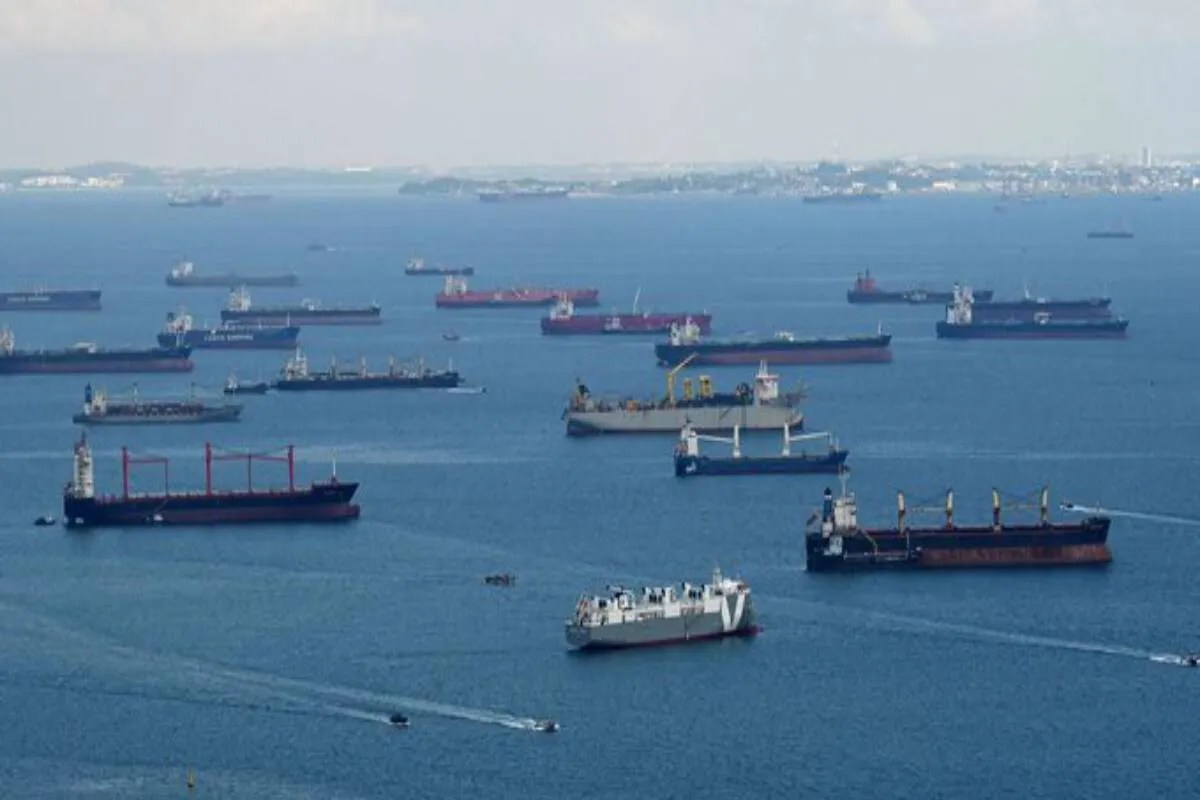
Every headline about Iran repeats the same lazy narrative. Western analysts stare at maritime maps, sweating over oil tankers choking in the Strait of Hormuz, assuming Tehran is trapped in a naval vise. Then they look north toward the Caspian Sea, blink, and dismiss it as a clumsy, second-rate detour for a desperate economy. They call it a workaround. They call it a temporary bandage.
They are entirely, catastrophically wrong.
I have spent over a decade watching supply chain strategists misread structural realignments because they refuse to look past coastal shipping lanes. When sanctions tighten and naval pressure mounts, the knee-jerk consensus says Iran hits a wall. But treating the Caspian pivot as a fallback plan misses the entire architecture of what is actually happening. Tehran is not fleeing south-to-north out of panic. They are building a permanent, sanctions-resistant artery straight into the belly of Eurasia, tying Russian rail networks directly to Persian Gulf ports through the International North-South Transport Corridor.
This is not a detour. It is a rewiring of continental commerce.
The Misunderstood Anatomy of the Caspian Route
The mainstream media loves a simple binary. Either the Strait of Hormuz is open and oil flows, or the Strait is blocked and Iran starves. That framework belongs in a twentieth-century textbook.
When experts analyze the Caspian initiative, they point to obvious physical friction points: incompatible rail gauges between former Soviet states and Iranian networks, chronic port congestion at Amirabad and Anzali, and a historic lack of roll-on/roll-off vessel capacity. They use these operational bottlenecks to prove that the route fails.
That logic collapses under close inspection. Every single one of those friction points is already being bypassed through state-directed capital expenditure and bilateral treaties signed away from Western financial rails.
Look at the missing link in the Rasht-Astara railway. For years, Western think tanks mocked this uncompleted stretch of track as proof that Iran could never pull off a northern trade corridor. They missed the forest for a single unspooled mile of steel. Moscow and Tehran did not view that gap as an engineering failure; they viewed it as a joint venture. When sovereign funding replaces market-driven private equity, timelines compress, and political will overrides bureaucratic drag.
Why the West Misreads the Russian Factor
There is a profound failure of imagination in how financial centers assess the Moscow-Tehran axis. The common take assumes an alliance of convenience born out of shared isolation.
Convenience ended years ago. What exists now is structural integration.
Russia does not view Iran as a pit stop. Moscow needs a warm-water logistics corridor that bypasses maritime chokepoints controlled by unfriendly actors. For years, Russian goods moving to India or the Middle East had to squeeze through European-dominated maritime corridors or face exorbitant transit costs. The Caspian-to-Gulf route cuts transit times by weeks compared to the Suez Canal.
When you look at the numbers traded through Astrakhan and Caspian ports over the last thirty-six months, you do not see a stagnant sideline. You see exponential growth in grain, petrochemicals, and heavy machinery moving entirely outside Western insurance markets, SWIFT messaging systems, and dollar-denominated contracts.
This trade network does not care about your sanctions compliance officer. It operates on sovereign clearing accounts and bilateral currency swaps. By the time a Western consultant finishes writing a report on why Caspian port infrastructure is inefficient, two hundred freight trains have cleared the border without touching a single dollar.
The Operational Reality on the Ground
Let us drop the macro-theory and look at what happens when a container leaves a Russian manufacturing hub bound for Mumbai via the Caspian corridor.
It hits the port of Olya or Makhachkala. It is loaded onto a shallow-draft vessel crossing the inland sea. It unloads at an Iranian Caspian port. Here is where the amateur observers throw up their hands, pointing out that unloading and shifting freight to trucks or narrow rail lines kills efficiency.
They forget how non-Western supply chains adapt. Iranian logistics firms have spent decades mastering high-friction environments. They do not rely on automated, single-click enterprise software. They use localized drayage networks, state-backed customs fast-lanes, and direct port-to-rail transshipment hubs that treat regulatory delays as a line item rather than a roadblock.
Is it as frictionless as moving a box from Rotterdam to Hamburg? Absolutely not. But efficiency is relative. When the alternative is having your ship impounded by Western naval patrols enforcing sanctions, an extra forty-eight hours of cargo handling is a price every merchant is willing to pay.
The friction is the feature, not the bug. It builds a moat that Western competitors cannot cross because their corporate governance structures and compliance departments will not touch a port facility that reports to sanctioned ministries.
Dismantling the Myth of Isolation
The most persistent delusion in international trade analysis is that cutting a country off from the Western financial system removes it from global commerce.
Iran has spent forty years running a masterclass in parallel trade architecture. The Caspian Sea strategy is simply the physical manifestation of that financial resilience. By connecting the Caspian basin to the Persian Gulf, Tehran has created a self-contained logistics loop that links Central Asia, Russia, and the Indian Ocean.
If you are still advising clients to wait out the Hormuz crisis under the assumption that Iran's trade routes will wither, you are flying blind. The infrastructure being paved right now in the northern provinces will outlast any temporary naval standoff.
Stop waiting for the choke point to clear. The trade has already moved inland.


