Archaeology Has an Obsession Problem
Every few months, mainstream media outlets throw a collective party because archaeologists uncovered another skeleton from three millennia ago.
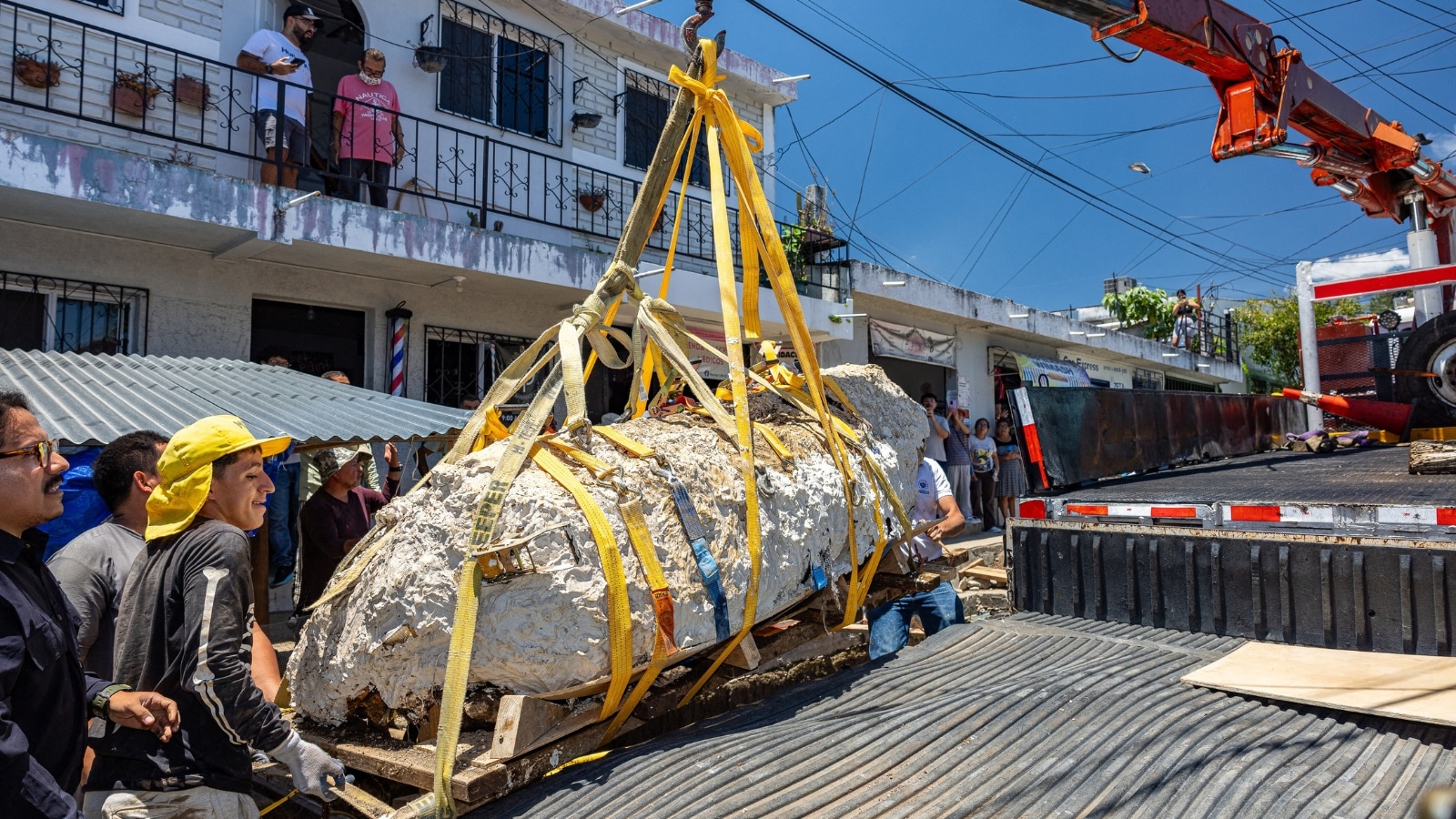
This time, it is El Salvador. Nearly 3,000-year-old human remains found in an ancient burial site. Headlines call it historic. Academics call it invaluable.
I call it a lazy obsession with mortality over human achievement.
We have spent decades letting romanticized tomb-raiding narratives dictate how the public understands history. We treat ancient bone fragments like sacred lottery tickets, as if pulling a femur out of volcanic ash magically explains how early Mesoamerican societies functioned.
It does not.
A skeleton tells you someone died. It tells you roughly what they ate, what diseases broke their bones, and how their neighbors buried them. But if you want to understand how a civilization survived, adapted, and built the foundational networks that allowed complex human trade to flourish across Central America, you need to stop staring at the ribcages and start analyzing the infrastructure.
The Fetishization of the Ancient Burial Site
Mainstream archaeology coverage is built on sensationalized voyeurism.
When reporting on sites like those in El Salvador, media houses immediately lean into the morbid details. Was it a ritual sacrifice? Were they elites buried with jade? Was there a curse?
This is bad science wrapped in clickbait.
"Bones are the biological residue of an individual's worst day. Infrastructure is the intellectual blueprint of a society's best years."
💡 You might also like: The Bahrain India Photo Op That Masks a Dying Economic Model
When you focus entirely on the mortuary context, you miss the actual engine of early settlement:
- Soil Management: How early agriculturalists altered volcanic terrain to prevent erosion.
- Trade Corridors: The logistical routes connecting obsidian sources across modern Guatemala, Honduras, and El Salvador.
- Hydraulic Systems: Early water capture techniques that turned seasonal downpours into year-round survival.
I have spent years watching institutions spend millions to meticulously preserve human remains while leaving the surrounding agricultural terraces and trade road networks to erode into obscurity. We are prioritizing the biological trash of history over its engineering masterstrokes.
What the 3,000-Year-Old El Salvador Discovery Actually Proves
Let us dismantle the popular narrative around the pre-Classic Mesoamerican timeline.
The mainstream consensus likes to frame discoveries like the recent Salvadoran site as "surprising" windows into a mysterious past. They talk about these populations as if they were isolated, primitive bands taking their first tentative steps toward society.
That narrative is flat wrong.
Three thousand years ago puts us squarely in the Preclassic horizon (around 1000 BCE). This was not a period of primitive experimentation. It was a period of aggressive, sophisticated regional integration.
| Research Focus | Traditional Romantic Approach | The Infrastructure-First Reality |
|---|---|---|
| Primary Data Source | Skeletal remains, grave goods, burial orientation. | Terracing, obsidian flake distribution, soil stratigraphy. |
| Core Conclusion | "They had complex religious rituals about the afterlife." | "They maintained multi-regional supply chains during climate shifts." |
| Economic Value | Museum display cases and tourism headlines. | Predictive models for soil conservation and urban planning. |
| Historical Lens | Passive victims of their environment. | Active engineers of their geography. |
If you find human remains buried with specific grave goods from this era, you are not looking at a local anomaly. You are looking at proof of established regional trade networks. The jade did not fall from the sky. The polished iron ore mirrors did not craft themselves.
The presence of those objects in a grave means an entire supply chain existed: miners, artisans, traders, security, and elite consumers. The bones are merely the least interesting link in that chain.
The People Also Ask Delusion
If you look at search engines around ancient archaeology in Central America, the public asks predictable, misguided questions. Let us dismantle them one by one.
"Why are ancient human remains so important to discover?"
They aren't—at least not in the way you think.
Discovering remains provides a snapshot of paleopathology and dietary stress. That is useful data for biological anthropologists. But human remains do not explain political organization, socio-economic stratification, or environmental adaptation. An obsession with skeletons reduces complex historical societies to medical charts.
"Did ancient Mesoamericans only live in small, isolated tribes 3,000 years ago?"
This premise is historically bankrupt.
By 1000 BCE, Mesoamerica was interconnected. Olmec influence, localized ceramic styles, and long-distance exchange of luxury and utilitarian goods were well underway. Treating a 3,000-year-old site as an "isolated find" ignores decades of spatial archaeology proving that these communities were nodes in a massive, sprawling network.
The Risk of Infrastructure-First Archaeology
Is there a downside to abandoning our romantic fixation on bones? Absolutely.
It is hard to market dirt.
Museums cannot easily put a 3,000-year-old irrigation canal in a glass case. Tourists do not buy tickets to see a reconstructed profile of agricultural soil stratigraphy. Skeletons sell tickets. Gold, jade, and polished skulls drive documentary funding.
If we pivot entirely to infrastructure-first analysis, public funding for archaeology might take a hit in the short term. The public wants stories about kings, sacrifices, and ancient mysteries. They do not want a 40-page report on the transport logistics of basalt blocks across muddy terrain.
But if our goal is actual historical truth rather than entertainment, that is a price we must be willing to pay.
Stop Looking at the Dead. Look at the Dirt.
The real headline out of El Salvador should not be that humans lived and died there 3,000 years ago. Humans have been living and dying everywhere for millennia.
The headline should be how those humans systematically altered their environment to survive in an ecologically volatile zone packed with active volcanoes, seismic shifts, and torrential weather.
Imagine a modern city being destroyed tomorrow. Three thousand years from now, archaeologists dig up your skeleton. They spend fifty years analyzing your teeth, writing papers about your cavities, and debating what your posture says about your religious beliefs. Meanwhile, they completely ignore the road network, the power grid, and the water treatment facilities that allowed millions of you to live together in one place.
They would completely miss the point of your existence.
We are doing the exact same thing to the ancient inhabitants of El Salvador.
Stop prioritizing the skeletal remains over the society that created them. Stop letting media outlets turn rigorous spatial science into a ghost story. The dead have nothing left to tell us—the dirt they moved, however, holds every answer we actually need.