Another academic journal dropped another panic piece about Nevada's lost species. Conservationists are wringing their hands over missing plants and subterranean snails, treating every localized drop-off as an ecological tragedy. They want you to believe that the Great Basin is unraveling because a few obscure phenotypes stopped showing up in baseline surveys.
It is professional hand-wringing packaged as science, and the entire premise is built on a fundamental misunderstanding of how arid ecosystems actually function.
Let us look past the alarmism. Nevada is not a static museum exhibit. It is a violent, churning furnace of geological and climatic volatility. Species come and go here with rhythmic indifference. When we treat every natural contraction of a population as an existential crisis, we miss the actual mechanics of evolution on the ground.
The Myth of the Frozen Ecosystem
The lazy consensus in modern conservation is that biodiversity must be locked in amber. If a species existed in a specific spring-fed basin fifty years ago, our current bureaucratic expectation is that it must persist there forever, frozen in time, protected from the very forces that shaped it in the first place.
That is not conservation. That is taxidermy.
I have spent enough time boots-on-the-ground in the Basin and Range province to know that stability is an illusion. Springs dry up. Volcanic activity reshapes watersheds overnight. Flash floods scour entire canyons, wiping out localized endemics before humanity ever invents a Latin binomial to name them. The desert does not care about your baseline data.
When researchers claim a species is missing, they are usually admitting one of two things: their sampling methodology is flawed, or the organism did what desert organisms have done for millions of years by shifting range, entering dormancy, or quietly winking out because its time ran out.
Nature is not a balanced spreadsheet. It is a perpetual purge.
Why Endemism is a Trap
To understand why these extinction fears are overblown, we need to look at how extreme isolation creates and destroys life. Nevada is a landscape of sky islands. Mountain ranges separated by blistering valleys act as evolutionary laboratories.
When a lineage gets trapped on a single mountain top or in a single isolated thermal pool, it hyper-specializes. It trades genetic flexibility for immediate local fit. It becomes a masterpiece of adaptation and a sitting duck for environmental shifts.
Conservation biologists love these hyper-endemic oddities. They are charismatic flagships for fundraising campaigns. But from an evolutionary standpoint, many of these narrow specialists are evolutionary dead ends. They are the high-stakes gamblers of the biological world, and sometimes the house wins.
When a hyper-localized snail or wildflower blips out of existence, the biosphere does not collapse. The energy gets reallocated. The ecological niche gets colonized by something tougher, faster, or more adaptable.
Pretending every single genetic variant has an absolute right to permanent occupancy is scientifically illiterate. Evolution requires extinction. Without pruning, there is no room for radiation.
The Cost of Misallocated Panic
The real danger here is not that a handful of obscure desert organisms are vanishing. The danger is where we direct our finite capital and attention.
Conservation budgets are notoriously thin. Every dollar spent chasing shadows in remote Nevada playas—trying to revive populations that may have naturally cycled out—is a dollar pulled away from protecting functional, large-scale ecosystems that actually matter. We are treating symptoms while ignoring the machinery.
Let us address the elephant in the room: climate shifts. The alarmists point to warming temperatures and human water extraction as the sole drivers of these losses. And yes, anthropogenic pressure is real. Pumping ancient aquifers dry to water alfalfa in the desert is indefensible stupidity.
However, blaming every single local disappearance on human malice lets us avoid a harder truth. Even in pristine environments untouched by heavy industry, species blink out. The fossil record is a graveyard of things that simply could not hack the turn of a geological epoch. By framing every loss as an indictment of modern civilization, we infantilize nature. We act as though the environment cannot handle change without our micromanagement.
Uncomfortable Realities of the Arid West
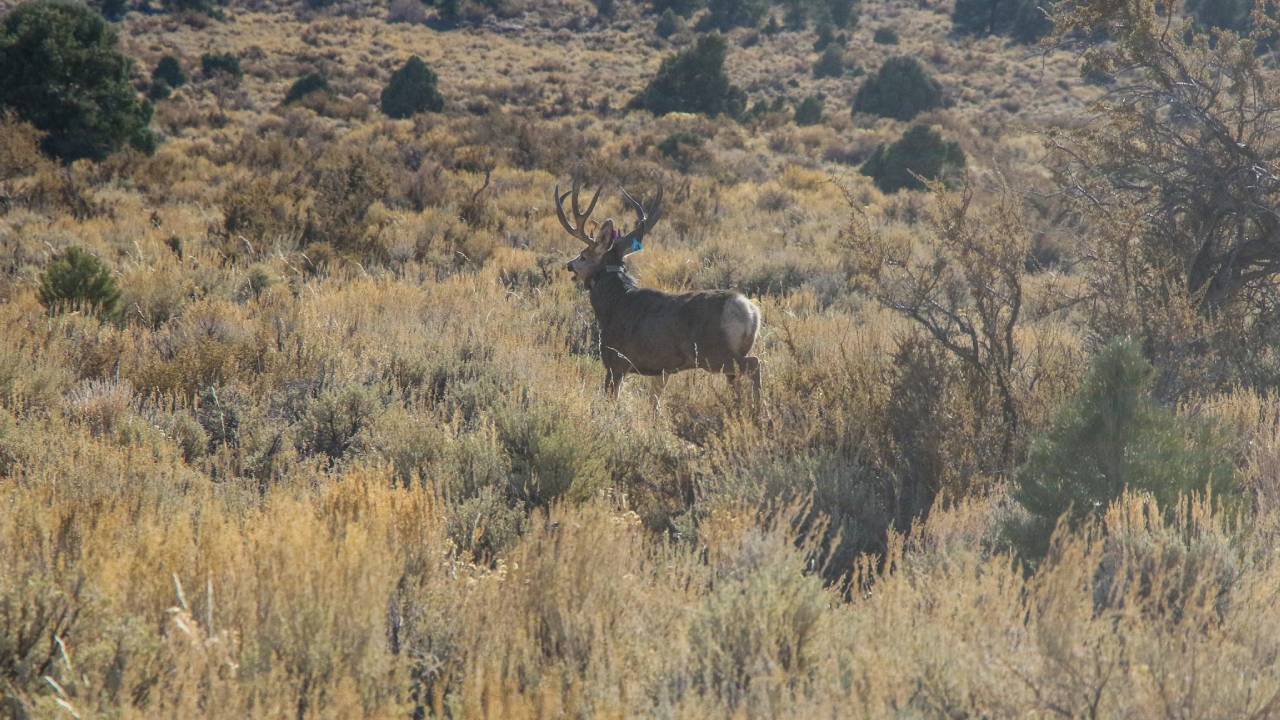
If you want to protect Nevada's ecology, you have to stop crying over ghosts and start defending the macro-processes that allow life to adapt. That means fighting for landscape connectivity, protecting major migratory corridors, and stopping the reckless destruction of major watersheds.
It means accepting that some species are going to die out, no matter how many permits we file or how many academic papers we publish.
My contrarian approach has a major downside: it makes people uncomfortable. It strips away the comforting narrative that humans can act as benevolent zookeepers for the entire planet if we just care enough. It forces us to admit that nature is often cruel, indifferent, and entirely unconcerned with our moral preferences.
Stop treating the Great Basin like a fragile greenhouse. It is a brutal, resilient crucible. Let the missing species go, and start focusing on the ones tough enough to inherit the dirt.