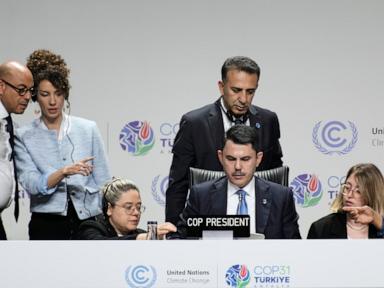
Every November, the climate press writes the exact same obituary. Diplomats lock themselves in a convention center, argue over the placement of a comma in a non-binding communique about fossil fuels, miss their flight home, and declare the process broken.
They got it backward. The collapse of the COP31 climate talks over fossil fuel phase-out language is not a tragedy. It is the healthiest thing to happen to global decarbonization in a decade.
Mainstream coverage frames the breakdown as a failure of political will—a tragic standoff between heroic climate advocates and villainous petro-states blocking progress. That narrative is lazy, emotionally satisfying, and completely detached from how energy markets actually operate. When 190-plus nations operate under a consensus rule where a single exporter can veto a single verb, gridlock is not an accident. It is the mathematical certainty of the design.
I have spent fifteen years advising energy infrastructure funds and sitting in the back rooms of these summits. I have watched sovereign wealth funds pledge billions on stage on a Tuesday, only to sign twenty-year liquefied natural gas offtake agreements on a Thursday. The public fights over text—whether to use "phase out," "phase down," or "transition away from"—are pure political theater. The real energy transition does not happen in plenary halls. It happens on balance sheets, in semiconductor foundries, and inside utility interconnection queues.
The Consensus Trap and the Illusion of the Text
To understand why the COP31 breakdown does not matter, you have to understand the fatal flaw of the United Nations Framework Convention on Climate Change (UNFCCC) architecture. Decisions require consensus. In diplomatic parlance, consensus does not mean unanimity; it means the absence of formal objection.
That distinction gives every nation a nuclear button.
When Saudi Arabia, Russia, or a coalition of developing nations refuses to sign off on explicit fossil fuel elimination timelines, reporters treat it like a sudden ambush. Why would anyone expect countries whose entire fiscal solvency depends on hydrocarbon rents to vote for their own immediate economic obsolescence? Asking an oil-dependent state to sign a phase-out pledge without offering a viable alternative revenue model is not diplomacy. It is performance art.
Worse, the obsession with universal text creates a dangerous moral hazard. Politicians fly home from a successful summit, point to a watered-down paragraph they signed, and claim victory without passing a single domestic regulation or funding a single gigawatt of transmission capacity. Conversely, when the talks collapse—as they just did at COP31—the media declares the planet doomed, ignoring the massive capital deployment happening completely independent of UN treaties.
Supply Side Fantasies vs. Demand Side Reality
The angry dispute at COP31 centered on supply-side restrictions: forcing producers to leave oil, gas, and coal in the ground. This is the single biggest strategic blunder in modern climate policy.
Economists from the International Energy Agency (IEA) to the Oxford Institute for Energy Studies have pointed out a basic law of commodities for years: if you restrict supply while demand remains inelastic, prices spike.
When prices spike, three things happen immediately:
- Marginal, high-cost producers rush back into the market to capture the windfall.
- Developing economies, unable to afford expensive gas, revert to burning cheap, dirty domestic coal.
- Voters in Western democracies punish incumbent governments over inflation at the ballot box, installing administrations that scrap climate policies altogether.
You do not kill an incumbent energy source by begging its producers to stop pumping. You kill it by destroying demand through superior, cheaper substitutes.
Look at the historic collapse of coal in the United States and the United Kingdom. It did not happen because a UN summit banned coal mining. It happened because hydraulic fracturing made natural gas cheaper, and falling levelized costs made wind and solar unbeatable on pure unit economics. Coal plants closed because their owners could no longer make money, not because diplomats agreed on an adjective.
What Everyone Gets Wrong About Petro-States
The standard media narrative paints petro-states as monolithic cartoon villains twirling their mustaches while the world burns. This misses the intense economic anxiety driving their negotiators.
Consider a thought experiment. Imagine you are the finance minister of a middle-income nation where oil exports fund 60 percent of your national budget—paying for hospitals, schools, and food subsidies. Western diplomats demand you sign a pledge to end your primary export by 2040. Meanwhile, those same Western nations are subsidizing their own domestic clean-tech manufacturing through protectionist industrial policies like the Inflation Reduction Act, blocking your exports with carbon border tariffs, and failing to deliver even a fraction of the promised climate finance for your transition.
Would you sign that paper? Of course not.
When COP31 delegates fought over fossil fuel language, the developing world was not defending oil out of ideological malice. They were defending their right to cheap energy to lift millions out of poverty, and demanding that the nations responsible for historical emissions pay for the transition first. Until rich nations stop lecturing and start writing checks with zero-strings-attached capital, this fight will repeat every year.
The Real Questions Nobody Is Asking
If you want to know where the energy transition actually stands after COP31, stop reading diplomatic communiques and start asking the questions that move institutional capital.
Does a UN agreement actually lower emissions?
No. Since the Kyoto Protocol in 1997, the world has held nearly thirty COP summits. During that exact timeframe, atmospheric carbon dioxide concentrations rose from roughly 363 parts per million to over 425 parts per million. Emissions curve downward only when domestic policy—like carbon pricing in the European Union or state-level renewable portfolio standards in the US—aligns with industrial competitiveness.
Why do companies still attend these summits if the talks fail?
Because COP is no longer a diplomatic conference; it is the world's largest trade show for green capital. While ministers scream at each other in the Blue Zone over fossil fuel wording, chief executives in the Green Zone are signing bilateral power purchase agreements, negotiating green hydrogen off-take deals, and syndicating debt for grid-scale battery storage. The collapse of the formal text has zero impact on the commercial deals signed in the hallways.
Isn't abandoning global consensus dangerous for small island nations?
Yes. This is the undeniable downside of letting the multilateral process fracture. Small Island Developing States (SIDS) rely on the UNFCCC because it is the only forum on Earth where Tuvalu has the same procedural veto as the United States or China. When consensus breaks down, geopolitical power reverts to bilateral bullying and economic might, leaving vulnerable nations exposed without a formal mechanism to demand loss-and-damage compensation.
How Capital Allocators and Policymakers Should Pivot
If you are an executive, an investor, or a policymaker, treating the COP31 breakdown as a reason to pause clean energy deployment is catastrophic. The smart money is already pivoting away from multilateral pledges and focusing on three concrete realities.
- Bet on bottlenecks, not targets. Governments love announcing 2030 and 2050 targets, yet they routinely fail to permit the physical infrastructure required to meet them. Stop investing in speculative clean-tech startups reliant on carbon credits. Put capital into high-voltage transmission lines, transformer manufacturing, copper mining, and long-duration grid storage. Those physical bottlenecks dictate the real speed of decarbonization.
- Embrace "climate clubs" over global treaties. Economist William Nordhaus won a Nobel Prize for proving that free-riding destroys universal climate agreements. The future belongs to small, aggressive coalitions of major economies—like the EU's Carbon Border Adjustment Mechanism—that penalize high-carbon imports at the border. Tariffs move supply chains faster than UN resolutions ever will.
- Focus on industrial heat and heavy transport. Electricity generation is the easy part; solar and batteries have already won that war on cost. The real fight over fossil fuels sits in steelmaking, cement production, aviation, and maritime shipping. If a policy or investment does not address molecules rather than electrons, it is a distraction.
The diplomats at COP31 did us a favor by finally letting the mask slip. Global consensus on ending fossil fuels was always a mirage designed to let politicians look busy while avoiding hard domestic choices. Stop waiting for 190 countries to agree on a verb, and start building the infrastructure that makes oil and gas obsolete on price alone.