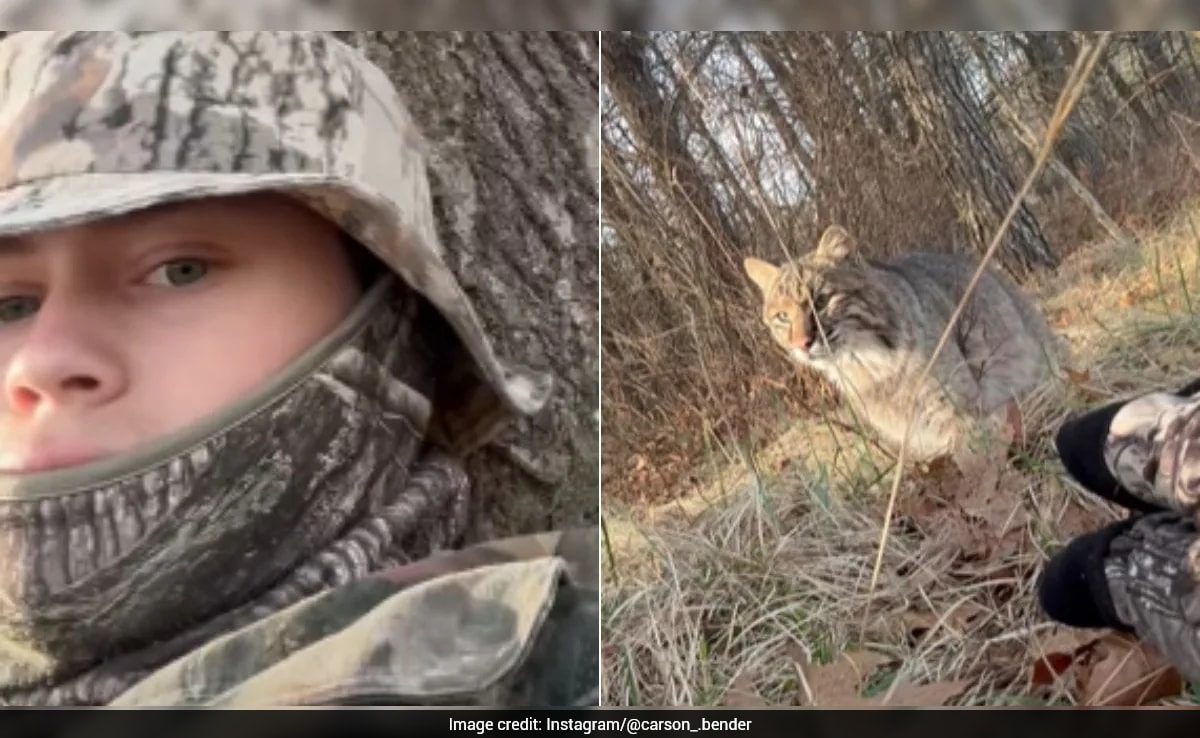
The internet loves a monster story. A teenager sits in the woods, minding his own business, when a 30-pound ball of fur and fury launches from the brush. The camera shakes. The audio captures a guttural growl. Within twenty-four hours, the footage is everywhere, framed as a "miraculous survival" against a "vicious predator."
It makes for great engagement metrics. It’s also complete nonsense.
If you’ve spent any real time tracking North American predators, you know the "terrifying attack" narrative is a lazy shortcut for journalists who wouldn't know a bobcat from a housecat without a GPS tag. The media treats these encounters as anomalies of nature or signs of a "rising threat." In reality, these incidents are almost always the result of human territorial ignorance and the total failure to understand feline biology.
The Myth of the Unprovoked Attack
The viral headline claims the bobcat "attacked." That word implies intent, malice, or a predatory hunt.
Let’s get one thing straight: A bobcat ($Lynx$ $rufus$) does not view a 160-pound human male as prey. To a bobcat, a human is a skyscraper that breathes. They are calculated, risk-averse hunters that specialize in rabbits, rodents, and the occasional unlucky turkey.
When a bobcat "attacks" a hunter, it isn't hunting the hunter. It’s usually a case of mistaken identity or a desperate defense of a nearby den. Most "turkey hunt attacks" happen because the hunter is doing exactly what they are trained to do:
- Wearing full-body camouflage.
- Using a high-fidelity turkey call.
- Sitting perfectly still in the underbrush.
You aren't a victim; you're a lure. You spent four hours and eighty dollars on gear to convince the local ecosystem that you are a delicious, flightless bird. When a bobcat actually believes you, it isn't "nature gone wild." It’s nature working exactly as intended. The "terror" in these videos is actually just the sound of a human realizing they are much better at roleplaying a turkey than they anticipated.
Stop Asking if Bobcats are Dangerous
If you look at "People Also Ask" on any search engine, the top queries are always: Are bobcats dangerous to humans? or Will a bobcat attack me in my backyard?
The premise of the question is flawed. It assumes the bobcat is an active agent looking for a fight.
I’ve spent fifteen years in the field, often within twenty feet of these animals. I can tell you that a bobcat is only "dangerous" in the same way a kitchen knife is dangerous. It has the tools to do damage, but it has zero interest in doing so unless you handle it like an idiot.
Statistically, you are more likely to be hospitalized by a neighbor’s golden retriever or a falling vending machine than by a bobcat. According to the CDC and various state wildlife agencies, unprovoked bobcat attacks on humans are so rare they barely register on the annual charts. When they do occur, there are usually only three explanations:
- Rabies: A neurological breakdown that bypasses the animal's natural fear.
- Cornering: You trapped a mother near her kittens.
- The Turkey Hunter Fallacy: You smelled like a bird and sounded like a bird, so the cat treated you like a bird.
The Viral Video Industrial Complex
Why does the media keep pushing the "terror" angle? Because "Teenager Accidentally Pranks Bobcat" doesn't sell ads.
The current media ecosystem relies on fear-driven engagement. By framing these encounters as "harrowing escapes," outlets reinforce a deep-seated, irrational fear of the outdoors. This isn't just annoying; it’s culturally damaging. It leads to calls for culls, increased trapping, and a general "kill it on sight" mentality in rural communities.
I have seen local councils vote for predator removal programs based on a single viral video that was clearly a case of a hiker getting too close to a den. We are legislating based on TikTok clips rather than biological data. It’s the height of ecological illiteracy.
How to Actually Survive the Woods (Without a Viral Video)
If you find yourself face-to-face with a bobcat, stop filming. The reason these "attacks" look so violent on camera is that the person holding the phone is usually frozen in a mix of shock and "content creation" mode.
The advice you get from most outdoor blogs is soft. They tell you to "give the animal space." That’s fine if you’re at a distance. But if a bobcat is within ten feet and posturing, you need to stop being a "victim" and start being a "predator."
- Break the Silhouette: Bobcats hunt by identifying shapes. If you are crouched or sitting, you look like prey. Stand up. Make yourself look like a seven-foot-tall problem.
- Violent Noise: Not a scream of terror. A shout of command. Use a deep, guttural tone. High-pitched screams mimic the sound of a distressed rabbit—the bobcat's favorite dinner.
- The Eye Contact Rule: Unlike domestic cats, which might see eye contact as a challenge, wild predators see it as proof that their element of surprise is gone. A bobcat relies on the ambush. If you are staring directly at it, you’ve already won the tactical battle.
The Hard Truth About Coexistence
The contrarian reality that no one wants to admit is that we are the ones encroaching. As suburban sprawl pushes further into traditional hunting grounds, these encounters will increase. That doesn't mean the cats are getting bolder; it means the map is getting smaller.
We have built a society that wants "nature" to be a curated, safe background for our Instagram posts. We want the deer in the yard but we scream for the police when the coyote follows the deer. You cannot have one without the other.
The bobcat in that viral video wasn't a monster. It was a hungry animal doing its job in an increasingly crowded world. If we want to share the planet with these creatures, we have to stop treating every scratch and hiss as a headline-worthy trauma.
The woods don't care about your feelings, your hunt, or your viral video. They don't owe you safety. They only owe you the consequences of your own presence. If you go into the brush dressed as a turkey, don't be surprised when something tries to eat you.
Stop filming. Start paying attention.