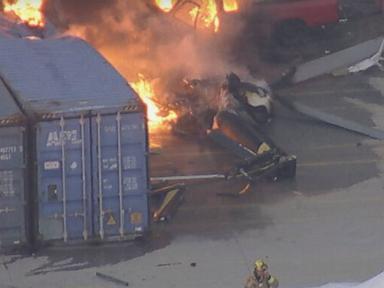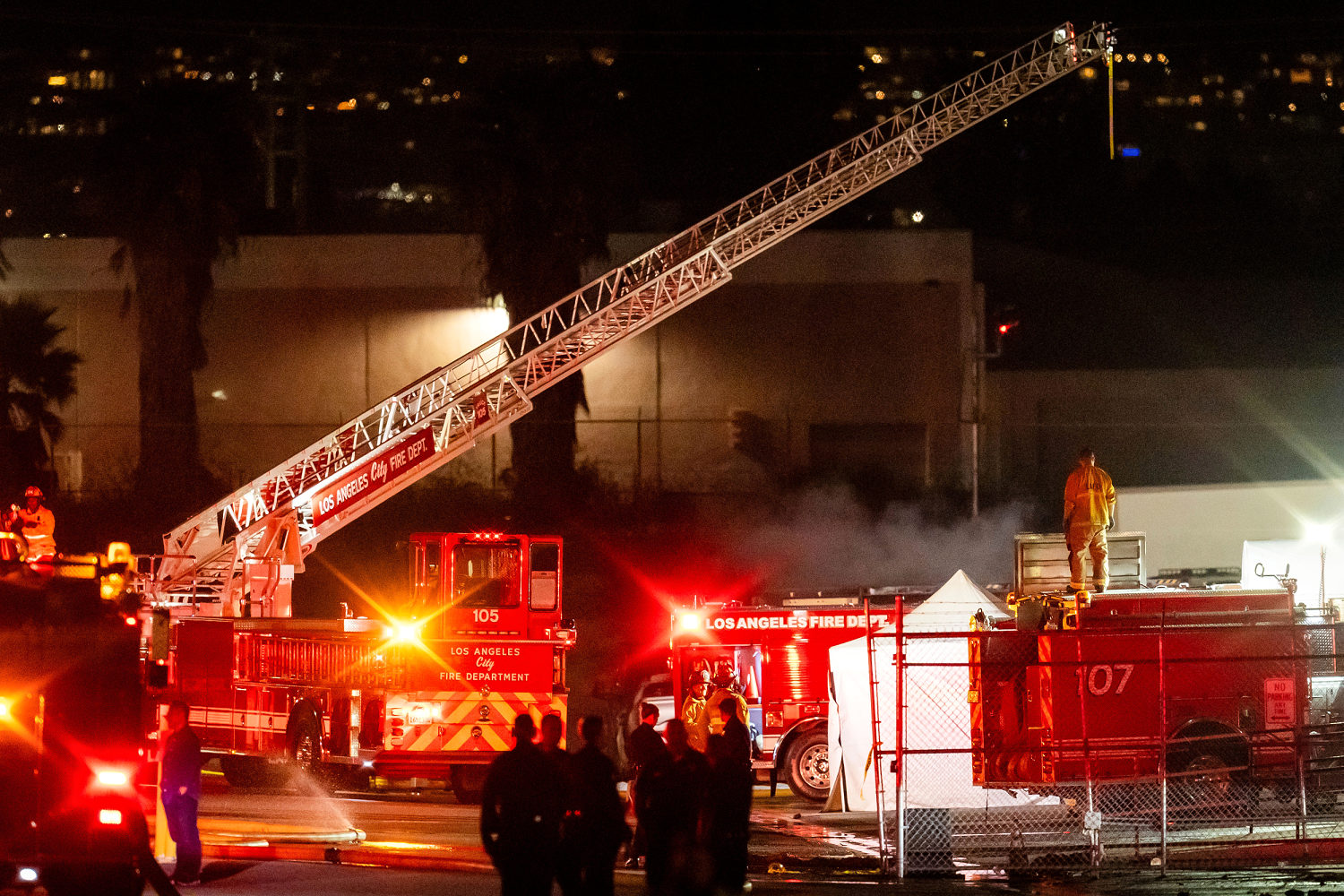
Another news chopper dropped out of the sky. Three dead. A routine crash covering a fatal bus collision in Los Angeles turned into its own live-broadcast catastrophe. The networks will offer solemn tributes to the pilot and crew, mutter standard talking words about dangerous conditions, and then dispatch the exact same bird back into the clouds tomorrow morning.
It is time to stop pretending this is an unfortunate cost of doing business. It is a completely obsolete, profoundly lethal theater of vanity driven by local television executives who refuse to update their operational models.
The lazy consensus in modern media is that aerial reporting provides an irreplaceable tactical advantage in breaking news. You need eyes in the sky. You need to show the scale of the gridlock, the plume of smoke, the wreckage spanning multiple lanes. Without the chopper, newsrooms argue, the public is blind.
That argument crumbles under basic scrutiny.
Satellite imagery, high-definition drone networks, fixed traffic-monitoring infrastructure, and crowdsourced telemetry from millions of connected smartphones on the ground provide faster, higher-resolution, and far more geographically accurate data than a single helicopter vibrating at five hundred feet. The only thing a news chopper actually offers that modern ground or digital tracking cannot is sensationalist noise and a dramatic live shot of red brake lights stretching into the horizon.
We are risking human lives for visual window dressing.
Look at the mechanics of the industry. Local news stations operate on razor-thin margins. To stay competitive, they chase ratings spikes that accompany high-drama breaking events. When a crash happens on the interstate, the race to be first over the scene forces pilots to fly low, maneuver aggressively in congested airspace, and prioritize dramatic angles over basic flight safety. The Federal Aviation Administration and National Transportation Safety Board accident databases are littered with investigations into news gathering aviation mishaps. Pilots are routinely pushed into marginal weather, high-wind corridors, and restricted airspace because an executive three miles away wants a live wide shot before the competitor gets it.
Admitting the downside of this contrarian stance requires acknowledging that cutting choppers means sacrificing a specific type of visceral television pacing. Viewers like the panning shot of a burning semi. They like the dramatic narration of a reporter circling a disaster zone. Dismantling this means accepting a shift toward calmer, more methodical reporting that relies on verified ground intelligence rather than breathless aerial speculation.
Ground intelligence is boring. It does not look good in a promo reel. But it does not require scraping three bodies off an asphalt parking lot either.
The economics are equally indefensible. Operating a turbine helicopter costs thousands of dollars an hour in fuel, maintenance, insurance, and pilot salaries. Multiply that across major media markets nationwide, and millions of dollars are funneled annually into a dying medium. Redirecting that capital into actual investigative reporting or modern digital surveillance infrastructure would radically improve journalism quality. Instead, capital is squandered on airborne machinery that serves as a flying billboard for local news brands.
Consider a parallel industry. Commercial construction used to rely heavily on scaffolding-mounted manual surveying and risky low-pass aerial scouting for site mapping. Today, commercial drone fleets and automated aerial mapping handle those tasks with zero human mortality risk and vastly superior spatial accuracy. Why television news remains stuck in a mid-twentieth-century mindset of putting reporters into manned rotary aircraft for routine traffic incidents is an indictment of newsroom leadership.
When a news helicopter crashes, the coverage follows a predictable script. Days of mourning, calls for safety reviews, and then institutional amnesia. No one asks the fundamental question of whether the aircraft should have been airborne in the first place.
The next time a major accident occurs on your local freeway and a news chopper starts rattling your windows, do not look up in awe at the coverage. Look up and realize you are watching an entirely avoidable tragedy rehearsing for its own sequel. Ground the fleet. Sell the birds. Report the news from the ground where the facts actually live.