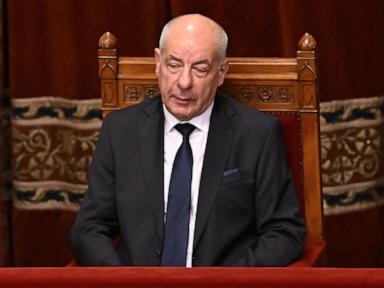
Western commentators are hyperventilating again. A headline crosses the wire about a Hungarian president signing a constitutional amendment that effectively ends their own term. Predictably, the think-tank circuit fires up the outrage machine. They cry democratic collapse. They scream authoritarian takeover.
They are missing the point entirely.
You are being sold a narrative written by people who treat international politics like a morality play. Good guys, bad guys, and a neat narrative arc where the institutions always save the day. In reality, what is happening in Budapest is a masterclass in constitutional hardball. If you want to understand modern statecraft, stop treating every legal maneuver in Central Europe as a tragedy and start analyzing it as an engineering schematic.
The Myth of the Sacred Office
Let us address the most glaring misconception first. The mainstream media covers the Hungarian presidency as if it were the American presidency. It is not.
The Hungarian head of state is a largely ceremonial figurehead elected by the parliament, not the public. Their job is to represent the unity of the nation, receive foreign diplomats, and sign bills into law. They are not the chief executive. They do not command the daily operations of the military. They do not set domestic policy. The Prime Minister does.
When a news outlet frames the abbreviation of a presidential term via a constitutional amendment as a "coup" or a "seizure of power," they expose their own ignorance of parliamentary mechanics. The power was never in the presidency to begin with. The presidency in a system like this is a pressure valve. When the ruling party needs to reshuffle the deck, the president signs the paperwork.
Imagine a scenario where a CEO asks a board member to step down, and the board votes to eliminate the seat. You would not call that a violent corporate takeover. You would call it a restructuring. Applying 20th-century panic to 21st-century administrative reshuffling is lazy journalism.
Hyper-Legalism vs. Rule of Law
I have watched foreign policy analysts blow millions in grant money trying to "fix" Eastern European democracies by funding awareness campaigns about the "rule of law." They fail because they fundamentally misunderstand the opponent.
The ruling coalition in Hungary does not operate outside the law. They operate strictly within it. They just happen to own the law.
When you hold a two-thirds supermajority in the Országgyűlés (the Hungarian parliament), you possess the power to rewrite the Fundamental Law on a Tuesday before lunch. This is where the concept of "abusive constitutionalism"—a term coined by legal scholar David Landau—comes into play. It describes the use of mechanisms of democratic change to make a state significantly less democratic.
But here is the bitter pill that idealists refuse to swallow: it is entirely, flawlessly legal.
The amendment ending the presidential term was drafted, debated in committee, brought to the floor, voted on, passed by the required supermajority, and signed. Every procedural box was checked.
If you want to criticize the morality of the action, fine. But calling it "illegal" or "unconstitutional" is a semantic failure. When the architects of the system are also the operators of the system, the constitution is no longer a boundary. It is a tool.
The Discomfort of Parliamentary Sovereignty
People constantly ask search engines, "Is Hungary a dictatorship?" They want a simple yes or no. The truth is vastly more uncomfortable.
Hungary is an electoral autocracy built on perfectly legal parliamentary maneuvers. The opposition exists. The press exists. Elections occur. But the structural engineering of the state ensures the house always wins.
This terrifies Western observers because it holds up a mirror to their own systems. Most democracies rely heavily on unwritten norms. We trust that a ruling party will not pack the courts, gerrymander the districts into oblivion, or rewrite the constitution to remove term limits, even if they technically have the votes to do so. We rely on tradition and shame.
Hungary stripped away the tradition and the shame. They looked at the rulebook, realized there was no rule against changing the rules, and acted accordingly.
This is why the resignation or term-ending amendment of a president is a feature, not a bug. It demonstrates absolute party discipline. A president who signs an amendment ending their own tenure is signaling to the electorate that the party machinery is unified and operates without friction. In a consensus democracy, this looks like coercion. In a majoritarian system pushed to its absolute logical extreme, it looks like efficiency.
The Flawed Fixes
Stop waiting for the European Union to ride to the rescue. The EU was designed as a trade bloc, not a democracy watchdog. Article 7 proceedings—the supposed "nuclear option" to suspend a member state's voting rights—require unanimity from all other member states. The architects of the EU never fathomed a scenario where two or more member states might simultaneously decide to backslide and protect each other.
Sanctioning funding works temporarily. Withholding pandemic recovery funds or cohesion funds forces minor concessions. The ruling party might create a new "anti-corruption" authority to placate Brussels, secure the funds, and then systematically defang the new authority through entirely legal parliamentary procedures.
I have seen exactly how this plays out. The international community demands a reform. The targeted government passes a law that technically meets the demand on paper. The international community declares victory and moves on. The targeted government then uses secondary legislation or regulatory capture to neutralize the reform.
You cannot beat hyper-legalism with strongly worded letters.
The Reality of the Supermajority
To defeat a system like this, you have to understand the math. The outrage over the president's term ending is a distraction.
The real issue is the structural advantage of the electoral law, which disproportionately rewards the largest party. The opposition is fractured, historically incompetent, and obsessed with fighting culture wars instead of building localized political machines. Until an opposition coalition can mathematically threaten the supermajority in the parliament, every constitutional amendment, every forced resignation, and every structural change is just routine administrative maintenance.
Stop focusing on the individual who holds the ceremonial pen. Focus on the people who manufacture the ink.
Your constitution is not a magical shield. It is just a piece of paper waiting for someone with enough votes to rewrite it.