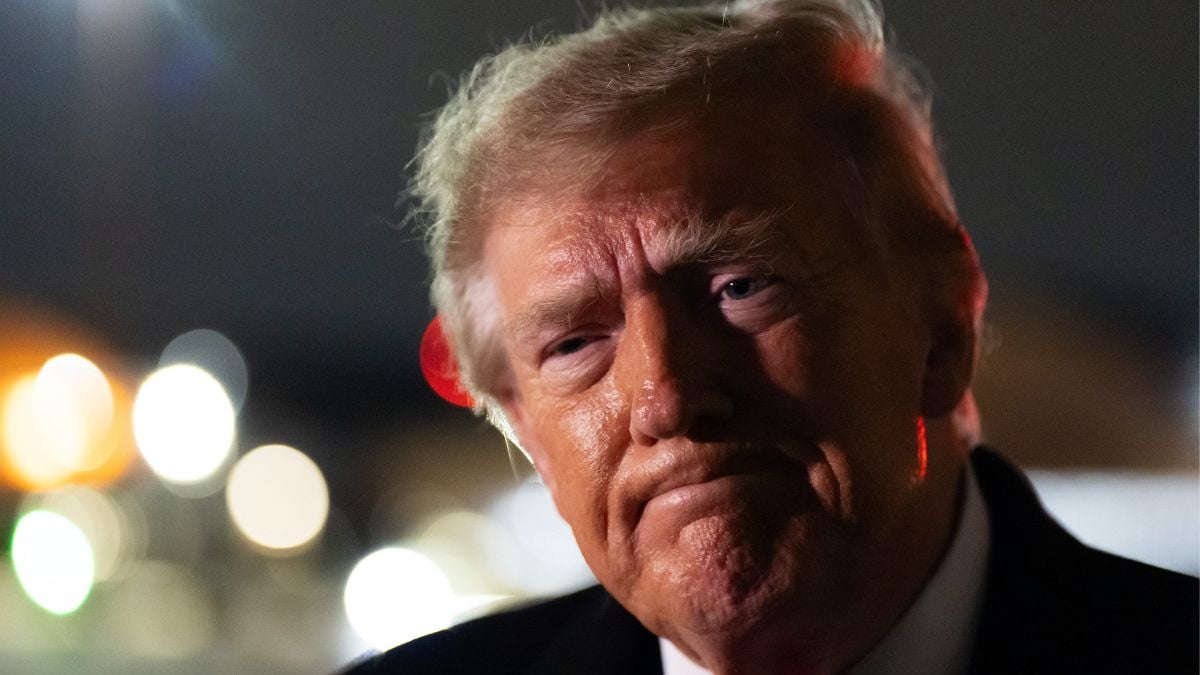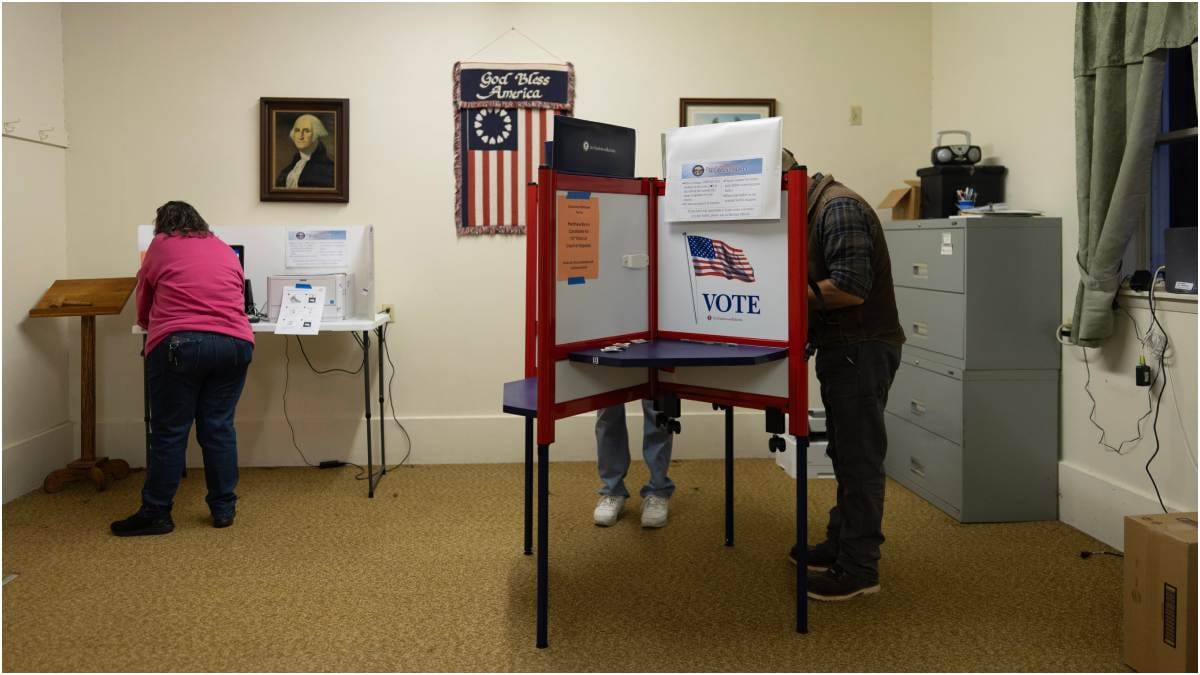
Every two years, political media dusts off the exact same headline. The sitting president faces a "major political test." The opposition party hopes to "flip Congress." Pundits treat the midterm elections like a national report card, a simple up-or-down vote on whoever sits in the Oval Office.
It is lazy. It is comforting. And it is almost completely wrong.
I have watched campaign committees and donor networks burn through hundreds of millions of dollars chasing that exact narrative. They buy nationalized ad spots, obsess over presidential approval ratings, and act shocked when the actual election results refuse to follow the script. Treating a midterm as a straightforward referendum on Donald Trump misses the actual mechanics of how American power shifts. Worse, it blinds voters and strategists to the real story: flipping Congress is often a poisoned chalice, and losing it can be the best thing that ever happens to a second-term president.
The Referendum Myth and the Surge-and-Decline Reality
The standard media framing assumes voters show up in November to grade the president. If they like him, his party holds the House and Senate. If they don't, the opposition sweeps in.
Political science dismantled this simplistic view decades ago. In the 1960s, Angus Campbell introduced surge-and-decline theory, and it remains one of the most reliable predictors in American politics. Presidential elections are high-stimulus events. They drag millions of low-propensity, peripheral voters to the polls—people who rarely pay attention to politics, vote largely on vibe or personality, and disproportionately break for the winning presidential candidate.
Midterms are low-stimulus events. Those peripheral voters stay home.
The electorate that actually shows up in a midterm is older, wealthier, more partisan, and far more motivated by grievance than by gratitude. You do not need a massive wave of voter regret to flip the House of Representatives. You just need the president's own coalition to feel comfortable enough to skip a Tuesday in November while the opposition's base shows up angry.
Differential turnout—not a sudden change of heart by the American public—drives midterm swings. When pundits frame the vote as a "test" of Trump's leadership, they are projecting a moral narrative onto a basic math problem.
Why Flipping Congress Is Often a Trap
Here is the part Democrats rarely want to hear, and Republicans rarely admit when they are in the minority: winning the House in a midterm can wreck your chances in the next presidential election.
Consider what happens the morning after an opposition party flips Congress. Right now, voters who are frustrated with the economy, inflation, or Washington dysfunction have a single, obvious target to blame: the party in the White House. The opposition gets to run as the check, the balance, the reasonable alternative.
The moment they take the gavel, that excuse evaporates.
Suddenly, the opposition owns the legislative calendar. They have to pass budgets, raise the debt ceiling, and manage internal faction wars between their moderate frontline members and their ideological base. Instead of unified messaging against the president, the public sees infighting, gridlock, and subpoenas that rarely change a single swing voter's mind.
Meanwhile, a president who loses Congress gets a gift. He no longer has to pretend to shepherd difficult, unpopular compromises through his own fractious majority. He gets to govern by executive order, veto messaging bills, and campaign for the next two years against a "do-nothing" opposition Congress. History is littered with presidents who looked dead in the water after a midterm shellacking, only to use that exact foil to win the next big fight.
Dismantling the Questions Voters Actually Ask
When people search for midterm coverage, they are usually fed a diet of horse-race trivia. Let's strip away the noise and answer the real questions behind the headlines.
Does a president's approval rating decide the midterms?
It sets the weather, not the outcome. Thermostatic public opinion—a concept pioneered by political scientist Christopher Wlezien—shows that the public naturally pushes back against whichever party holds power. Voters act like a thermostat: when policy moves too far in one direction, they dial it back toward the center. That happens regardless of who the president is. Approval ratings tell you the direction of the wind, but structural baselines—like the number of truly competitive House districts—decide how far the needle can actually move.
Can Democrats actually flip both chambers?
Asking whether they can is the wrong question. The right question is whether the map even allows it. The House of Representatives is heavily insulated by redistricting and geographic sorting. Only a tiny fraction of the 435 seats are genuinely competitive in any given cycle. The Senate is even more skewed, because every state gets two seats regardless of population, and the specific class of seats up for election in any given cycle dictates the battlefield before a single vote is cast. A party can win the national popular vote by millions and still fail to flip the Senate if the calendar deals them a brutal map.
Do midterm results predict the next presidential race?
Almost never. Midterms measure which party's base is angrier in an off-year. Presidential elections bring back the massive, unpredictable pool of infrequent voters. Treating a midterm swing as a permanent realignment is the fastest way to misread the electorate.
Where the Contrarian Model Breaks Down
Every sharp model has a blind spot, and pretending otherwise is how analysts lose credibility. Here is the honest downside to discounting the national referendum narrative: economic shocks override structure.
If unemployment spikes suddenly, or if a major financial crisis hits in the autumn before the vote, structural baselines and turnout models get thrown out the window. In a genuine economic panic, low-propensity voters do show up in a midterm, and they show up to punish whoever holds the keys. In those rare moments, the lazy media narrative accidentally becomes true. The election really does become a brutal, singular referendum on the president.
Outside of a full-blown crisis, however, the fundamentals rule.
How to Read the Election Like an Insider
Stop watching cable news panels argue over whether a single rally or a viral gaffe just "changed the race." It didn't. If you want to know what is actually happening as the votes come in, ignore the nationalized theater and track three concrete metrics:
- Suburban county margins in bellwether states. Do not look at national polling averages. Look at the shift in educated, suburban counties compared to the previous two cycles. That tells you whether swing voters are actually moving or just staying home.
- Early vote and mail-in ballot composition by age and party registration. Turnout is not a mystery. You can see who is showing up weeks before Election Day. If the youth vote or low-propensity rural voters are absent from the early rolls, no amount of last-minute ad spending is going to conjure them out of thin air.
- Down-ballot ticket splitting. Watch the gap between top-of-the-ticket races and local House races. When that gap widens, it proves voters are rejecting specific candidates rather than the president's entire party.
Imagine a scenario where the opposition party sweeps the House by a narrow margin, declares a historic mandate, and immediately launches two years of nonstop investigations. They spend their political capital on cable news hits instead of kitchen-table legislation. Two years later, the same swing voters who handed them the gavel look at the chaos, shrug, and hand power right back.
That is not a hypothetical. That is the standard operating procedure of modern American politics.
The media wants you to believe this election is a dramatic, winner-take-all verdict on one man. It isn't. It is a turnout grind governed by geography, human laziness, and the oldest rule in Washington: the moment you win the power you chased, the clock starts ticking on your own excuse.