Every time a Pakistani cabinet minister touches down on Indian soil for a multilateral summit, the foreign policy press corps reaches for the exact same tired playbook. They dust off words like "thaw," "icebreaker," and "historic opening." They treat a routine logistical obligation under the Shanghai Cooperation Organisation banner like the Camp David Accords.
It is lazy journalism. Worse, it is strategic illiteracy.
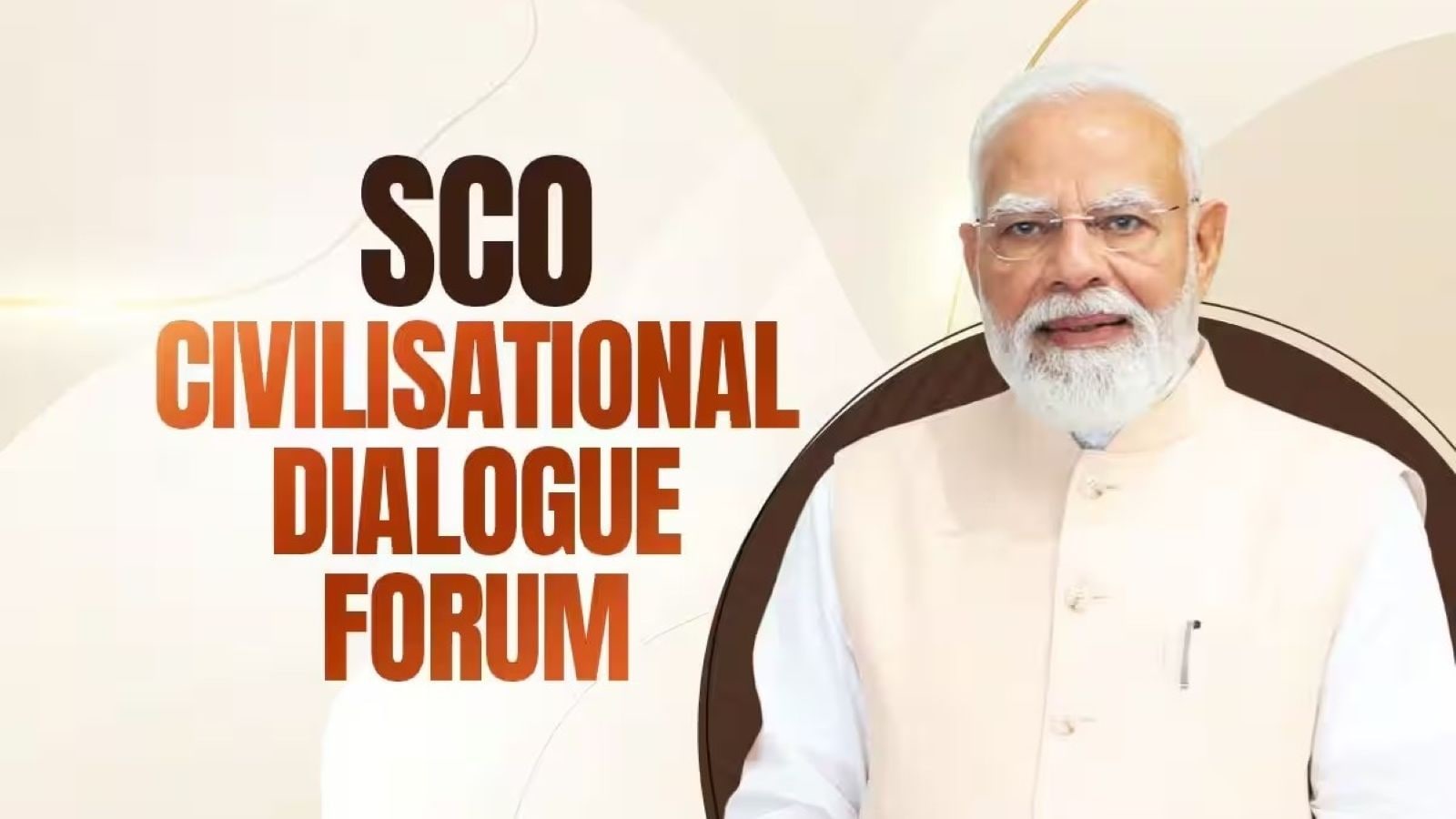
When Pakistan’s Federal Minister Masood Malik arrived in India for the SCO Civilisational Dialogue Forum, the standard commentary immediately framed the visit through the lens of bilateral reconciliation. The implicit assumption behind every breathless headline is simple: physical proximity equals political progress. Put an Islamabad official in a New Delhi conference hall, surround them with Eurasian diplomats, and suddenly the structural freeze between two nuclear-armed neighbors starts to melt.
That premise falls apart the moment you look at how multilateral diplomacy actually functions in South Asia. Attending a regional forum hosted by a rotating chair is not an olive branch. It is the bare minimum required to avoid ceding regional diplomatic real estate to a rival.
The Multilateral Mirage
To understand why these visits generate so much heat and so little light, you have to strip away the ceremonial theater.
The Shanghai Cooperation Organisation operates on strict institutional mechanics. Member states take turns hosting sub-forums, ministerial meetings, and cultural dialogues. When India holds the gavel for a specific SCO track, Pakistan faces a binary choice: show up and retain a seat at the table where regional narratives are shaped, or boycott and hand New Delhi an uncontested microphone in front of Beijing, Moscow, and the Central Asian republics.
Showing up is an act of self-preservation, not reconciliation.
I have sat in enough track-two diplomatic briefings and regional security roundtables to watch this cycle repeat itself with clockwork predictability. Journalists see a handshake in a hallway or a formal arrival at an airport tarmac and immediately project bilateral intent onto a multilateral obligation. Meanwhile, inside the actual working rooms, the delegations read from pre-approved, zero-sum scripts designed to satisfy domestic constituencies and reassure third-party patrons—primarily China.
Why "Civilisational Dialogue" Is Diplomatic Anesthesia
Look closely at the venue itself: a Civilisational Dialogue Forum.
In international relations, cultural and civilisational tracks exist precisely because hard security and trade tracks are deadlocked. When two states cannot agree on border demarcation, water-sharing treaties, cross-border militancy, or basic Most Favored Nation trade status, diplomats retreat into the safest possible linguistic territory. They talk about shared heritage, ancient trade routes, and cultural affinities.
This is not a stepping stone to hard diplomacy. It is a substitute for it.
Calling a civilisational forum a breakthrough is like praising two estranged business partners who refuse to speak about a multi-million-dollar lawsuit because they briefly agreed on the quality of the catering at an industry conference. The polite conversation in the lobby does nothing to alter the litigation in the courtroom.
Dismantling the "Icebreaker" Myth
If you search for coverage around Pakistani ministerial visits to India, you encounter the same recurring questions from readers trying to decode the diplomatic tea leaves. Almost every one of those questions rests on a flawed assumption.
Does a ministerial visit signal the resumption of bilateral talks?
No. Under established diplomatic protocol, multilateral attendance is explicitly insulated from bilateral engagement. Both New Delhi and Islamabad go to extraordinary lengths before these events to clarify—often through off-the-record briefings—that no bilateral pull-asides are scheduled. When a minister travels under the SCO flag, their legal and diplomatic mandate is restricted to the multilateral agenda. Treating this as a backchannel for bilateral talks ignores the rigid bureaucratic guardrails both foreign ministries erect to prevent domestic political backlash.
Why does Pakistan send ministers to India if trade remains suspended?
Because abandoning multilateral platforms carries an immediate strategic penalty. Since 2019, bilateral trade between India and Pakistan has remained largely frozen following constitutional changes in Jammu and Kashmir and subsequent retaliatory tariff hikes and suspensions. Yet Pakistan cannot afford to let India dominate the SCO's institutional machinery. By sending a federal minister, Islamabad signals to Beijing and Central Asian capitals that it is a constructive regional stakeholder, while simultaneously denying New Delhi the ability to claim Pakistan is isolating itself from regional cooperation.
Can cultural and civilisational forums build trust between rivals?
Only when structural incentives align—and in South Asia, they currently point in opposite directions. Realist international relations theory, articulated by scholars like John Mearsheimer and Kenneth Waltz, demonstrates that states prioritize survival and relative power over cultural affinity. Shared history has never stopped neighboring states from fighting wars; in fact, contested history is usually the fuel. Trust in international politics is built through verifiable, costly concessions on security and economics, never through keynote speeches about ancient civilisations.
The Structural Reality Both Capitals Ignore
The mainstream media narrative misses the most important shift in South Asian geopolitics over the past decade: India no longer views bilateral engagement with Pakistan as a prerequisite for its regional or global ambitions.
For decades, Western and regional analysts operated under the assumption that India could not rise as a major power while bogged down in a permanent standoff with its western neighbor. That doctrine is dead. New Delhi has systematically decoupled its broader economic and diplomatic trajectory from Islamabad. India’s foreign policy bandwidth is overwhelmingly focused on supply-chain integration, maritime security in the Indo-Pacific, managing border friction with China, and positioning itself as a voice for the Global South.
Pakistan, conversely, faces acute macroeconomic headwinds, internal security challenges, and heavy reliance on external financial lifelines. For Islamabad, high-profile visibility at multilateral forums in India serves a dual purpose: it projects diplomatic normalcy to international lenders and allies, and it forces the Kashmir and regional stability questions back into the international news cycle simply by virtue of a Pakistani minister standing on Indian soil.
When you place these two realities side by side, the asymmetry becomes obvious:
- India's objective: Demonstrate institutional competence as an SCO host, maintain strict compartmentalization between multilateral duties and bilateral grievances, and deny Pakistan any diplomatic concessions.
- Pakistan's objective: Prevent diplomatic marginalization within a China-led regional bloc, project state capacity abroad, and utilize the media spotlight generated by an Indian visit without offering substantive policy shifts at home.
Neither side is looking for a breakthrough. Both sides are executing containment strategies.
The Hidden Downside of Cynical Realism
Dismissing diplomatic theater as empty symbolism carries its own trap, and anyone who pretends otherwise is selling you a different kind of delusion.
If you treat every multilateral interaction as pure noise, you risk missing the micro-signals that genuinely precede policy shifts. History shows that backchannels rarely announce themselves with press releases. In 2021, when Indian and Pakistani militaries suddenly reaffirmed the 2003 Line of Control ceasefire agreement, it caught most public commentators completely off guard because the groundwork had been laid quietly by intelligence chiefs in third-country capitals—not by ministers at public forums.
The danger of pure cynicism is assuming that nothing can ever change. The danger of media naivete is assuming that everything visible is a sign of change.
Experienced analysts separate performative diplomacy from substantive diplomacy by tracking operational indicators rather than photo opportunities:
- Diplomatic Staffing Levels: Are both countries restoring their High Commissions in New Delhi and Islamabad from charge d'affaires status back to full High Commissioners? Until full ambassadorial representation returns, talk of normalization is fiction.
- Visa Regimes for Non-Officials: Are businesspeople, journalists, and ordinary citizens receiving visas outside of tightly controlled religious pilgrimage corridors or multilateral sports and conference exemptions?
- Trade Normalization: Have either Islamabad or New Delhi moved to dismantle the punitive tariff walls and statutory regulatory orders that choked off direct commerce?
- Intelligence and Military Hotlines: Are Director General of Military Operations (DGMO) communications shifting from crisis-management mode to sustained border-management protocols?
Notice what is missing from that list: speeches at civilisational dialogue forums.
Stop Watching the Podium, Watch the Ledger
Imagine a scenario where a Pakistani minister skips an SCO event in India entirely. The headlines would scream about a diplomatic boycott, heightened tensions, and regional instability. Now contrast that with what actually happened when Masood Malik arrived: headlines screaming about a potential thaw, cautious optimism, and diplomatic engagement.
In both scenarios, the underlying bilateral reality—frozen trade, downgraded diplomatic missions, unresolved territorial disputes, and deep institutional mistrust—remained 100% identical.
When commentary swings wildly between "imminent crisis" and "historic breakthrough" based solely on whether a cabinet minister boarded a commercial or chartered flight to attend a pre-scheduled regional summit, the public is being misled about how power works.
Multilateral organizations like the SCO are arenas where rivalries are managed, channeled, and occasionally masked behind bureaucratic consensus. They are not magic wands that dissolve core national security doctrines. Masood Malik’s presence in India proves only one thing: neither Islamabad nor New Delhi is willing to surrender institutional turf inside a bloc dominated by Beijing and Moscow.
Quit reading diplomatic tea leaves on airport tarmacs. Until trade resumes, High Commissioners return to their posts, and security guarantees replace cultural talking points, every handshake at a regional forum is just protocol doing its job.