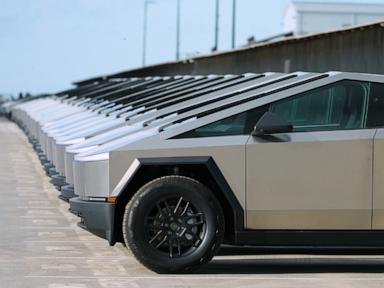
Mainstream auto journalists are throwing a victory party over the Cybertruck's scheduled mid-2027 production wind-down. They are pointing at the sales charts, laughing at the missed 250,000-unit annual targets, and writing lazy obituaries about how "allure escaped most shoppers."
They are reading the scoreboard for the wrong sport.
If you judge the Cybertruck as a traditional commercial pickup meant to dethrone the Ford F-150, it is an undeniable flop. You cannot argue with Cox Automotive data showing U.S. deliveries dropping from nearly 39,000 in 2024 down to roughly 20,200 in 2025, and sliding another 28% through the first nine months of 2026. You cannot ignore that Elon Musk's own companies had to absorb nearly a fifth of U.S. registrations in late 2025 just to keep volume moving.
Those numbers are real. But treating the Cybertruck as a failed consumer truck misses the brutal manufacturing reality of what happened inside Gigafactory Texas over the last four years. Tesla did not build an angular stainless-steel wedge to win over Nebraska cattle ranchers. They built a rolling, street-legal R&D laboratory funded entirely by wealthy early adopters, and they are shutting it down precisely because the experiment worked.
The Lazy Consensus of Detroit Think
I have spent two decades watching legacy automakers burn billions of dollars trying to protect sunk-cost tooling. In Detroit, Munich, and Toyota City, the cardinal sin is killing a vehicle program before you have amortized the stamping dies over a seven-to-ten-year lifecycle. When a traditional automaker builds capacity for 125,000 units a year and only moves 25,000, heads roll, rebates get slapped on hoods, and the company bleeds cash for a decade trying to force-feed metal to dealers.
Pundits apply that exact same legacy accounting to Tesla's November 2026 announcement that the Cybertruck line will wind down by mid-2027 to make room for the Cybercab. The media consensus goes like this: Demand dried up, the polarizing design alienated regular truck buyers, and Tesla is retreating in shame.
That analysis suffers from terminal short-sightedness. It assumes Tesla's primary goal in 2026 is maximizing unit volume on a $75,000-plus novelty pickup. It ignores the fact that Tesla is actively killing off its legacy hardware—having already axed the Model S and Model X lines earlier in 2026—to reallocate every square inch of factory floor and engineering bandwidth toward autonomous fleet hardware.
Keeping a bespoke, low-volume stainless-steel assembly line running when you are preparing to scale a dedicated robotaxi is corporate malpractice. Killing it isn't surrender. It is ruthless capital discipline.
What the Cybertruck Actually Paid For
To understand why the Cybertruck was a strategic triumph despite dismal retail numbers, look under the skin. Consumers paid $80,000 to $100,000 to beta-test four foundational technologies that would have bankrupted Tesla if they had debuted them on a mass-market vehicle first.
1. The 48-Volt Low-Voltage Architecture
For over sixty years, the entire automotive industry has been trapped on a 12-volt electrical architecture. Every attempt to move to 48 volts failed because no tier-one supplier wanted to re-engineer wiper motors, window regulators, and seat actuators for a single manufacturer. Tesla used the Cybertruck to brute-force the supply chain into submission. By shifting to 48 volts, Tesla slashed copper wiring mass by roughly 70%. Now that the supplier base is built and debugged on the backs of Cybertruck buyers, that exact 48-volt architecture drops straight into the Cybercab at a fraction of the cost.
2. True Steer-by-Wire and Rear-Wheel Steering
Before the Cybertruck, "steer-by-wire" in production cars usually meant keeping a heavy mechanical steering column as a regulatory backup. Tesla eliminated the physical shaft entirely, replacing it with redundant actuators and variable-ratio software. You cannot build a steering-wheel-free robotaxi without proving to federal regulators that your digital steering actuators will not fail at highway speeds. The 60,000-plus Cybertrucks on American roads have logged hundreds of millions of real-world miles validating the exact fault-tolerant steering hardware required for autonomous fleets.
3. The Etherloop Wiring Topology
Traditional cars have miles of point-to-point wiring harnesses that require armies of human workers to snake through body panels—the single biggest bottleneck to full factory automation. The Cybertruck introduced a high-speed, single-cable Ethernet loop connecting decentralized controllers. This cut assembly complexity dramatically. When you are building a vehicle like the Cybercab using Tesla's "unboxed" manufacturing process, you cannot have humans reaching into tight cavities to plug in hundred-pin harnesses. Cybertruck proved the Etherloop works in mud, snow, and extreme heat.
4. Giga-Casting at Extreme Scale
Tesla pushed front and rear single-piece aluminum underbody castings to their structural limits on a heavy-duty frame. The lessons learned from metallurgy failures, die wear, and thermal distortion on the Cybertruck line directly inform the structural castings of Tesla's next-generation platforms.
| Vehicle Metric | Legacy Auto Perspective | Tesla Manufacturing Reality |
|---|---|---|
| Low Retail Volume (~25k/yr) | Commercial failure; inability to capture core truck market | Sufficient fleet size to validate hardware at scale without massive recall exposure |
| High Retail Price ($75k+) | Price gouging that alienated $40k reservation holders | Customer-funded R&D subsidizing 48V and steer-by-wire supplier tooling |
| Mid-2027 Wind-Down | Premature cancellation; sunk-cost write-off | Rapid reallocation of Giga Texas floor space to high-margin Cybercab lines |
| Exoskeleton Design | Gimmick that blocked European/Australian homologation | Eliminated the automotive paint shop—the most expensive, toxic part of a factory |
Why Electric Pickups Were Always a Dead End
If you are looking for the real failure in the electric truck sector, stop staring at Austin and start looking at Dearborn and Detroit.
The media keeps framing the Cybertruck's wind-down as proof that Tesla misread the truck market. The truth is that physics misread the electric truck market. Full-size pickup trucks have the aerodynamic profile of a brick wall. When you use a battery to push a 6,500-pound brick through the air at 75 miles per hour, range collapses. When you hook a 7,000-pound trailer to the back, range gets cut in half.
Ford learned this the hard way with the F-150 Lightning, slashing production shifts and bleeding billions on its Model e division. Rivian has had to survive on commercial van contracts and massive capital raises while pivoting its survival strategy toward the smaller, cheaper R2 SUV. General Motors spent a fortune stuffing a massive 200-kilowatt-hour battery pack into the Silverado EV—creating a 9,000-pound monster that costs as much as a luxury sports car and takes forever to charge on road trips.
Traditional truck buyers do not want an electric pickup. They want a vehicle that can tow a boat 300 miles up a mountain grade and refuel in four minutes. Until solid-state batteries cut weight and cost by half, full-size electric pickups will remain an expensive niche for suburban commuters who occasionally haul bags of mulch.
Tesla realized this faster than anyone else. While Ford and GM remain locked into multi-billion-dollar union contracts and dedicated truck plants that cannot easily build anything else, Tesla is walking away from the unwinnable electric pickup war entirely.
Answering the Questions Nobody Asks Honestly
Whenever a high-profile vehicle gets axed, the search engines fill up with the same predictable questions. Most analysts give sanitized, PR-friendly answers. Here is what is actually happening.
Why did Cybertruck sales collapse after the initial hype?
Because early adopters are a finite species. Roughly 60,000 people in North America were willing to pay luxury-car money to drive a rolling sci-fi prop and endure constant stares at traffic lights. Once Tesla burned through that specific demographic in 2024 and early 2025, they hit a brick wall. Normal buyers who need a truck for construction, farming, or family road trips looked at the awkward bed sides, the lack of rear visibility, the $80,000 price tag, and the inability to export it to Europe or Australia due to pedestrian safety laws, and bought a gas F-150 or a Model Y instead.
Is the "make room for Cybercab" excuse a lie?
critics love pointing out that Gigafactory Texas is massive and has plenty of empty dirt around it. Technically, Tesla could have built another wing. Practically, manufacturing isn't just about concrete floors—it is about management attention, supply chain complexity, and capital allocation. Running a bespoke cold-rolled stainless-steel stamping operation for 2,000 trucks a month is an operational distraction. Why nurse a low-margin, low-volume niche truck when every engineering hour spent on the Cybercab has ten times the financial upside?
What happens to current Cybertruck owners when production ends?
They instantly own a collector's item, for better or worse. Notice what happened the week after Musk announced the 2027 wind-down: orders temporarily spiked enough that Tesla had to extend the final production window by up to two months just to clear the last-minute FOMO backlog. Spare parts will remain available for years due to federal mandates and Tesla's massive service network, and the Cybertruck's over-the-air software shares its core architecture with the rest of the fleet. However, if you crack one of those bespoke gigacastings in a major collision in 2030, expect a brutal wait time and an insurance write-off.
Where Tesla Actually Screwed Up
Giving Tesla credit for turning a retail flop into an R&D triumph does not mean excusing their unforced errors. Even as a Trojan horse, the Cybertruck program left deep scars that Elon Musk's team brought entirely on themselves.
The 4680 Battery Cell Fiasco: The Cybertruck was supposed to be the grand unveiling of Tesla's revolutionary 4680 dry-cathode battery cells, promising massive cost cuts and 500 miles of range. Instead, dry-cathode manufacturing proved to be an engineering nightmare. Tesla struggled for years with yield rates and thermal bottlenecks, forcing them to ship a truck with far less range at a far higher price than promised on stage in 2019.
Self-Inflicted Brand Damage: You cannot ignore the elephant in the showroom. The traditional demographic for full-size pickup trucks skews heavily conservative, yet the overlap between conservative truck buyers and people willing to buy an experimental electric vehicle is microscopic. Meanwhile, the progressive, tech-forward buyers who normally line up for Teslas were increasingly alienated by Musk's polarizing political commentary throughout 2024 and 2025. The Cybertruck got trapped in a demographic no-man's-land—too weird and electric for the rural crowd, too politically radioactive for the coastal tech crowd.
The Exoskeleton Illusion: Marketing the truck as having an "ultra-hard 30X cold-rolled stainless-steel exoskeleton" created endless manufacturing headaches. Stainless steel is notoriously unforgiving; every microscopic stamping variance shows up as a wavy panel gap. Worse, rigid stainless steel does not crumple the way mild steel or aluminum does, making it impossible to pass strict European pedestrian impact regulations. Tesla sacrificed global market access for a parlor trick that could stop a 9mm bullet—a feature zero commercial fleet managers ever asked for.
The Playbook for Watching Automotive Disruption
If you want to understand where the auto industry is heading over the next five years, stop tracking monthly unit deliveries on niche vehicles and start tracking component commonality.
- Watch the supply chain, not the showroom. When a tech-forward automaker launches an expensive, weird product that makes no sense on paper, look at the tier-one components inside it. If those components show up two years later in a high-volume platform, the "flop" was actually a subsidized pilot program.
- Punish sunk-cost loyalty. Reward companies that kill underperforming products quickly. The most dangerous phrase in corporate strategy is "we already paid for the tooling." Legacy automakers will bleed cash until 2030 trying to justify their bloated EV truck investments. Tesla took the reputational hit in 2026 to clear the deck for 2027.
- Separate physics from software. Electric powertrains are unbeatable for urban duty cycles, delivery vans, and autonomous robotaxis where vehicles run 16 hours a day at moderate speeds. They are terrible for long-haul towing. Bet on the companies aligning their hardware with the laws of thermodynamics, not the ones chasing vanity market share.
The Cybertruck will go down in history as one of the strangest vehicles ever mass-produced—a brutalist steel wedge that promised a million reservations and barely moved seventy thousand units before getting the axe. Journalists will point to its grave as proof that Tesla lost its touch. Meanwhile, millions of driverless Cybercabs will roll off the exact same Texas factory floor, powered by the 48-volt wiring, steer-by-wire actuators, and single-piece castings that Cybertruck buyers unknowingly paid to perfect.