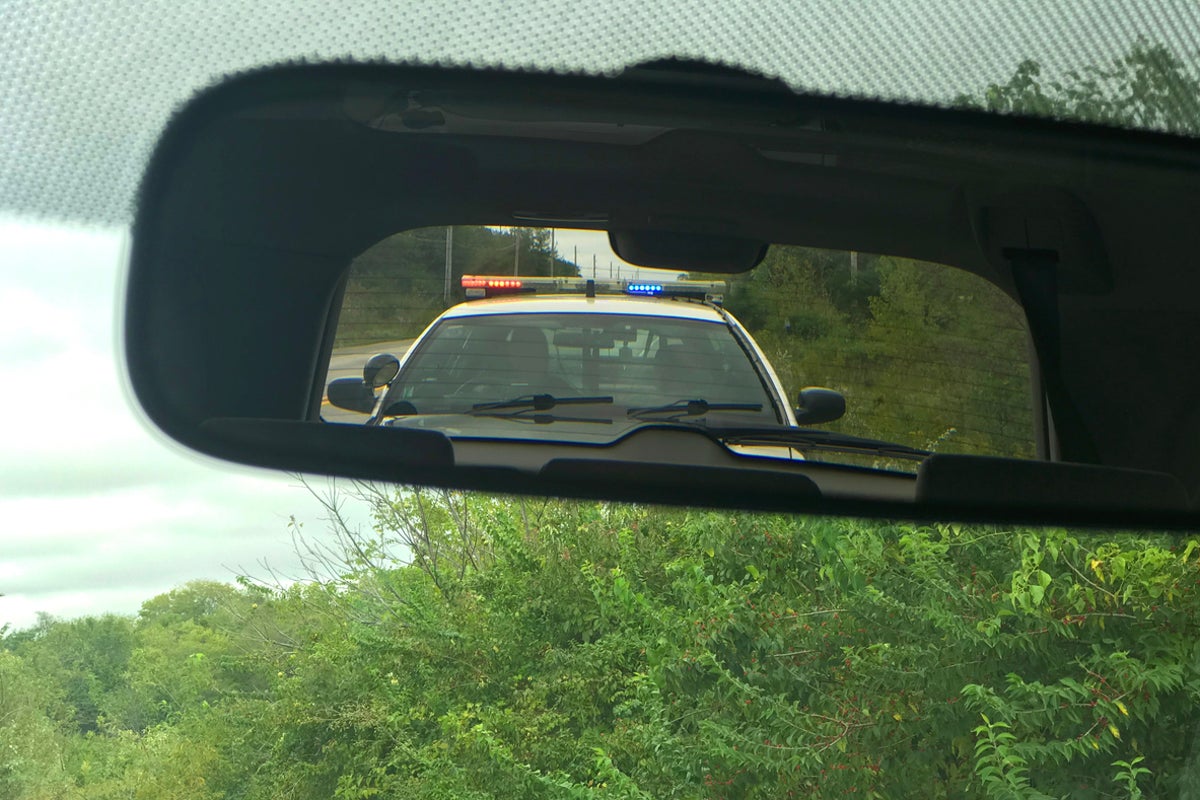
Adding low-frequency rumble sirens to emergency vehicles sounds clever until you look at human perception and acoustic physics.
The media loves the headline. Police departments love buying new hardware. Meanwhile, traffic engineers and acoustic specialists know the truth: vibrating a driver's chassis does not solve gridlock, nor does it teach anyone how to yield correctly.
It is an expensive band-aid applied to a fundamental design flaw in modern transportation.
The Soundproof Bubble Problem
Automakers spend billions perfecting cabin insulation. Double-pane acoustic glass, active noise cancellation, high-end sound systems, and heavy door seals turn modern sedans and SUVs into soundproof vaults.
Drivers sit inside these rolling isolation chambers listening to podcasts or stream audio at eighty decibels. Traditional sirens operating in the 1,000 Hz to 3,000 Hz frequency range bounce off acoustic laminate and insulated steel like tennis balls off concrete.
So the emergency response industry hit a wall. Their fix? The Rumbler—a secondary amplifier that translates standard siren tones down into low-frequency waves between 180 Hz and 330 Hz.
The theory claims drivers feel the vibration through their steering wheel and rear-view mirror when they cannot hear the high tones.
The reality is far messier.
Why Sub-Bass Triggers Panic Instead of Action
When sound drops into low frequencies, human ears lose the ability to pinpoint direction.
High-frequency sounds have short wavelengths. They strike one ear microseconds before the other, allowing human brains to calculate the exact origin of a sound in space.
Low-frequency waves have long wavelengths—sometimes six to eight feet long. They wrap around obstacles, bounce off concrete walls, and resonate uniformly inside a cabin.
Imagine a driver stopped at an intersection in downtown traffic. Suddenly, their entire car begins to shake.
- Where is the threat coming from? They cannot tell.
- Which direction should they pull over? They have no idea.
- Is the patrol car behind them, beside them, or two streets over? The resonance fills the entire cabin equally.
Instead of clear directional guidance, low-frequency sirens deliver ambient dread. Drivers freeze. They slam on brakes in active lanes, hit hazards randomly, or execute dangerous lane changes into oncoming traffic trying to escape a vibration they cannot locate.
I have spent years analyzing fleet telemetry and intersection crash data during emergency runs. Adding tactile vibration sounds great in press releases. On a six-lane urban corridor, it creates localized chaos.
The Physical Toll on Urban Corridors
Low-frequency sound waves do not stop at car doors. They pass straight through residential brick, office glass, and building foundations.
Standard high-pitch sirens are annoying, but high-frequency sound degrades rapidly over distance and dies against solid structures. Low-frequency energy penetrates everything.
Deploying high-decibel bass sweeps across dense urban environments introduces serious public health costs:
- Structural Resonance: Low frequencies shake windows, framing, and interior drywall in surrounding buildings, causing chronic fatigue for residents along emergency routes.
- Acoustic Desensitization: Constant exposure to tactile noise causes habituation. Within months, urban drivers learn to tune out chassis vibration just like they tuned out standard sirens.
- Occupational Exposure: First responders sitting directly above low-frequency subwoofers face long-term physical fatigue and auditory strain from hours of continuous structural vibration.
We are solving driver distraction by escalating an acoustic arms race in public space.
The Real Fix Isn't Louder Sirens
If low-frequency vibration is a flawed solution, what actually clears emergency corridors?
The answers exist right now, but they require moving beyond 19th-century acoustic signaling.
Emergency Vehicle Preemption Systems
Traffic signals should clear paths long before a patrol car reaches an intersection. Optically or radio-controlled preemption cycles lights green for emergency responders and holds all cross-traffic red. If traffic is moving smoothly, responders do not need to force their way through standing cars using brute-force acoustics.
In-Cabin Transponder Alerts
Modern vehicles feature connected telematics. Emergency alerts sent directly to the driver’s instrument cluster or heads-up display instantly cut cabin audio and provide precise directional guidance. An on-screen prompt stating "Emergency Vehicle Approaching from Left Rear" achieves in milliseconds what a vibrating chassis never can.
Mandatory Corridor Design
Dumping sound into a six-lane bottleneck yields zero results if drivers literally have nowhere to pull over. Urban traffic engineering must mandate dedicated physical space—hard shoulders, bus lanes, or center turn pockets—for emergency transit.
The Acoustic Armistice
Dousing municipal streets in low-frequency sub-bass is an acoustic brute-force tactic born from design laziness. It attempts to overpower insulated automotive engineering rather than integrating smartly into modern infrastructure.
If we want emergency responders to reach calls faster and safer, we need to stop trying to shake drivers into compliance and start clearing the way programmatically.
Turn off the subwoofers. Clear the intersections before the car arrives.