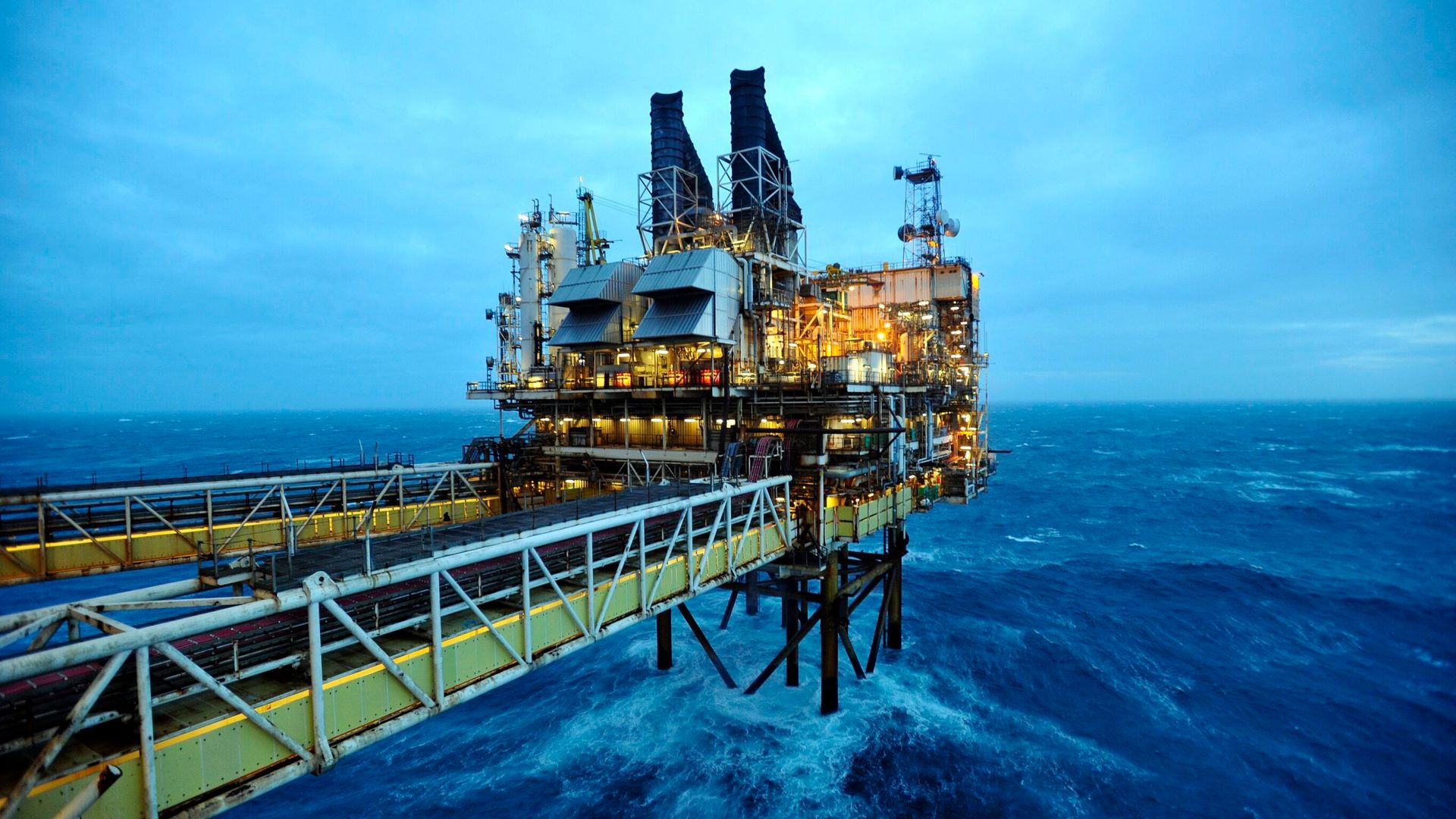
Every time an offshore safety body updates its physical fitness standards, the same predictable outrage machine fires up. Headlines scream that "overweight offshore workers could lose their jobs." Unions cry discrimination. Management hides behind vague liability waivers. Everyone argues about body mass index as if a number on a bathroom scale is the sole arbiter of who survives a North Sea ditching.
They are all arguing about the wrong thing. For an alternative view, consider: this related article.
The lazy consensus frames this as a simple battle between worker livelihoods and cold corporate bureaucracy. On one side, you have seasoned roughnecks, drillers, and technicians—men and women with twenty years of irreplaceable institutional knowledge—suddenly treated like walking liabilities because their waistlines expanded after two decades of twelve-hour shifts and mess-hall fried food. On the other side, you have safety regulators pointing to helicopter escape hatches and lifeboat weight capacities.
Both sides are missing the fundamental engineering reality of offshore survival. The issue is not that workers are getting heavier. The issue is that the industry is forcing twenty-first-century humans into mid-twentieth-century safety hardware, and then punishing the humans when the geometry fails. Similar insight on the subject has been published by Reuters Business.
The Physics of the Helicopter Window
If you want to understand why weight and body dimensions became a flashpoint in offshore oil, gas, and wind, stop reading HR memos and look at a Sikorsky S-92 or an Airbus H225 helicopter. Specifically, look at the emergency push-out windows.
When a helicopter hits the water, it almost always flips upside down. The engines and main gearbox sit on top of the cabin, making the aircraft top-heavy. Within seconds, the cabin fills with freezing, pitch-black seawater. Passengers have roughly thirty to sixty seconds to unbuckle, orient themselves while inverted, jettison the window, and pull themselves through an opening that was designed decades ago around a "standard" 1970s male anthropometric profile.
Regulators like the Civil Aviation Authority (CAA) in the UK and organizations like Oil & Gas UK (now Offshore Energies UK) did not wake up one morning and decide to fat-shame the workforce. They looked at survivability data from real accidents, including the tragic 2009 Cougar Flight 491 crash off Newfoundland and the 2013 Super Puma crash off Sumburgh. In disoriented, panicked, submerged conditions, shoulder width—specifically bideltoid breadth—determines whether a human being exits the fuselage or becomes a plug that traps everyone behind them.
Notice what I just said. Shoulder width. Not weight. Not BMI.
A bodybuilder with eight percent body fat and massive deltoids can get wedged in a helicopter escape hatch just as easily as a guy carrying fifty pounds of visceral fat around his midsection. Yet, because measuring bideltoid breadth at scale requires standardized anthropometric rigs and trained assessors, operators routinely fall back on crude proxies like Body Mass Index (BMI) or arbitrary weight caps.
That is where the system breaks down. Using BMI to determine offshore fitness is like using a hammer to check tire pressure. It is the wrong tool, it produces terrible data, and it alienates the exact workforce the industry claims to protect.
Why the BMI Metric is Junk Science for Manual Laborers
Let us dismantle the most persistent myth in occupational health. Body Mass Index was invented in the 1830s by Adolphe Quetelet, a Belgian mathematician and astronomer—not a physician—who was trying to define the "average man" for statistical sociology. He explicitly warned against using his formula to assess individual health.
Nearly two centuries later, offshore medical examiners still use Quetelet’s math to decide if a scaffold builder or crane operator is fit to fly.
I have watched companies blow millions in lost productivity and recruitment costs because they let rigid, poorly calibrated medical screenings sideline their best technicians. Imagine a scenario where a veteran subsea engineer—six-foot-two, 240 pounds, deadlifts 400 pounds, passes his Helicopter Underwater Escape Training (HUET) with zero hesitation—gets flagged as "high risk" during his biennial medical exam because his BMI crosses 30. Meanwhile, a sedentary 165-pound technician with severe cardiovascular plaque, atrocious VO2 max, and zero upper-body strength sails through the screening because his height-to-weight ratio looks neat on a spreadsheet.
Who do you want pulling you out of a burning module or hauling a weighted stretcher across a rolling deck?
The industry’s reliance on weight thresholds ignores three critical physiological realities:
- Muscle Density vs. Fat Volume: Muscle tissue is roughly 18 percent denser than adipose tissue. A muscular worker takes up less physical volume per pound than an obese worker, yet a simple scale penalizes them equally.
- Cardiovascular Reserve: In an offshore emergency—whether it is a fire on a production platform or a climb up a 100-meter wind turbine monopile—metabolic demand spikes instantly. A worker’s aerobic capacity and heat tolerance matter infinitely more than their mass.
- Functional Mobility: Can the worker climb a vertical ladder wearing a 15-pound survival suit and rebreather? Can they pull their own body weight through a restricted opening while submerged? A functional capacity evaluation answers this in ten minutes. A bathroom scale never will.
The Structural Hypocrisy of Offshore Catering
If operators were genuinely serious about metabolic health and weight management offshore, they would look at their own galleys before threatening anyone’s employment.
Spend two weeks on a standard production platform or drilling rig and observe the environment. Workers are isolated from their families for fourteen to twenty-one days at a time. They work grueling twelve-hour shifts—often rotating between days and nights, which wrecks circadian rhythms and spikes cortisol and ghrelin, the exact hormones that drive insulin resistance and fat storage.
And what is waiting for them when they come off shift?
An all-you-can-eat buffet heavy on refined carbohydrates, deep-fried proteins, and industrial seed oils, paired with unlimited sugary sodas and desserts. Offshore catering contracts are frequently awarded to the lowest bidder, and cheap calories are always dense, processed, and inflammatory. For decades, operators used high-calorie comfort food as a cheap morale booster to keep crews compliant during harsh rotations.
You cannot lock workers in a floating steel box, disrupt their sleep architecture, feed them hyper-palatable junk food three times a day, and then act shocked when their metabolic health deteriorates. Threatening termination over weight gain in an environment engineered to cause weight gain is peak corporate hypocrisy.
Answering the Questions Nobody Wants to Touch
When these rule changes hit the news cycle, workers flood search engines with frantic questions. Most HR departments answer them with sanitized, legally vetted non-answers. Let us deal with them directly.
Can an offshore company legally fire you for being overweight?
In most jurisdictions, obesity by itself is not a protected characteristic unless it is tied to an underlying disability or medical condition under laws like the UK Equality Act 2010 or the Americans with Disabilities Act. However, an employer cannot simply fire you for looking heavy. They can, however, legally bar you from working offshore if you fail to meet a bona fide occupational requirement—such as fitting through a certified emergency exit or not exceeding the Safe Working Load (SWL) of rescue winches and lifeboats. If a helicopter operator cannot legally transport you under aviation safety rules, your employer has grounds for capability dismissal if no onshore role exists. It is not about aesthetics; it is about regulatory compliance and physics.
What is the actual weight limit for offshore workers?
There is no single global weight limit, which is why the headlines are so misleading. What exists are equipment thresholds. In the UK North Sea, the CAA implemented rules requiring passengers whose shoulder width exceeds 55.9 cm (22 inches) to be seated next to push-out windows sized specifically for larger frames, and if a rig’s helicopter fleet lacks those larger exits, the worker cannot fly. Separately, rescue winches, fall-arrest harnesses, and Total Enclosed Motor Propelled Survival Craft (TEMPSC) lifeboats have strict rated capacities—often calibrated around an average passenger weight of 82.5 kg to 95 kg depending on the age of the vessel. If you put thirty 120-kilogram workers into a lifeboat rated for thirty 85-kilogram people, the davit cables can snap during launch. That is basic mechanical engineering, not HR policy.
How do you pass an offshore medical if you have a high BMI?
Stop trying to crash-diet two weeks before your OGUK or BOSIET medical. Rapid water loss dehydrates you, spikes your blood pressure, and makes you fail the cardiovascular screening instead. If your BMI is over 30, you will almost certainly trigger secondary testing: blood pressure monitoring, resting ECG, blood glucose panels, and potentially a step test or Bruce Protocol treadmill stress test. Focus entirely on cardiovascular conditioning and blood pressure control. If your resting heart rate is under 70, your blood pressure is below 130/80, and your blood work shows no untreated diabetes, a competent occupational physician will certify you fit—provided your physical dimensions do not violate helicopter seating restrictions.
The Uncomfortable Truth About the Contrarian Approach
Critics of strict weight and size rules argue that the industry should simply redesign the helicopters, widen the escape hatches, and upgrade every lifeboat davit across the globe.
As much as I despise lazy BMI cutoffs, I have to be honest about the downside of that counter-argument: the timeline and capital cost are brutal.
You cannot retrofit a global fleet of offshore helicopters overnight. Aviation certification through the FAA or EASA takes years and hundreds of millions of dollars in structural testing. Cutting a larger hole in a pressurized or semi-monocoque fuselage changes the stress distribution of the entire airframe. Similarly, replacing the lifeboats and launching davits on aging North Sea platforms—many of which are already slated for decommissioning within the next decade—is economically dead on arrival.
If we scrap physical limits entirely while waiting ten years for new airframes, people will die in preventable ditchings. When a helicopter goes down in six-meter swells, physics does not care about fairness, seniority, or labor law. If a passenger blocks the only exit, four other people drown behind them. That is the hard reality that safety regulators have to live with, and pretending otherwise is reckless.
What the Industry Actually Needs to Do
If operators, regulators, and unions want to stop this recurring war over worker weight, they need to abandon superficial metrics and overhaul how they manage human performance offshore.
First, replace BMI with functional and anthropometric reality. Measure shoulder width accurately using standardized calipers. Test actual aerobic capacity and strength-to-weight performance during survival training. If a 250-pound worker can fit through the window template in a wet suit and complete a simulated underwater escape without bottlenecking the cabin, let them work.
Second, audit the catering contracts. Stop treating offshore galleys like fast-food courts. Mandate high-protein, nutrient-dense whole foods, eliminate high-fructose beverages from mess halls, and bring in sports nutritionists who understand shift-work metabolism. When offshore operators actually invest in clean fuel for their crews, average body fat drops across the board without a single disciplinary threat.
Third, build real gyms and protect recovery time. Giving workers a rusted treadmill in a vibration-heavy corner next to the engine room is an insult. Modern offshore installations—especially new-build floating wind substations and deepwater drillships—must integrate properly equipped strength and conditioning spaces, coupled with shift schedules that stop brutalizing human sleep cycles.
Finally, stop hiding behind safety when the real motive is cost-cutting. Everyone in the industry knows that during downturns, strict medical and weight enforcement magically gets tighter. Companies use "fitness for duty" as a convenient, non-redundancy mechanism to trim an aging, expensive workforce without paying out severance packages. Regulators need to audit operators who weaponize medical standards during layoffs.
Blaming offshore workers for failing to fit into cramped, outdated rescue gear is the easiest cop-out in industrial safety. Fix the metrics, fix the food, and design equipment for the actual human beings running the rigs—or admit that your safety rules are really just a disguised layoff strategy.