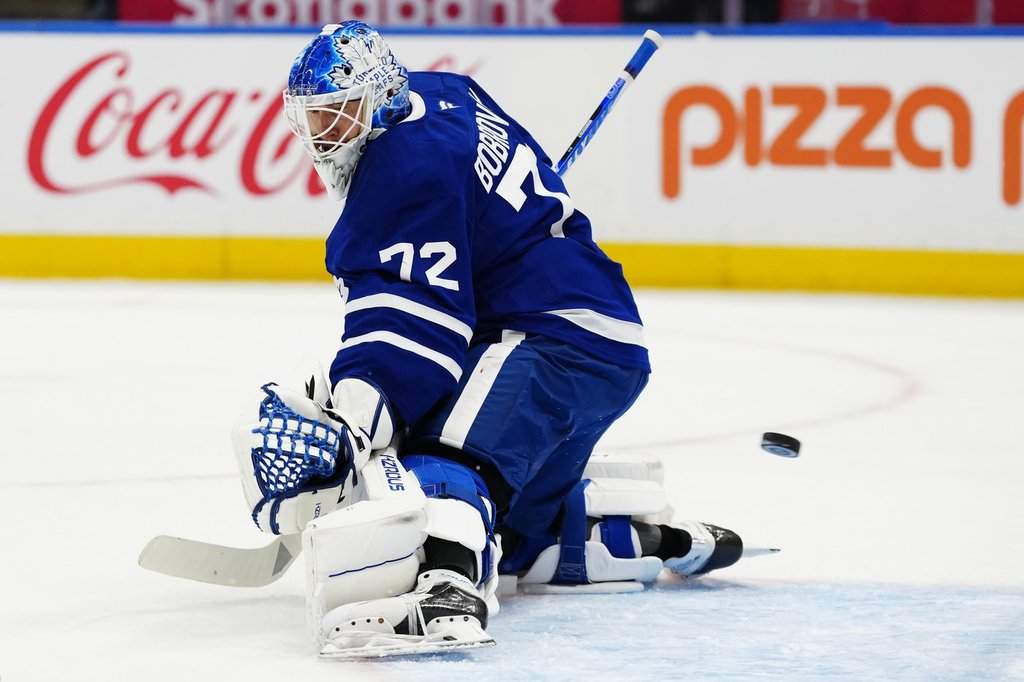
"Traction" is a comfort word for lazy hockey writers. It lets everyone off the hook.
Read the standard beat coverage on Sergei Bobrovsky and the Toronto Maple Leafs, and you get the exact same tired script: a 38-year-old two-time Stanley Cup champion is "chipping away," leaning on his famous routine, and waiting for puck luck and chemistry to turn. Meanwhile, the team around him is "finding its game" through a rough early patch. If you liked this article, you should read: this related article.
That framing is backwards. Wrong diagnosis. Wrong timeline. Wrong culprit.
Sergei Bobrovsky’s save percentage sitting in the upper .870s and his record sinking to 3-9-1 through mid-November are ugly. Giving up three or more goals in 13 of his first 14 starts after signing a three-year, $21 million contract—and trading away Joseph Woll to clear the runway—looks like a disaster on paper. Yet treating this as a slump waiting to be "chipped away" misses the structural reality of what Toronto actually bought. For another angle on this event, refer to the latest update from Bleacher Report.
The Lazy Consensus Around Routine and "Puck Luck"
The conventional wisdom says two things whenever a veteran goalie struggles in a new city: first, trust the process and the routine; second, give a new roster time to gel. Auston Matthews, Colton Sissons, and head coach Jim Hiller have all sung variations of that song, praising Bobrovsky’s professionalism while admitting the skaters haven’t given him enough help.
Polite dressing-room quotes are not scouting reports.
Routine does not stop cross-seam passes when your defensemen lose box-outs. Routine does not recover a puck when your forwards cough up 20 giveaways and get caved in along the walls. More importantly, a 38-year-old netminder with more than 800 NHL games on his body does not suddenly "forget" how to track pucks because of a calendar flip—he gets exposed when the defensive structure in front of him leaks high-danger chances night after night.
Even worse is the myth that Toronto’s problems started on opening night. Bobrovsky arrived in Toronto coming off a 2025-26 campaign in Florida where his regular-season save percentage dipped to .877 across 52 games. That wasn’t a random blip; it was a warning sign about age, wear, and dependence on system insulation. Toronto didn’t buy prime 2024-2025 championship armor. They paid $7 million a year—complete with a full no-movement clause through 2028-29—for a high-mileage veteran whose margin for error had already shrunk.
The Real Question: Why Did Toronto Pay for Past Performance Instead of Current Mechanics?
People keep asking: When will Bobrovsky and the Maple Leafs find their traction?
That is the wrong question. The real question is why a front office in the NHL’s most unforgiving market handed a three-year, $21 million commitment and a no-move clause to a 37-going-on-38 goaltender coming off an .877 season, while shipping out a younger netminder in Joseph Woll.
In modern NHL roster building, paying top-tier money for past rings and past Vezinas is one of the fastest ways to trap your cap and your crease. Goaltending is notoriously volatile year over year, and aging curves for goalies who rely on explosive lateral push and reaction speed do not bend upward just because a player carries a "consummate professional" reputation.
Think about how front offices evaluate goaltending when they get seduced by résumé gravity. Analysts and executives who study goalie volatility—from public analytics pioneers like Micah Blake McCurdy to tracking-era scouts—have shown for years that save percentage is heavily influenced by shot quality, rebound control, and defensive support, not just raw reflex saves. When a team ignores a declining baseline in favor of championship pedigree, it mistakes nostalgia for value.
I’ve watched front offices and sports organizations burn millions chasing big names at the end of a peak—paying for the version of a player they remember from two springs ago rather than the physical and tactical reality walking through the door today. Sometimes it works for a hot month. Usually, it leaves a roster stuck defending a sunk cost while the standings slip away.
Dissecting What Is Actually Happening in Toronto’s Crease
To see why the Maple Leafs are spiraling, separate three distinct mechanics that beat writers lump together as "finding traction":
- Rush and Slot Vulnerability: When a team struggles to get to the middle of the ice offensively and gets pinned or turned over in its own zone, its goalies face second and third efforts from close range. A veteran goalie who isn't moving as effortlessly laterally as he did at 32 gives up clean net-front rebounds and east-west tap-ins that inflate goals-against averages in a hurry.
- Workload Distortion: When your $7 million starter is leaking three-plus goals almost every night, every game feels like a must-stop-everything audit. That creates a psychological tax on both the goalie and the skaters—forwards press for offense because they feel they need four or five goals just to survive, which leads to looser defensive spacing and even more odd-man rushes.
- Depth Reality vs. Cap Allocation: Toronto has Anthony Stolarz—a massive 6-foot-6 goaltender on a team-friendly $3.75 million average annual value—who has shown he can handle heavier stretches without artificial workload caps. Yet the contract hierarchy and veteran deference keep pulling Toronto back toward Bobrovsky even when his numbers are dragging the team down.
Imagine a scenario where the Maple Leafs had split the crease purely on merit from week one—giving Stolarz the tougher matchups and riding whichever goalie actually controlled rebounds that week, regardless of contract size or career hardware. A 38-year-old veteran doesn’t need coddling; he needs protected minutes and a team that doesn’t treat him like a miracle worker. Instead, Toronto put maximum pressure on a declining asset while tying its own hands with a three-year guarantee.
Addressing the Questions Everyone Else Answers Softly
Can Sergei Bobrovsky bounce back over the rest of the 2026-27 season?
He can post better stretches—especially if Toronto’s skaters clean up turnovers, get healthy, and stop handing opponents free middle-ice looks. Bobrovsky’s compete level has never been the issue. Expecting him to magically turn back into a .920 workhorse for 60 games at age 38, though, is wishful thinking. His realistic ceiling now is a sheltered tandem or 1B option behind a strong defensive structure.
Is the problem mostly Bobrovsky or the Maple Leafs’ defense?
It’s a feedback loop, and pretending it’s 100% one or the other is dishonest. Toronto’s skaters have left him exposed with sloppy puck management, lost battles, and shaky team defense. At the same time, Bobrovsky hasn’t stolen games or bailed out mistakes the way elite starters must when a team is under pressure. When a leaky defense meets an aging goalie, six-goal nights stop being flukes and start becoming a pattern.
What should Toronto actually do right now?
Stop waiting for a magical "click" in routine. Run a true merit-based crease with Anthony Stolarz getting real runway—there are no workload restrictions holding him back—and cut Bobrovsky’s exposure until his rebound control and save metrics actually stabilize. Simultaneously, tighten up neutral-zone exits and slot coverage so Toronto isn't asking its goalies to win track meets every night.
Where This Contrarian Take Can Burn You
I’ll own the risk of pushing back on a future Hall of Fame caliber goalie: veteran netminders with championship DNA have a history of making critics look foolish in small samples. If Toronto’s lineup stabilizes, injuries clear up, and Bobrovsky strings together a sharp three-week run, calling the signing a structural mistake will look harsh in the short term.
There’s also a locker-room cost to benching or cutting back a respected veteran. Players notice when a high-profile teammate gets sidelined, and if the replacement doesn't hold the fort, the noise around the room gets even louder.
Still, in a salary-cap league, protecting feelings or reputations is a luxury bad teams can’t afford. You don’t fix a broken crease by repeating "he’s a great pro" after another six-goal loss. You fix it by stopping the bleeding in front of the net, playing the goalie giving you the best chance tonight, and admitting that paying for yesterday doesn’t buy a single save today.