The environmental commentariat has settled on a tidy, comforting narrative. A recent thousand-year ecological reconstruction out of Victoria’s Croajingolong National Park points an accusing finger backward across the centuries, arguing that British colonisation in 1788 halted Indigenous cultural burning, transformed open woodlands into dense, uniform forests, and locked south-east Australia into a catastrophic wildfire loop.
It sounds sophisticated. It cites deep history. It provides a neat historical villain for every scorched acre of eucalypt canopy.
It is also a dangerous operational distraction.
Pinning our modern infernos primarily on structural changes set in motion two hundred and thirty-eight years ago lets contemporary land managers, risk-averse urban regulators, and modern bureaucratic inertia completely off the hook. We are romanticising pre-colonial land management as an easily scalable drop-in plugin for a 21st-century continent choked by red tape, legal liability, and sprawling exurban housing developments.
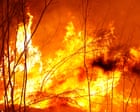
Let us look at the actual mechanics. The premise of the study is correct in its micro-history: Indigenous fire regimes relied on frequent, low-intensity mosaic burning that cleared understory fine fuels and maintained open canopies. When European settlement interrupted those practices, the absence of regular fire allowed woody biomass to accumulate. Eucalypts, evolutionarily addicted to fire, thickened into dense stands. When ignition finally happens under modern climatic pressure, the sheer volume of accumulated fuel turns a manageable ground sweep into an apocalyptic crown fire.
Here is where the consensus breaks down. The academic finger-pointing stops at colonisation as if history froze in 1788 and modern forestry policy has been entirely blameless ever since.
I have watched state forestry budgets, local council zoning boards, and environmental litigation offices choke off the exact mitigation work required to break this loop. We do not suffer merely from a centuries-old colonial hangover; we suffer from modern bureaucratic paralysis. Try running an extensive hazard-reduction burn across public land today. You will navigate a labyrinth of flora and fauna impact studies, air-quality complaints from urban centres hundreds of kilometres away, tight seasonal weather windows, and the suffocating shadow of civil liability if a backburn escapes containment.
The result? Fuel loads accumulate exponentially faster than bureaucracies can issue permits.
Blaming colonisation offers a theological explanation for a mechanical failure. It turns an engineering and operational crisis into a historical grievance. If the root cause is structural colonisation, then the solution feels abstract, generational, and inextricably bound to macro-political reconciliation. That absolves the local fire commissioner who cancelled three consecutive hazard-reduction windows because the wind direction shifted five degrees or because a minor lobby group filed an injunction to protect a beetle habitat.
Imagine a scenario where we magically restore cultural burning across every acre of public timberland tomorrow morning without changing a single modern environmental statute or liability law. It would fail. Why? Because the landscape has fundamentally changed, our infrastructure footprint has expanded deep into the bush-urban interface, and our legal frameworks treat every stray spark as a prosecutable catastrophe rather than an ecological tool.
To dismantle the modern wildfire loop, we have to look past 1788 and examine what is happening right now.
First, we must redefine hazard reduction not as a discretionary environmental luxury, but as heavy industrial asset protection. This means accepting short-term ecological disruption—smoke, charred bark, temporary habitat displacement—as the mandatory price of long-term forest survival. Right now, clean-air panic in capital cities dictates regional burn programs, ensuring that small amounts of controlled smoke are traded for catastrophic, uncontainable walls of carbon during fire season.
Second, we have to reform the liability frameworks governing land management. When private landowners or local authorities are legally crucified for a hazard reduction burn that breaches a containment line, they choose the path of least resistance: do nothing, let the fuel build, and pray for rain. As long as inaction carries zero legal penalty while proactive burning carries existential liability, forests will continue to turn into tinderboxes.
Third, stop pretending we can return to a pristine pre-colonial wilderness while millions of citizens live in subdivisions carved directly into high-risk eucalypt forests. The wildland-urban interface is a modern design failure. You cannot manage a modern suburb surrounded by dry sclerophyll forest with sixteenth-century burning techniques alone. It requires aggressive zoning restrictions, mandatory clearing zones, and building codes that treat fire as an absolute architectural certainty.
The study out of Victoria provides valuable data on how landscapes evolve under shifting management regimes. But using it as an all-encompassing explanation for contemporary bushfire crises is intellectually lazy. Colonisation loaded the gun, but modern bureaucracy, legal cowardice, and regulatory bloat are pulling the trigger every single summer.
Stop waiting for a historical reset that will never arrive. Clear the fuel, rewrite the liability laws, and accept that managing a living forest requires getting your hands dirty today.