The mainstream sports desks are doing exactly what they always do when the middle jewel of the Triple Crown rolls around. They are falling in love with a narrative.
With Kentucky Derby winner Golden Tempo bypassing Saturday's 151st Preakness Stakes to wait for the Belmont at Saratoga, the corporate turf writers are panicking. They are desperately trying to manufacture a rivalry out of a deeply flawed field. They want you to believe that Chad Brown taking the blinkers off Iron Honor (9-2) is a masterstroke. They want you to believe that Brittany Russell’s undefeated local star Taj Mahal (5-1) is destined to make history from the rail. They want you to buy into the class-relief angle for Incredibolt (5-1) or the late-closing magic of Ocelli (6-1).
It is total nonsense.
I have watched public money get incinerated on these exact assumptions for two decades. The public handicappers look at the graded stakes pedigrees, check which jockey has the highest winning percentage, and bet the board down until there is zero value left. They are asking the wrong question. They are asking who is the best horse?
The correct question for the 2026 Preakness is far more mechanical: Which horse will survive a catastrophic pace meltdown on a track layout none of these trainers actually understand?
This is not Pimlico. Old Hilltop is currently a pile of rubble undergoing a multi-million-dollar modern overhaul. For the first time in history, the Preakness is being run at Laurel Park. That single geographical shift completely invalidates every historical trends model the public is relying on this week.
The Laurel Park Illusion Dismantling The Home Track Advantage
Let us start with the "lazy consensus" surrounding Taj Mahal. The bay colt is three-for-three at Laurel. He won the Federico Tesio Stakes right here on this dirt. The narrative writes itself: a local hero, trained by Maryland standout Brittany Russell, staying in his own backyard while the out-of-towners try to find the bathrooms.
It is a trap.
Look closer at how Taj Mahal won those races. He did it by controlling the pace from the front against regional horses who lacked the early speed to look him in the eye. On Saturday, he breaks from the absolute worst spot on the racetrack: the No. 1 post.
Imagine a scenario where an undefeated front-runner gets pinned to the rail with a dozen horses screaming down his throat into the first turn. Laurel Park features a shorter run from the gate to the first turn at the 1 3/16-mile distance than the traditional configuration at Pimlico. If Sheldon Russell does not send Taj Mahal with absolute, foot-to-the-floor urgency, he will get buried in sand by the time they hit the backstretch. If he does send him, he triggers a suicide mission.
And he will not be alone.
The Speed Trap Why The Favorites Are Set Up To Fail
This field is choked with horses that only know how to do one thing: run fast early and pray for mercy late.
- Chip Honcho (5-1): Steve Asmussen’s colt is a weapon when he is on or near the lead. His best career performances, including his second in the Risen Star, came when he dictated the terms. When they tried to rate him in the Louisiana Derby? He completely collapsed. Jose Ortiz has no choice but to send him.
- Napoleon Solo (8-1): Chad Summers’ trainee won the Champagne Stakes at two by blazing early fractions. He has zero interest in sitting back and waiting. Joel Rosario will be applying heat from the outside.
- Corona de Oro (30-1): A massive longshot who only improved when Dallas Stewart started letting him use his natural gate speed. John Velazquez is not taking back.
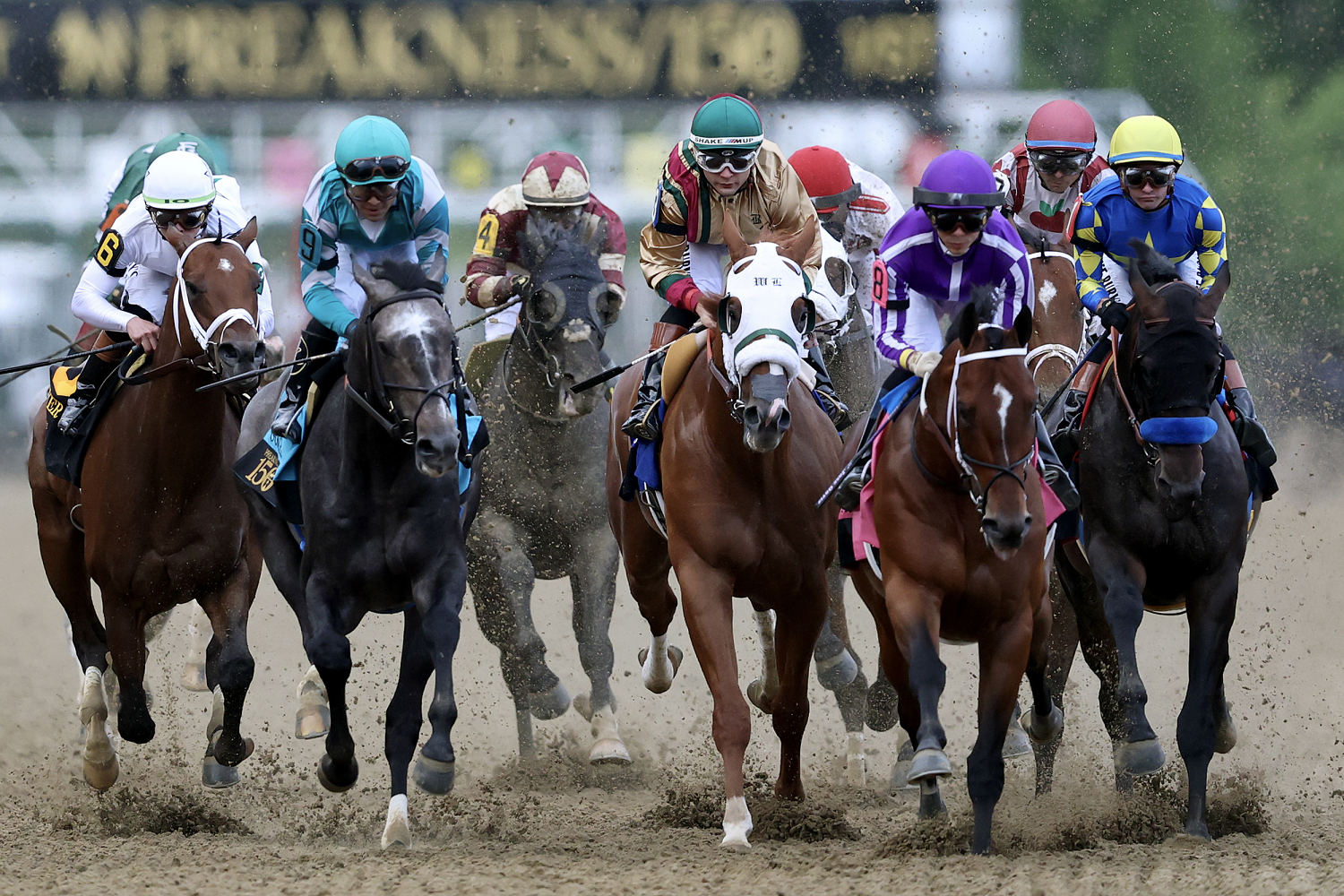
When you have Taj Mahal trapped on the rail, Chip Honcho needing the lead to function, and Napoleon Solo pressing from the outer posts, the opening half-mile is going to look like a quarter-horse sprint.
The public is betting Iron Honor at 9-2 because they assume Chad Brown removing the blinkers means the colt will suddenly relax, sit fourth or fifth, and pass tired horses. That is a fundamental misunderstanding of equine psychology. Iron Honor chased frantic fractions in the Wood Memorial and quit like a scolded dog, finishing a dismal seventh. Removing equipment does not magically turn a high-strung speed merchant into a patient sniper overnight. He is still going to want to push forward, and at short odds, he is a massive underlay.
Dismantling The "People Also Ask" Consensus
The public betting pools are driven by flawed premises. Let us address the two biggest lies being circulated in the betting lines right now.
Misconception 1: Ocelli finished third in the Kentucky Derby, so he is the class of this field and the logical closer to inherit the piece.
This is a classic recency bias trap. Ocelli was 28-1 in the Blue Grass and an astronomical 71-1 in the Derby. He ran the race of his life two weeks ago because the track at Churchill Downs was favoring his exact closing style that afternoon, and he saved every inch of ground on the rail under Tyler Gaffalione. Now, because the top two finishers skipped Baltimore, he is going to be bet down to 6-1.
Betting a horse at 6-1 who was 71-1 two weeks ago is how horseplayers go broke. Ocelli is still a maiden. He has never won a race. Relying on a horse who does not know how to cross the wire first to bail you out in a Grade 1 event is a losing proposition.
Misconception 2: Incredibolt won the Virginia Derby by four lengths with a 100 speed rating, making him the safest bet outside of the top three.
Riley Mott has done a fantastic job with Incredibolt, but that 100 speed rating from March is an outlier. It was achieved with total class relief against a regional field. In his prior start in January, the Holy Bull Stakes at Gulfstream, he faced elite top-tier competition and finished last by a mile. He is a flat-track bully. When the pressure gets turned up in the middle of the backstretch on Saturday, he will revert to form.
How To Actively Exploit The Board
If the front-runners melt each other down, and the short-priced closers are massive underlays, where do you look? You look for the battle-tested grinders who do not mind taking dirt in their face and are trained by conditioners who specialize in crashing the Triple Crown party.
You look at Talkin (20-1).
Danny Gargan knows exactly what he is doing here. He bypassed the Kentucky Derby entirely to point this horse specifically for this race. While the rest of the field was getting beat up in Louisville, Talkin was freshening up. Yes, he was beaten by double-digit lengths in the Blue Grass, but that race was an anomaly where the winner ran an impossible, freakish figure. Despite the margin, Talkin actually recorded his own career-best speed rating that day.
He gets Irad Ortiz Jr. in the irons. From post 5, Talkin has the tactical versatility to sit completely detached from the early fireworks. While Taj Mahal, Chip Honcho, and Napoleon Solo are carving each other up through a internal fractional war, Talkin can sit seven lengths back, completely in the clear, waiting for the real estate to open up turning for home. Gargan pulled off this exact type of ambush in the 2024 Belmont with Dornoch at 18-1.
If you want an even deeper stab to throw into your exotic wagers to ensure a massive payday, ignore the running lines for Corona de Oro (30-1) and look at the man saddling him. Dallas Stewart has made a career out of finishing second in Triple Crown races with massive, unconsidered longshots. He did it with Commanding Curve at 37-1 in the Derby. He did it with Tale of Verve at 28-1 in the Preakness. If Velazquez can convince this colt to let the true maniacs go early, he is exactly the type of horse that grinds away to fill out a $2,000 trifecta while the favorites are stopping to a walk.
Stop listening to the sports desk anchors talk about pedigree. Saturday is not about who has the prettiest bloodline; it is an exercise in structural survival. Bet the collapse.