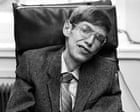
The mainstream media loves a "stars, they're just like us" moment, especially when it involves a dead genius. Recently, a wave of breathless reporting surfaced around the release of Frank Hawking’s diaries. The collective internet gasped because Stephen Hawking’s father worried his college-aged son "does not study much." The headlines framed it as a comforting anecdote for slackers everywhere: Look, even the greatest mind of a generation was lazy!
This interpretation is fundamentally wrong. It is a lazy consensus built by people who measure productivity in desk hours rather than cognitive output.
Frank Hawking’s anxiety wasn't proof that Stephen was coasting. It was proof that the traditional educational system—and the patriarchal expectations of the mid-20th century—completely misunderstood how breakthrough intellect actually operates. We are still making the same mistake today. We confuse performative busyness with actual brilliance.
The Tyranny of the Hourglass
The diaries reveal that during his time at Oxford, Hawking estimated he studied about a thousand hours over three years—roughly an hour a day. To a traditionalist like his father, a medical researcher accustomed to meticulous, linear lab work, this looked like a moral failure.
But linear effort does not yield non-linear results.
In theoretical physics, as in any highly abstract creative field, progress doesn't happen by staring at a page for eight hours. It happens through intense, concentrated bursts of deep thought, often punctuated by long periods of incubation.
Linear Productivity: Time Spent ∝ Output Produced
Non-Linear Productivity: Insight Generated = (Intensity of Focus)^2 × Selective Incubation
When you are fundamentally reshaping our understanding of spacetime, quantum mechanics, and black holes, you are not checking off a to-do list. You are synthesis-mapping.
Frank Hawking wanted a son who memorized textbooks. Stephen Hawking was a man who questioned the math inside the textbooks. The elder Hawking’s worry wasn't an indictment of Stephen's work ethic; it was a symptom of a mismatched metric.
The "Average Student" Illusion
Biographers often point to Hawking's mediocre grades at Oxford as further evidence of his early laziness. He famously ended up on the borderline between a first- and second-class degree, needing an oral examination to secure his spot at Cambridge.
People look at this and ask: How could a genius be so average?
They ask the wrong question. The premise is flawed because it assumes standard university exams in the 1960s were designed to measure exceptional, disruptive thought. They weren't. They were designed to measure compliance, retention, and adherence to established paradigms.
Genius is rarely compliant.
I have spent decades watching brilliant minds stall out in corporate and academic environments because they refuse to jump through the arbitrary hoops set by bureaucratic gatekeepers. The smartest person in the room is often the one looking out the window, processing variables the professor hasn't even considered. Hawking wasn't failing Oxford; Oxford's rigid structure was failing to engage a mind that operated on a different frequency.
The Downside of Disruption
To be clear, this contrarian approach to work carries immense risk. If you adopt the "Hawking model" without possessing the raw, compensatory cognitive hardware, you will simply fail.
- The Hazard: Most people who study one hour a day aren't incubating revolutionary theories about singularity; they are just distracted.
- The Reality: The line between a misunderstood visionary and a genuinely lazy underachiever is razor-thin and only validated by the final output.
If you choose to reject the grind, your results must be undeniable. Hawking delivered the results.
Dismantling the People Also Ask Nonsense
Look at the algorithmic queries surrounding this news cycle. The questions betray a desperate desire for a shortcut.
Did Stephen Hawking have a high IQ?
Who cares? The obsession with IQ scores is a metric for the unimaginative. Hawking himself famously told the New York Times in 2004 that "people who boast about their IQ are losers." An IQ score measures the ability to solve predefined puzzles within a closed system. True genius redefines the system itself.
How many hours did Stephen Hawking study?
Asking this question proves you missed the point entirely. The exact number of hours is irrelevant. What mattered was his radical selectivity. He filtered out the noise—the rote memorization, the busywork, the academic posturing—and focused entirely on the core existential questions of cosmology.
The Cult of Performative Exhaustion
We live in a culture that worships the grind. Founders brag about 100-hour workweeks. Students pull all-nighters to brag about their lack of sleep on social media.
This behavior is a defense mechanism for mediocrity.
When you lack the ability to produce high-leverage insights, you compensate with volume. You stay late at the office. You send emails at 3:00 AM. You make sure everyone sees you working.
Frank Hawking’s diary entries are a historical mirror of this modern sickness. He saw his son relaxed, talking with friends, listening to classical music, and assumed nothing was happening. He couldn't see the cognitive machinery running in the background.
We must stop measuring the value of intellectual work by the physical toll it takes on the worker. The brain does not operate like a factory assembly line. Exhaustion is not a badge of honor; it is a sign of inefficiency.
The Actionable Pivot: Brutal Selectivity
If you want to apply the actual lesson of Hawking’s early life, you need to abandon the consensus advice of "work harder." Instead, execute a strategy of brutal selectivity.
- Identify the Lever: Find the one problem in your domain that, if solved, renders all other problems irrelevant.
- Starve the Noise: Ruthlessly eliminate the administrative tasks, meetings, and superficial readings that exist only to make you feel productive.
- Accept the Friction: Be willing to let people think you are lazy. Let your peers out-hustle you on the small stuff while you out-think them on the macro level.
Frank Hawking wanted his son to be a conventional success—predictable, safe, and easily measurable. Had Stephen listened to his father's anxieties and forced himself into the mold of a dutiful, grind-oriented student, he might have become a perfectly adequate laboratory assistant.
Instead, he chose the terrifying luxury of unhurried, unstructured thought. He allowed himself the space to be bored, to drift, and ultimately, to see the universe clearly.
Stop counting your hours. Start counting your insights. Everything else is just noise.