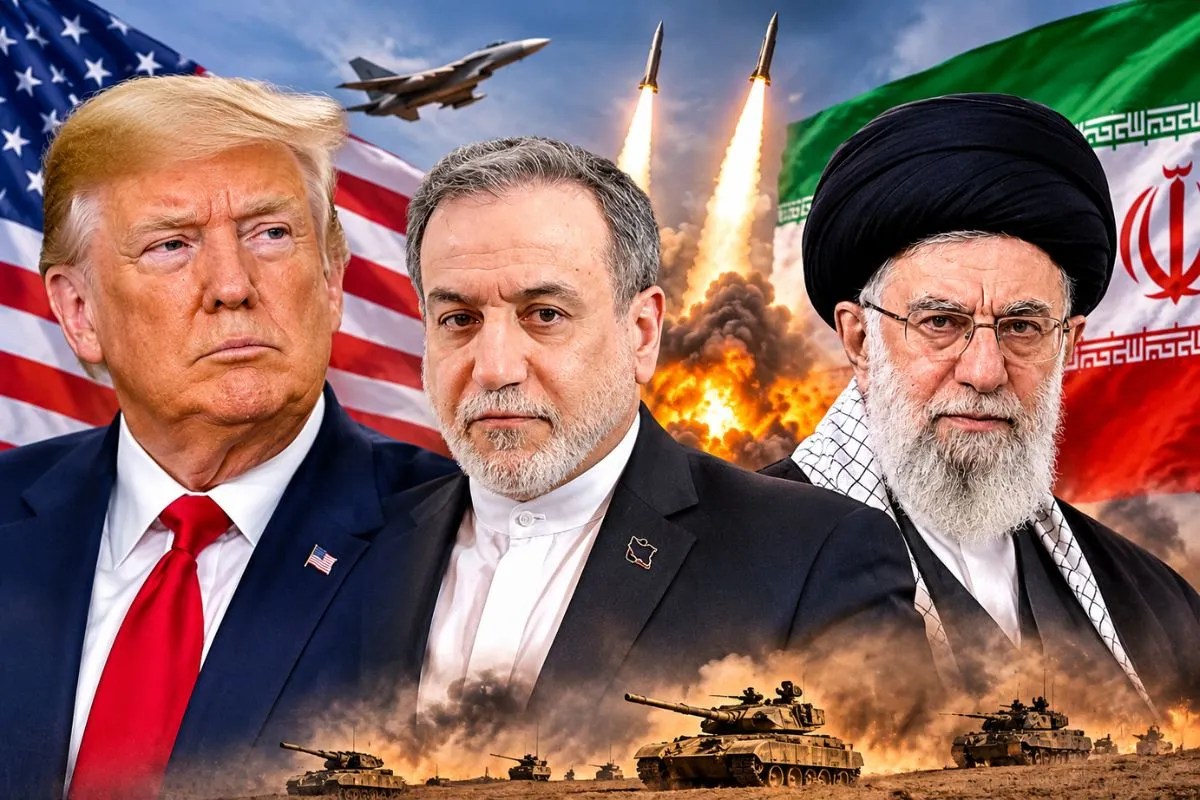
The media ecosystem thrives on a comfortable narrative: three nuclear or near-nuclear powers are stumbling blindly toward accidental total war. Cable news experts frame every missile strike, proxy clash, and naval intercept as a tragic breakdown in diplomacy—a sudden, unexpected spike in volatile tensions between Iran, Israel, and the United States.
That narrative is fundamentally wrong.
What the mainstream analysis labels as escalating chaos is actually a highly calculated, institutionalized equilibrium. Washington, Tehran, and Jerusalem are not trapped in a chaotic tailspin. They are running a predictable, mutually beneficial business model of controlled friction. The media calls it a crisis. In reality, it is the status quo.
The Myth of the Accidental War
The lazy consensus relies on a flawed premise: that leaders in Washington, Tehran, and Jerusalem wake up every morning desperately trying to achieve regional peace, only to be thwarted by misunderstandings.
Look at the actual mechanics of conflict over the past decade. When a state strike occurs, it is preceded by days of diplomatic back-channels, back-alley warnings through third parties, and calibrated target selection designed specifically to minimize untoward casualties while maximizing press coverage. Signals are telegraphed. Targets are scrubbed. Responses are delayed precisely to allow the target nation time to prep air defense grids.
This is not wild escalation. It is choreography.
The illusion of imminent, total disaster serves a specific domestic function for every government involved:
- Tehran relies on the external American and Israeli threat to justify domestic economic austerity, suppress internal dissent, and legitimize its paramilitary footprint across the Levant.
- Jerusalem leverages perpetual existential threat matrix logic to maintain military aid, unify fragmented political coalitions, and justify strategic preemptive action across its borders.
- Washington uses regional volatility to justify a global naval presence, validate multi-billion-dollar defense procurement pipelines, and secure energy transit routes under the guise of stabilizing global markets.
True peace would ruin the business model for all three.
Deconstructing the "Tension Spike" Myth
The standard article on Middle Eastern geopolitics treats every military engagement like a fresh shock. This ignores the structural dynamics that make low-level confrontation the safest long-term bet for political survival.
The Myth of the Mad Mullahs
The conventional view frames Iran’s leadership as ideological fanatics eager to provoke a final apocalyptic clash.
The reality is colder. The Iranian political establishment is obsessed with regime survival above all else. They know a full-scale direct war with the United States is the one scenario guaranteed to end their rule. Every action Tehran takes—from funding regional non-state actors to expanding enrichment capabilities—is designed to raise the cost of an invasion to prohibitive levels, not to provoke one. They do not want total war; they want cheap leverage.
The Myth of the American Lifeline
The media assumes the United States provides unconditional support to Israel out of sheer ideological alignment or domestic lobbying pressure alone.
In practice, the strategic utility of the relationship is far more pragmatic. The U.S. uses its security architecture in the region to enforce a containment sandbox. By maintaining strict control over weapon supplies and intelligence sharing, Washington buys veto power over Israel's most extreme strategic options. The goal isn’t to erase conflict—it’s to keep the fire contained to a manageable burn.
The Myth of Deterrence
Defense analysts endlessly debate whether sanctions or strategic strikes "restore deterrence."
Deterrence, as defined by foreign policy think tanks, assumes both sides want zero conflict. But when low-intensity conflict serves domestic political needs, deterrence is a myth. Neither side wants zero kinetic activity. They want calibrated, predictable kinetic activity.
| Strategic Goal | Mainstream Narrative | Operational Reality |
|---|---|---|
| Iranian Enrichment | Seeking immediate nuclear breakout | Creating permanent leverage without triggering invasion |
| U.S. Troop Presence | Defending regional democracies | Maintaining maritime control & defense contractor demand |
| Israeli Operations | Eliminating existential threats | Managing security borders within political constraints |
| Proxy Warfare | Ideological expansionism | Low-cost strategic depth to avoid direct confrontation |
The Real Winner: The Defense-Industrial Complex
Follow the capital. When headlines trumpet rising tensions, market capital doesn't flee the defense sector—it floods in.
I’ve sat in rooms with defense contractors and policy architects who quietly admit the obvious: a completely peaceful Middle East is a commercial disaster. The persistent threat of regional war drives global demand for state-of-the-art missile defense systems, drone interception tech, and intelligence platforms.
When an interceptor missile downs a drone over the Red Sea, that isn't just a military engagement. It is a real-time product demo for foreign military sales. Every strike validates next year's defense budget allocations in Washington, Tel Aviv, and European capitals.
       [ Regional Threat Narrative ]
                    │
                    ▼
       [ Expanded Defense Budgets ]
                    │
                    ▼
   [ Advanced Systems Procurement & Testing ]
                    │
                    ▼
     [ Calibrated Threat Maintenance ]
                    │
                    └───────► (Repeat)
The system feeds itself. The crisis isn't breaking the machine; the crisis is the machine.
Stop Asking When the Escalation Will End
People ask the wrong question. They look at headline-making strikes and ask, "Is this the start of World War III?"
The short answer is no. World War III is bad for business, terrible for regime survival, and impossible to control.
The correct question is: "How much conflict is required to maintain the current political and economic balance?"
The answer is exactly as much as you are seeing right now.
The threat of war must remain high enough to justify defense spending, maintain internal political unity, and preserve regional leverage—but strictly capped to avoid a total systemic collapse.
What looks like strategic failure to an outside observer is, from an institutional perspective, an ongoing success. The tensions aren't rising because diplomacy failed. They are rising because tension is the precise instrument all three players use to maintain power.
The next time you read a breathless report about escalating hostilities in the region, don't wait for the resolution. The escalation is the resolution.