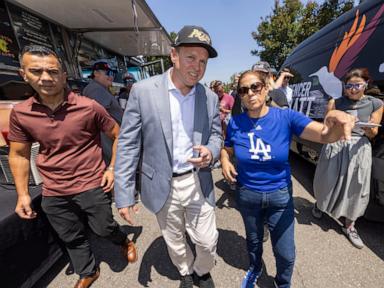
You probably remember him as the bleach-blonde, crystal-loving instigator who spent the late 2000s orchestrating drama on MTV’s The Hills. For over a decade, Spencer Pratt was the guy America loved to hate. But over the last few months, he managed to do something far more shocking than any reality television storyline. He turned the race for Los Angeles mayor completely upside down, securing millions of views, raising millions of dollars, and coming within a razor-thin margin of making the November runoff.
The political establishment laughed when he announced his candidacy. They aren't laughing now. Even though progressive City Councilmember Nithya Raman ultimately overtook him as the late mail-in ballots were counted, Pratt’s upstart, chaotic run exposed deep fractures in the city.
This wasn’t just a vanity project. It was a symptom of a deeply frustrated electorate, fueled by a devastating natural disaster, powered by artificial intelligence, and backed by some of the most powerful names in national politics. If you want to understand why local governance feels so broken to so many people right now, you need to look at how a reality TV villain almost won the keys to City Hall.
From The Hills to the Ashes of the Palisades Fire
Every wild political campaign needs a turning point. For Pratt, it was literally a baptism by fire. In January 2025, the catastrophic Palisades wildfire ripped through Southern California, destroying thousands of structures. Among the ash and ruins were the homes of Spencer Pratt and his parents.
Instead of retreating into celebrity privilege, Pratt weaponized his grief and anger. He spent months filming the charred remains of his neighborhood, posting raw, unfiltered videos to TikTok and Instagram. He didn’t just mourn; he blamed. He targeted incumbent Mayor Karen Bass and Governor Gavin Newsom, slamming what he called a slow, bureaucratic disaster response and a total lack of accountability.
When he officially launched his campaign on the one-year anniversary of the fire, it struck a nerve.
"Business as usual is a death sentence for Los Angeles, and I'm done waiting for someone to take real action," Pratt told a crowd at his announcement rally. "This just isn't a campaign—this is a mission, and we are going to expose the system."
For Angelenos tired of soaring housing costs, visible homelessness, and sluggish 911 response times, Pratt’s rage felt authentic. He wasn't talking like a politician because he wasn't one. He was a pissed-off homeowner who lost everything, and that resonated far beyond his old MTV fanbase.
The AI Weapon and the Fight for the Screen
Pratt didn’t run a traditional campaign because he couldn't afford to play by the establishment's rules. Instead, he treated the mayoral race like a media property. His strategy relied heavily on high-concept, viral digital content that bypassed traditional news outlets completely.
He made national headlines by deploying aggressive, surreal AI-generated advertisements. One viral clip depicted Pratt as Batman, swooping over a burning Los Angeles skyline to save the city. Another featured an AI-rendered battle where he fought Karen Bass with lightsabers. These videos weren't just funny; they racked up tens of millions of views, giving him massive name recognition without spending a dime on traditional television ad buys.
But it wasn't all deepfakes and memes. When Pratt showed up to the first televised mayoral debate, political analysts expected him to get shredded on policy details. He didn't. He delivered a commanding, hyper-aggressive performance, directly attacking both Bass and Raman. He leaned heavily into his reality TV training, knowing exactly how to command a camera, when to interrupt, and how to deliver a punchy soundbite that would dominate the next morning's news cycle.
The Math Behind the Red Mirage
When the polls closed on primary night, it looked like Pratt had pulled off the impossible. Early returns from early mail-in ballots and Election Day voters put Karen Bass in first, but Pratt sat comfortably in second place. He held a distinct six-percentage-point lead over Nithya Raman.
Under California’s jungle primary system, the top two finishers advance to the general election, regardless of party affiliation. For a few days, LA was staring down the literal reality of a Bass vs. Pratt showdown in November.
Then the "Red Mirage" faded.
In Los Angeles, mail-in ballots can be postmarked up to Election Day and take days to count. Historically, progressive and registered Democratic voters hold onto their ballots until the absolute last minute. As the Los Angeles County Registrar-Recorder updated the tallies over the weekend, Pratt's lead shrank. Raman gained tens of thousands of votes with each batch.
- Karen Bass: 34.3%
- Nithya Raman: 28.5%
- Spencer Pratt: 25.8%
By the time 93% of the vote was counted, Raman had pulled ahead, locking Pratt out of the runoff. The shift was so dramatic that it drew accusations of a "rigged election" from Donald Trump on Truth Social, who had previously praised Pratt as a "character" and expressed hope that he'd do well. Pratt himself hinted at conspiracy theories on social media, complaining about a net swing of 43,000 votes against him after election night.
But the reality wasn't fraud; it was just regular Los Angeles voting patterns. The city’s massive progressive base simply showed up late to the box.
Real Money and Serious Endorsements
It's easy to dismiss Pratt's run as a joke, but the financial disclosures show he was a heavyweight. He didn't just rely on small-dollar internet donations. He raised over $3.7 million, actually out-fundraising Karen Bass’s $3.2 million and completely eclipsing Raman’s $980,000.
His campaign attracted a bizarre coalition of backers. On one side, he had the MAGA establishment, including an endorsement from Richard Grenell, Trump’s former presidential envoy. On the other side, he won over thousands of moderate, fed-up homeowners who typically vote blue but felt completely abandoned by the city's current leadership.
He pushed policy ideas that were radical for deep-blue LA. He advocated for forensic performance audits of every city program, a total rejection of defund-the-police rhetoric, and mandatory medical treatment for unhoused individuals rather than the city's current "Inside Safe" motel-housing strategy.
Critics rightly pointed out that his plans for involuntary psychiatric holds would face insurmountable legal hurdles. But to a voter walking past tent encampments every day, his bluntness sounded like a real solution.
What Happens to the Angry Voter Now
Spencer Pratt is out of the race, but the anger that fueled him hasn't gone anywhere. The upcoming November runoff between Karen Bass and Nithya Raman will be a bitter fight between two distinct wings of the Democratic party.
Bass is vulnerable. Pulling less than 35% as an incumbent proves that Angelenos are frustrated with the status quo. Raman is going to attack her from the left on housing and police spending, while Bass's team is already framing Raman as an extremist who allows encampments near schools.
If you voted for Pratt, or if you're just someone who wants to see actual change in how Los Angeles handles its crises, you don't have to check out of the process just because your candidate lost. Here is how you can actually channel that frustration into local action right now:
- Track the Forensic Audits: Pratt hammered the city on wasting money. You can hold the current City Council accountable by tracking the actual controller reports on housing programs. Look at where the money goes, not just the press releases.
- Show Up to Council Meetings: Nithya Raman’s district (District 4) and others hold public comment periods. If you hate the current approach to local encampments or slow 911 responses, voice it directly where it gets recorded into the public file.
- Focus on the Neighborhood Councils: City Hall feels distant, but LA has 99 local Neighborhood Councils. They have a direct line to the mayor's office and control local budget grants. If you want to fix your neighborhood after a fire or disaster, start there.
Pratt’s campaign proved that the old way of doing politics in Los Angeles is officially dead. You don't need the backing of the local party machine to shake up the system anymore. All you need is a smartphone, a clear enemy, and a population that has simply had enough.


.png)