For weeks, the silence of the sprinkler was the loudest sound in Calgary. It was a phantom noise, a memory of summer mornings when the rhythmic thwack-thwack-thwack of water hitting grass signaled that all was right with the world. Instead, we lived with a strange, communal tension. We looked at our neighbors’ yellowing lawns not with judgment, but with a shared, somber solidarity. We were a city holding its breath, waiting for a pipe to heal.
The crisis didn't start with a roar. It started with a catastrophic break in a feeder main—a massive concrete artery that most of us never knew existed until it failed. Suddenly, the simple act of washing a dish or taking a three-minute shower felt like a moral calculation. We were told to save every drop. We were told the city’s reservoir was a ticking clock. And we listened.
The Anatomy of a Thirsty City
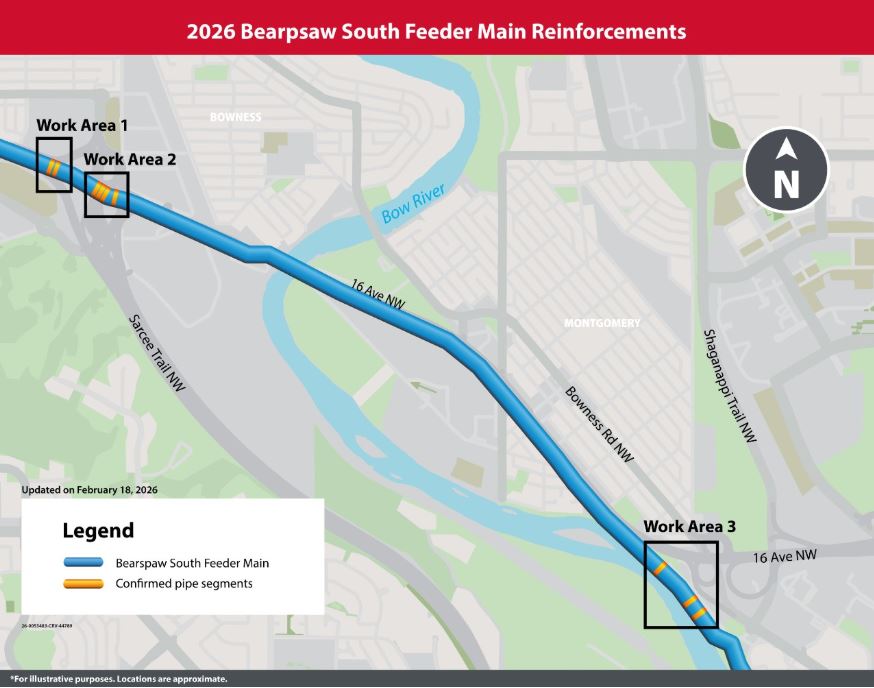
To understand why a single pipe could bring a metropolis to its knees, you have to visualize the sheer scale of the Bearspaw South Feeder Main. This isn't the copper pipe under your sink. This is a tunnel of concrete and steel, wide enough for a person to stand in, carrying the lifeblood of hundreds of thousands. When it burst in Montgomery, it didn't just leak. It hemorrhaged.
Imagine a marathon runner who suddenly suffers a collapsed lung. The rest of the body is healthy, the muscles are ready to move, but the oxygen simply can't get where it needs to go. Calgary was that runner. The Glenmore Water Treatment Plant tried to pick up the slack, but it was never designed to carry the entire load. The math was brutal and unforgiving. If we used more than we could treat and move, the taps would eventually run dry. Not just for gardens, but for fire hydrants. For hospitals.
Consider Sarah, a hypothetical but very real representation of the "water-conscious" Calgarian these past few weeks. She’s a mother of two in the deep south of the city. For twenty days, she kept a bucket in her shower to catch the cold water before it turned warm. She used that gray water to flush the toilets. It sounds like a small, perhaps even noble sacrifice, until you’re doing it on day fourteen. Then, it’s a grueling reminder of how fragile our modern comfort truly is. Sarah watched her vegetable garden—the one she spent all May planting—turn brittle and brown. She felt a genuine, aching grief for her tomatoes. It wasn't just about the food; it was about the loss of control.
The Thursday Threshold
The City of Calgary has finally offered the news we’ve been craving like a desert wanderer. If the final rounds of testing hold—if the pressure remains steady and the microscopic checks for bacteria come back clean—the restrictions will lift as soon as Thursday.
This isn't just a bureaucratic "all clear." It is a massive engineering feat. Workers have been in those trenches twenty-four hours a day, battling heat, fatigue, and the immense pressure of a city’s expectations. They weren't just fixing a pipe; they were restoring a social contract.
But the transition won't be like flipping a light switch. You can’t just slam the valves open on a system that has been traumatized. If the water moves too fast, the pressure could cause new breaks in the older, more brittle parts of our subterranean web. It is a delicate dance of physics and patience. The city will move from Stage 4 restrictions—the "no outdoor watering" era—down through the levels. Thursday marks the beginning of the return to "normal," but normal will feel different now.
The Invisible Stakes
Why did we care so much? It’s just grass, right?
That’s the lie we tell ourselves to feel more rational. The truth is that water is the invisible thread that sews a community together. When we were told we couldn't wash our cars or fill our pools, we realized that our private lives are deeply dependent on public infrastructure we rarely thank. We felt the weight of the "invisible stakes."
The invisible stakes are the elderly residents who couldn't cool their homes with a quick hose-down of the patio. They are the small landscaping businesses that saw their revenue vanish overnight because they couldn't legally do their jobs. They are the car wash employees wondering if their shifts would be cut. Behind every "dry" headline was a human story of lost income or added stress.
We also learned something about our collective character. In a world that feels increasingly fractured, Calgary chose to cooperate. We didn't have "water police" roaming every street, yet water usage dropped by twenty-five percent almost immediately. We did it because we knew the person three blocks over needed that water more than our petunias did. There is a profound beauty in that quiet, unforced sacrifice.
The Memory of the Drought
Even when the taps are fully open and the sprinklers are singing their rhythmic song again, we shouldn't forget the feeling of the dry weeks. This crisis was a dress rehearsal for a future that looks increasingly thirsty. Across the prairies, water security is moving from a "someday" problem to a "right now" reality.
We have lived through a localized version of what many parts of the world experience as a permanent state of being. We felt the anxiety of the "low reservoir" warning. That feeling shouldn't be discarded. It should be archived. It should change how we design our cities, how we plant our yards, and how we value the miracle of clean, pressurized water.
The engineering reports will eventually be filed away. The massive craters in the roads will be paved over. Commuters will forget the detours. But for many of us, the sound of the first legal watering session on Thursday or Friday will be more than just maintenance. It will be a celebration.
Think of the park down the street. For weeks, it has looked dusty and defeated. On Thursday, when the city workers turn the irrigation back on, that first mist of water hitting the parched earth will release that distinct, earthy smell—petrichor. It’s the scent of relief. It’s the smell of a city that survived a trial by fire, or rather, a trial by lack of water.
We are coming out the other side. We are a little more tired, our gardens are a little less green, but we are undeniably more connected to the ground beneath our feet. We know what’s under the pavement now. We know what it costs to keep a city hydrated.
The next time you turn on your kitchen tap, listen. Don't just hear the rush of the water. Hear the work. Hear the thousands of people who saved every drop so that the system wouldn't fail. Hear the relief of a city that finally found its flow again.
The water is coming back. Use it well.