The plastic ball makes a distinct, hollow pop. It is an abrupt sound, sharp enough to cut through the heavy summer air of a suburban driveway. Pop. Pop. Pop. To anyone walking past, it is just the noise of teenagers wasting an afternoon, burning off restless energy with a perforated sphere and two wooden paddles.
Except this afternoon is different.
The net is not a regulation vinyl barrier stretched across a pristine gymnasium floor. It is a tangled web of yellow caution tape tied precariously between a rusted mailbox and the low branch of an aging oak tree. The court boundaries are crooked white lines drawn with fading sidewalk chalk. And the stakes? The stakes are measured not in match points or bragging rights, but in something far heavier.
They are measured in days stolen back from a quiet hospital room.
We live in an era that worships scale. We want our philanthropy packaged in glossy Silicon Valley galas, backed by venture capital, driven by algorithmic efficiency. We look for grand architectures of change. But sometimes, the most enduring machinery of hope starts with something as small as a plastic ball and a teenager refusing to look away from a tragedy.
Meet Rohan.
He is seventeen, an age defined by the agonizing friction between childhood and the terrifying vastness of adulthood. On a typical Tuesday, his biggest worries should have been calculus homework, college applications, and whether his jump shot was improving. But life has a cruel habit of inserting heavier variables into the equation.
A few towns over, a family he knew received the kind of phone call that tears the calendar right off the wall. Pediatric cancer. Two words that reduce every grand ambition, every petty argument, and every trivial worry to absolute ash.
Rohan did not have a million dollars. He did not have a sprawling non-profit foundation, a board of directors, or a PR firm on retainer. He had a driveway. He had a beat-up paddle. And he had a gnawing, unbearable restlessness that refused to let him sit still while someone he cared about suffered.
"What can I actually do?" he asked himself, staring at the chalk lines on the pavement.
It is a dangerous question. Most of us ask it, feel the crushing weight of our own insignificance, and turn back toward the comforting numbness of our screens. We donate twenty dollars anonymously, pat ourselves on the back for our civic virtue, and scroll to the next video.
Rohan didn't scroll.
He looked at the pickleball craze sweeping every municipal park and country club in America. He looked at the frantic energy of middle-aged players dinking and volleying, chasing weekend glory. And he saw an engine. A noisy, bouncing, fiercely addictive engine of community.
Let us be honest about pickleball for a moment. It looks absurd. It sounds ridiculous. It is tennis played in a phone booth with an oversized ping-pong paddle.
Yet, therein lies its genius.
Unlike golf, which requires a trust fund and four hours of uninterrupted silence, or marathon running, which demands monastic suffering, pickleball is radically accessible. You can teach a grandparent and a teenager the basic rules in ninety seconds. It is loud. It is social. It thrives on proximity and laughter.
Rohan understood this intuitively, even if he couldn't articulate the sociological mechanics of it. He realized that people don't give money because you guilt them; they give money because you invite them into joy.
He decided to host a local tournament.
No corporate sponsors. No municipal permits initially. Just a handful of folding tables, a cooler full of melted ice and warm sodas, and an aggressive campaign of text messages sent to every kid, parent, and neighbor within a five-mile radius. His goal was modest. Maybe raise a few hundred bucks. Maybe buy some video games for the pediatric ward, something to make the sterile white walls of the hospital feel a little less terrifying for a kid attached to an IV pole.
The first tournament was a logistical disaster.
The brackets were drawn on crumpled loose-leaf paper. A sudden thunderstorm opened up halfway through the semifinals, sending forty people scrambling into a cramped two-car garage. The extension cord powering the makeshift sound system shorted out with a dramatic pop and a whiff of burning plastic.
Standing in the damp garage, surrounded by wet sneakers and the smell of ozone, Rohan felt the sudden, suffocating panic of failure.
Then, someone pulled out an acoustic guitar. Someone else started passing around a box of grocery-store donuts. Instead of packing up and going home, the players sat on overturned buckets and bumpers, laughing, trading trash talk about missed volleys, and chipping in twenty-dollar bills that hadn't been factored into the entry fees.
That afternoon, they raised over a thousand dollars.
More importantly, something fundamental shifted. The driveway tournament was no longer just a bunch of kids hitting a plastic ball. It was a gathering place. It was a community actively pushing back against the dark.
Consider what happens next when momentum meets stubborn sincerity.
That messy garage tournament wasn't an endpoint; it was a prototype. Rohan took the lessons of the chaos—the sudden rainstorms, the sloppy brackets, the fierce hunger for connection—and he built something better.
He didn't stop at his driveway. He started knocking on doors. He talked to local parks and recreation directors, looking for neglected tennis courts with cracked surfaces and rusted nets. He learned the agonizing choreography of permitting, insurance liability waivers, and municipal bureaucracy. He spent his Friday nights watching YouTube tutorials on how to run double-elimination tournament software.
He transformed a backyard pastime into a structured sports platform.
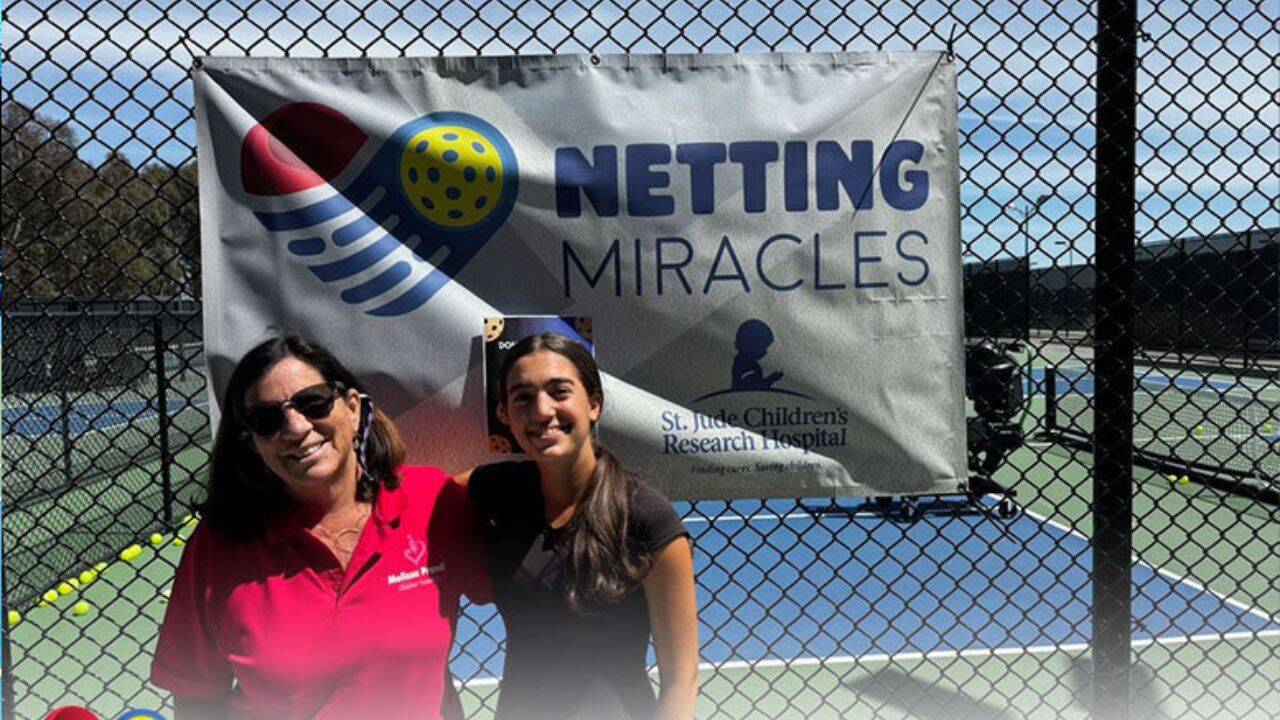
Let us pause to look at the math, because the numbers are staggering. What started as a muddy afternoon with forty people in a garage expanded across communities, drawing in hundreds of players, local businesses, and regional volunteers. By the time the dust settled, Rohan’s grassroots initiative had funneled more than ninety thousand dollars directly to St. Jude Children’s Research Hospital.
Ninety thousand dollars.
To put that in perspective, that is not just a statistic on an annual report. That is countless hours of specialized nursing care. That is experimental immunotherapy treatments that give a child another birthday. That is families sitting by a bedside, not having to worry about whether they can afford the next prescription, because strangers in a local park cared enough to play a game.
We often look at the world’s brokenness with a sense of helpless exhaustion. The problems are too vast, the institutions too entrenched, the suffering too immense. What can a teenager with a plastic paddle possibly do against the terrifying machinery of pediatric illness?
Everything.
Because the real magic of Rohan’s platform isn't the ninety thousand dollars, as staggering as that sum is. The magic is the architecture of participation.
When you play in one of his tournaments, you are not a passive spectator watching a tragedy unfold on a news screen. You are an active participant in a collective defiance. You are sweating, laughing, missing shots, and handing over your entry fee, knowing that every ridiculous dink over a net is a small, stubborn act of love.
We are desperately starved for this kind of agency. We live in digital silos, hyper-connected yet profoundly isolated, scrolling through endless crises that we have no power to fix. We feel small.
Rohan’s platform proves that smallness is an illusion.
You do not need a foundation. You do not need a million-dollar endowment or a seat in a boardroom. You need a willingness to look at a problem, however overwhelming, and ask the simplest, most dangerous question imaginable:
What if I just started right here?
The sun is dipping below the horizon now. The chalk lines on the driveway are nearly washed away by dew, fading into the gray asphalt until the next time someone drags a folding table out of the garage.
Inside the hospital room, miles away, a child closes their eyes and drifts off to sleep, breathing a little easier because of ninety thousand dollars raised by strangers who wanted nothing more than an excuse to hit a plastic ball.
Outside, in the fading light, the wind catches a stray piece of yellow caution tape tied to the oak tree. It flutters softly, whispering in the quiet air.
Pop.