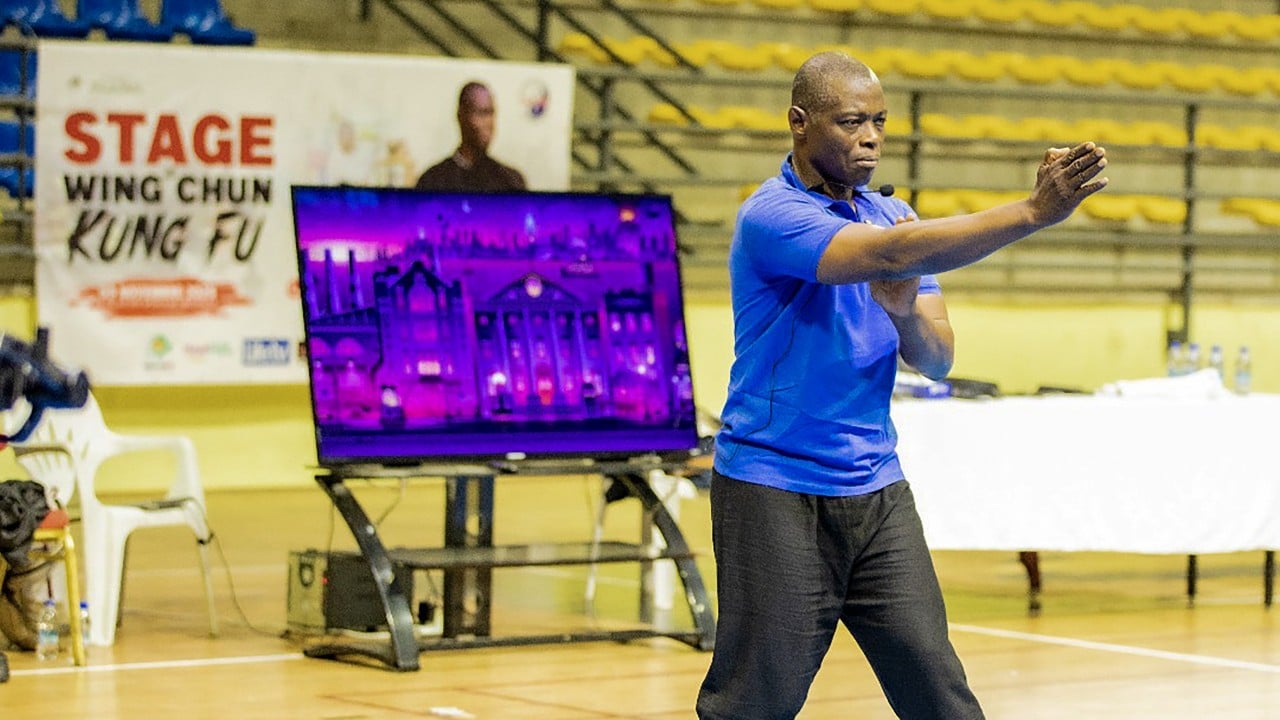
Abidjan’s Treichville neighborhood echoes with the sharp sound of canvas shoes striking concrete. In a dusty courtyard, dozens of young Ivorians move in unison, executing flawless Wing Chun forms. This is not a sudden fad. For decades, kung fu has steadily woven itself into the fabric of Ivory Coast, transforming from a late-night cinema obsession into a powerful instrument of geopolitics and social mobility. While casual observers view it as mere entertainment, Beijing sees it as a highly successful blueprint for cultural diplomacy in West Africa.
The phenomenon started long before diplomatic ties formalized. In the 1970s and 1980s, cheap celluloid imports featuring Bruce Lee and Jackie Chan flooded West African theaters. Young men in Abidjan, dealing with economic stagnation and rapid urbanization, found an immediate connection with the archetype of the underdog fighting back against systemic injustice. Kung fu offered more than physical defense. It provided a disciplined framework for survival in a changing society.
Today, that grassroots obsession has matured into a structured network of hundreds of clubs spanning the country, making Ivory Coast the undisputed martial arts gravity well of the region.
The Geopolitical Script Beyond the Screen
Beneath the athletic appeal lies a calculated strategy of soft power deployment. The Chinese state has recognized that martial arts offer a friction-free entry point into African civil society, far more palatable than raw economic statistics or political rhetoric.
[Grassroots Cinema Obsession] -> [Local Club Proliferation] -> [State-Backed Institutionalization]
By providing scholarships, funding local tournaments, and institutionalizing training through Confucius Institutes, Beijing has turned a pop-culture trend into a diplomatic bridge. This approach succeeds because it does not feel transactional. A young fighter in Bouaké does not see an infrastructure loan when they practice a kata; they see a path toward personal excellence.
This cultural integration creates a highly favorable environment for broader bilateral relations. When local populations view Chinese culture with deep respect and familiarity, state-level resource negotiations and infrastructure projects encounter far less domestic resistance. It is an exercise in long-term influence, built one training hall at a time.
Street Level Realities and the Fight for Better Lives
For the youth of Abidjan, the motivation remains intensely personal. Unemployment and underemployment present daily challenges. The martial arts club, or dojo, serves as a sanctuary and an informal employment bureau.
- Discipline as Capital: Students learn punctuality, emotional restraint, and leadership—traits that local business owners actively seek.
- Security Opportunities: The booming private security sector in West Africa heavily recruits from these clubs, offering a direct line from the training mat to a steady paycheck.
- International Mobility: Top-tier practitioners frequently secure visas to compete in mainland China, opening doors to global travel that would otherwise remain firmly shut.
Consider the path of a typical instructor in Yopougon. He manages a class of fifty students, balancing the roles of athletic coach, social worker, and community mediator. The local federation coordinates regional tournaments, turning what used to be fractured neighborhood rivalries into structured, respectful athletic competitions.
The Commercial Engine of West African Wushu
The economic footprint of this movement extends beyond tuition fees. A micro-economy has emerged around the sport, driven entirely by local demand and regional supply chains.
| Sector | Economic Impact | Primary Drivers |
|---|---|---|
| Apparel & Gear | High growth | Local tailoring of uniforms mixed with imported protective equipment. |
| Event Promotion | Medium growth | Corporate sponsorships for regional tournaments and broadcast rights. |
| Media Production | Emerging | Local action cinema heavily influenced by classic Hong Kong choreography. |
Local tailors now specialize in stitching traditional silk suits, modifying designs to suit the tropical climate. Meanwhile, digital media platforms are filled with Ivorian creators producing high-quality martial arts content, blending traditional West African storytelling with Asian martial arts techniques. This cultural synthesis is unique, proving that the sport is no longer just an import; it has been entirely naturalized.
Friction Points in the Cultural Exchange
This integration is not without tension. Traditional Ivorian wrestling, lutte traditionnelle, has historically held a sacred place in rural communities. As urban youth increasingly gravitate toward wushu and kung fu, some cultural elders express concern over the erosion of indigenous sporting traditions.
Furthermore, the institutionalization of the sport introduces bureaucratic friction. The Ivorian Federation of Wushu constantly navigates the delicate balance between maintaining athletic independence and accepting foreign state patronage. When funding flows directly from external diplomatic missions, the sporting agenda inevitably shifts toward the priorities of the donor country. This dynamic creates an undercurrent of skepticism among older instructors who prefer the grit and independence of the early, unsanctioned club era.
The Regional Gravity Well
Abidjan has effectively positioned itself as the training hub for all of West Africa. Athletes from Mali, Burkina Faso, and Guinea regularly travel to Ivory Coast to sharpen their skills and obtain recognized certifications.
This centralization has turned the nation into a regional powerhouse, dictating the training standards and competitive rules for neighboring states. The presence of high-ranking masters who studied directly in Henan province ensures that the techniques taught remain authentic, elevating the prestige of the local federations.
The evolution from a cheap cinematic distraction to a regional institutional force illustrates how deeply a subculture can alter a nation's social fabric. The momentum built in these training halls shows no signs of slowing down. As long as economic realities require resilience and discipline, the youth of West Africa will continue to look toward the mat, translating ancient movements into modern survival strategies.