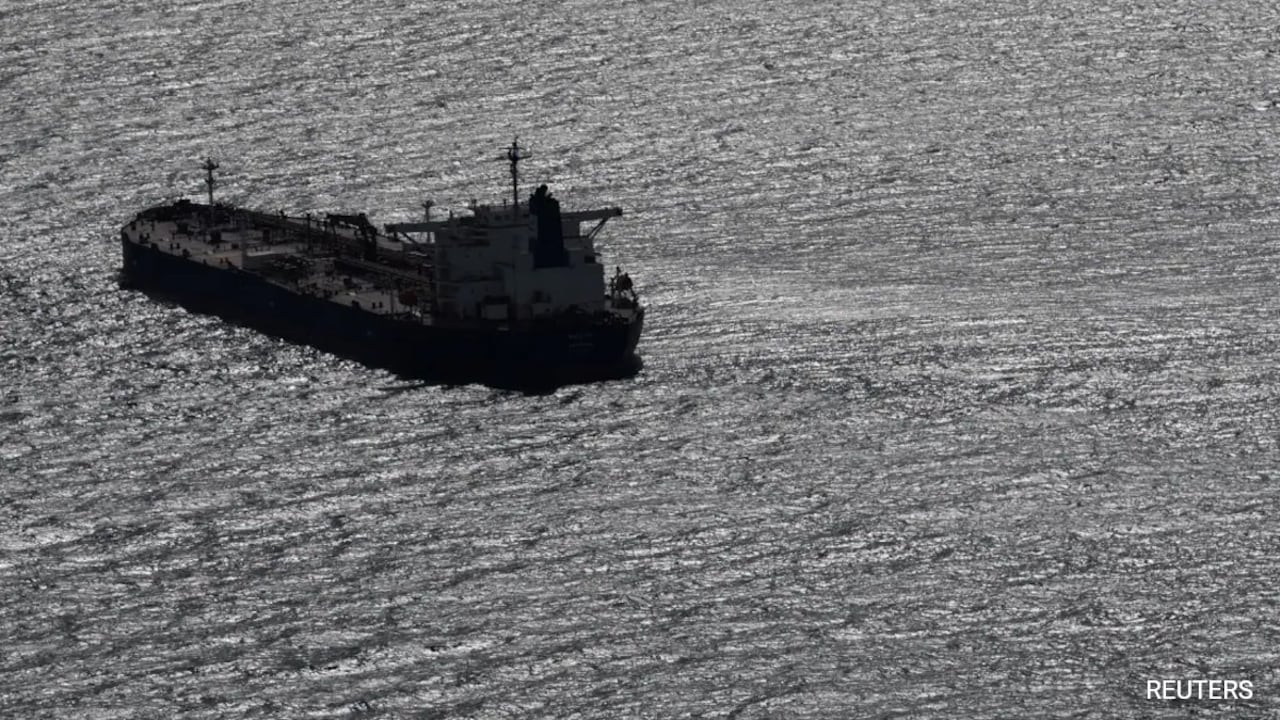
The water in the Sea of Azov does not feel like the open ocean. It is shallow, brackish, and perpetually restless, hemmed in by coastlines that have seen too much blood over the last decade. On a midsummer night, if you stand on the shores of occupied Crimea, the air carries a heavy, humid weight, thick with the scent of salt and, increasingly, the faint, chemically tang of burning petroleum.
For months, the citizens of the peninsula have lived under a quiet state of emergency. Gas stations sit empty or rationed. Power grids flicker and die, plunging entire neighborhoods into a sudden, suffocating dark. To the average family trying to survive the occupation, the crisis feels like a weather pattern—unpredictable, systemic, and cruel.
But out past the breaking waves, beneath the cover of pitch-black skies, the true architecture of this misery is being systematically dismantled.
It happens without the thundering roar of a battleship’s artillery. Instead, there is only a low, lawnmower-like buzz cutting through the marine mist. Then, a blinding flash. A 140-meter wall of steel erupts into a geyser of orange flame.
The Phantoms of the Logistics Line
To understand what died in the shallows of the Azov Sea this week, you have to understand the ghosts that fly under false flags.
When international regulators slammed the door on Russian energy exports, the Kremlin didn't stop shipping. They simply went underground. Or rather, underwater. They assembled what maritime investigators call the "shadow fleet"—a ragtag armada of aging, unmonitored, and heavily sanctioned merchant vessels. These are ships that officially do not exist in the polite ledgers of global commerce. They change names like cheap suits. They register under countries that lack the resources to inspect them. They turn off their transponders, slipping into the grey zones of international waters like thieves in an alleyway.
Consider a hypothetical crewman on a ship like the Venera-3 or the Sanar-1. Let's call him Mikhail. He isn't a military officer; he is a merchant mariner, perhaps recruited from a cash-strapped port city with the promise of hazardous-duty pay that never quite materializes. His job is simple but terrifying: navigate 7,000 metric tons of highly volatile gasoline through a war zone. He knows his ship is a pariah. He knows that if something goes wrong, no legitimate international insurance policy will cover the catastrophic oil spill or the loss of life.
Mikhail’s ship, alongside sisters like the Penelope and the Klimena, formed a floating conveyor belt. They would load up at Russian mainland ports like Taganrog, slip into the Kerch Strait, and bleed fuel directly into the veins of the Russian military machine occupying Crimea.
Every single run was equivalent to driving 200 fully loaded railway tank cars across a vulnerable bridge. It was a massive, highly illegal shell game.
Until the birds arrived.
Fishing on an Industrial Scale
The Ukrainian military unit responsible for the devastation calls themselves "Madyar’s Birds." Led by a commander whose name has become a curse word in Russian naval circles, the Unmanned Systems Forces have spent the last few years rewriting the rulebook of naval warfare. They don't have a traditional navy. They don't need one.
On the night of July 7, 2026, the pilots of the Kairos unit sat in darkened rooms miles away from the water, staring at glowing monitors. Through the grainy, high-contrast lens of thermal drone cameras, the Sea of Azov appeared as a vast expanse of dark grey. But the tankers were impossible to hide. Their massive engines radiated heat, blooming on the screens like glowing white embers.
The strike was not a random act of harassment. It was calculated arithmetic.
The drones struck eight shadow fleet tankers in a single, coordinated sweep. Black-and-white footage released by the unit shows the exact moment of impact: a steady crosshair hovering over a massive deck, a sudden shudder, and then a billowing cloud of white-hot thermal energy as thousands of tons of petroleum caught fire.
The commander described the operation not as a battle, but as "fishing on an industrial scale."
They caught a whole school. By sunrise, a significant portion of Russia’s maritime fuel lifeline to Crimea was either sinking, actively burning, or severely crippled. When fully loaded, a fleet of that size carries up to 50,000 tonnes of fuel.
Gone. Vaporized into the summer sky or leaking into the troubled waters.
The Invisible Suffocation
It is easy to get lost in the cinematic spectacle of burning ships. The internet loves video clips of explosions. But the real consequence of the strike lies in the quiet, desperate calculus now happening inside the headquarters of the Russian occupying forces.
An army is essentially a massive, hungry beast that digests fuel and spits out ammunition. Without gasoline, the trucks cannot carry artillery shells to the front lines. Without diesel, the armored vehicles are just very expensive, immovable metal boxes. By striking the naval logistics network, Ukraine didn't just burn oil; they froze the gears of the entire military infrastructure in Crimea.
But this type of warfare brings a heavy, painful ambiguity that anyone watching from the outside must confront. It is a sobering truth. When a fuel tanker burns, the military suffers, but the civilian population bleeds too.
The state of emergency gripped Crimea long before these eight ships were targeted, but the coming weeks will likely see the darkness deepen. Hospitals will have to rely on dwindling generator reserves. Regular people will find themselves stranded, unable to flee or find basic supplies as civilian distribution networks collapse under the weight of military rationing.
This is the agonizing paradox of modern siege warfare via technology. To stop the occupier, you must starve the land they walk on. It is a terrifying, messy reality that offers no clean moral victories—only the grim necessity of survival.
The Turning of the Tide
For a long time, the Black Sea Fleet was viewed as an untouchable titan, a symbol of imperial permanence in the region. That illusion has been systematically shredded over the past four years, piece by piece, drone by drone.
Moscow, of course, claimed to have repelled the worst of the onslaught, boasting of hundreds of downed drones and retaliatory strikes on Ukrainian ports. But propaganda cannot fill an empty fuel tank. It cannot patch a thermal hole in the hull of the Sanar-17.
The shadow fleet was supposed to be Russia’s ultimate loophole—a way to thumb its nose at global sanctions while keeping its war machine lubricated. But the sky above the Azov Sea is no longer a safe haven for ghosts.
As the sun rose over the water, the fires on the tankers continued to burn, casting long, wavering shadows across the waves toward the Crimean coast. The message sent by the Unmanned Systems Forces wasn't written in diplomatic cables or policy papers. It was written in smoke, visible for miles in every direction. The loophole has been closed, and the cost of keeping the lights on in occupied territory has just become impossibly high.