The air in the waiting room smelled of rubbing alcohol, damp coats, and quiet panic. It was a Tuesday night in Nova Scotia, the kind of evening where the wind cuts off the Atlantic like a blade, sliding under collars and rattling the glass doors of the local emergency department. Inside, the triage desk was a fortress under siege. Flu symptoms, broken bones, chest tightness, and a dozen people clutching their arms where small, dark passengers had recently dug in.
Tick season had arrived months ago, but the consequences lingered like a low-grade fever across the province.
For years, the ritual was identical and exhausting. You found the pinhead-sized black-legged tick on your skin. You panicked. You waited eight hours on a plastic chair under fluorescent lights that hummed a flat, maddening C-note, only to be told by an exhausted physician what you already suspected: Yes, that’s a deer tick. Then came the prescription for prophylactic antibiotics, handed over after a night spent bleeding hours into a waiting room that felt closer to a transit station than a place of healing.
Then something quiet happened. A shift so understated it barely registered against the roar of the daily news cycle.
Pharmacists were handed a pen.
Suddenly, the front line of medicine moved twenty feet forward, out of the sterile inner sanctum of the hospital and straight onto the bright linoleum of the corner pharmacy.
Consider what happens when a system stops making people wait. In Nova Scotia, when the provincial government authorized trained pharmacists to assess tick bites and prescribe early preventative antibiotics directly across the counter, the emergency rooms did not just breathe a little easier. They emptied out by half for that specific, agonizing complaint. Emergency room visits for Lyme disease dropped by roughly fifty percent.
Numbers on a spreadsheet rarely tell the whole human story. But behind that fifty percent statistic are thousands of people who did not spend a sleepless night shivering under the glare of a hospital television, wondering if the bullseye rash spreading on their thigh was the beginning of chronic pain or just a bad memory waiting to happen.
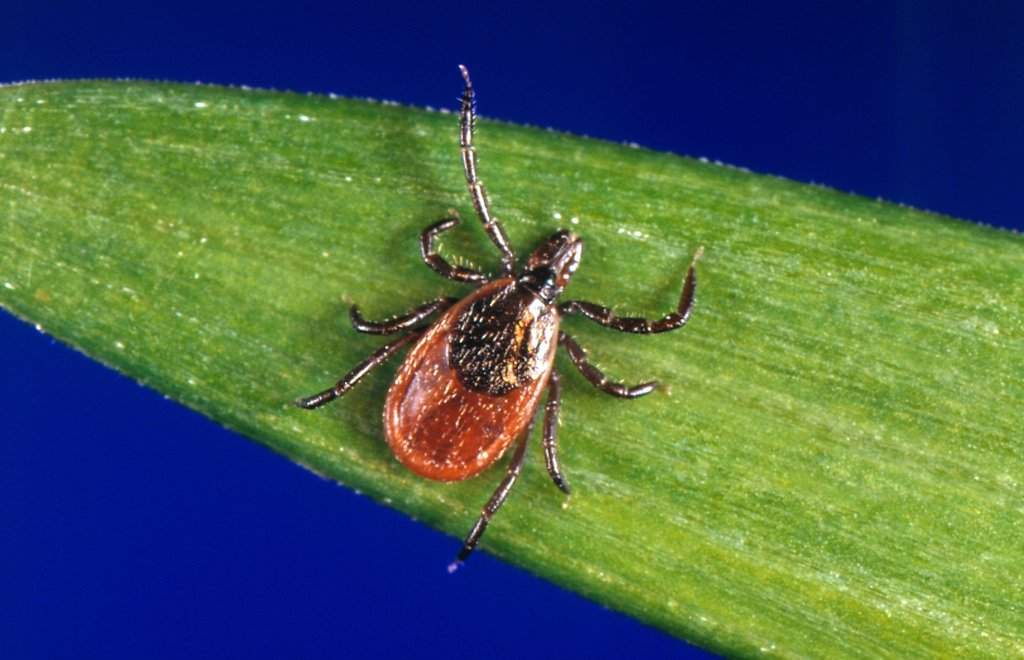
To understand why this matters, you have to understand the microscopic thief at the center of the story. Borrelia burgdorferi, the spiral-shaped bacterium responsible for Lyme disease, does not announce its arrival with a trumpet. It hitches a ride on the nymph stage of the black-legged tick—creatures no larger than a poppy seed. You brush past a fern on a damp hiking trail in the Annapolis Valley. You kneel in the tall grass to tie your bootlace. You walk the dog through the brush behind your house.
The tick finds skin. It settles in. It feeds.
If caught within seventy-two hours of the tick detaching, a single dose of doxycycline acts like a chemical firewall. It halts the bacteria in its tracks before it can colonize the joints, the nervous system, or the heart. Timing is everything. Every hour spent sitting in a hospital queue waiting for a doctor's signature is an hour the bacteria uses to dig deeper into the host.
Medicine has traditionally been built on priesthoods. Knowledge was hoarded behind vaulted doors, requiring appointments weeks in advance, referrals passed like secret handshakes, and long, expensive vigils in institutional corridors for something as simple as a preventative pill. We created a bottleneck of our own design.
When community pharmacists—trusted neighbors who know your name, your allergies, and your kids—were given the authority to evaluate tick exposure and prescribe antibiotics directly, the bottleneck broke.
Imagine walking into your local apothecary with a magnifying glass still resting on your kitchen table. You show the pharmacist the red welt on your shoulder. They look at it, ask you how long the tick was embedded, check the local vector mapping, and determine whether you meet the clinical criteria for preventative treatment. Five minutes later, you are walking out with a small orange bottle of pills. No triage nurse sighed. No emergency physician was pulled away from a trauma bay. No eight-hour clock was burned down to ash.
Critics of such decentralized care often worry about safety. They wonder if retail counters can replace clinical rigor. But the data from Nova Scotia answers that question with quiet authority. Pharmacists undergo specialized training in minor ailments assessment. They understand the geographic risk zones better than anyone, because they live in them. They see the localized spikes in tick density week by week. They are not replacing physicians; they are acting as the specialized scouts they were always trained to be, intercepting problems at the perimeter before they become structural disasters.
There is a deeper lesson here about how we design our lives and our institutions. For decades, we assumed that safety required scale, that importance required a hospital badge, and that serious medicine could only happen under the watchful eye of a specialist. We centralized everything until the centers began to buckle under their own weight.
The quiet revolution in Nova Scotia proves that the most effective health care is often the most intimate. It lives down the street, next to the milk and the postage stamps. It looks like a pharmacist in a white coat pausing between filling prescriptions to peer closely at a suspicious red circle on a customer's arm.
The ticks will still hatch in the spring. The tall grass will still brush against our ankles as the weather warms and we chase the long, golden light of northern evenings. The threat has not vanished. But the panic has changed its shape.
The emergency doors still swing open and shut on those windy Atlantic nights, but now, the people who need them most are actually getting inside in time. And somewhere down the street, a small amber bottle sits on a kitchen counter, quietly doing its job.