The air does not move. It hangs.
It sits heavy against the skin, tasting of scorched peat and wet ash, tasting of things that were once green and are now reduced to grey dust. For anyone standing on the tarmac of Tjilik Riwut Airport in Palangka Raya, the horizon has simply vanished. There is no sky. There is only an opaque, yellowish-grey ceiling that presses down upon the asphalt, blurring the runway lights into faint, shivering halos.
Planes do not land here today. They do not take off either.
Across the vast, lung-shaped expanse of Borneo, a familiar ghost has returned. It arrives silently, creeping out from the smoldering subterranean depths of the island's ancient peatlands before dawn, blanketing cities, rivers, and rainforest canopy in a suffocating shroud. When the visibility drops below legal safety thresholds—sometimes down to a few hundred meters, sometimes down to a few dozen—the aviation charts become useless. Radar can guide a machine through the dark, but it cannot pierce a wall of smoke thick enough to choke an engine.
Consider what happens when the sky closes its doors.
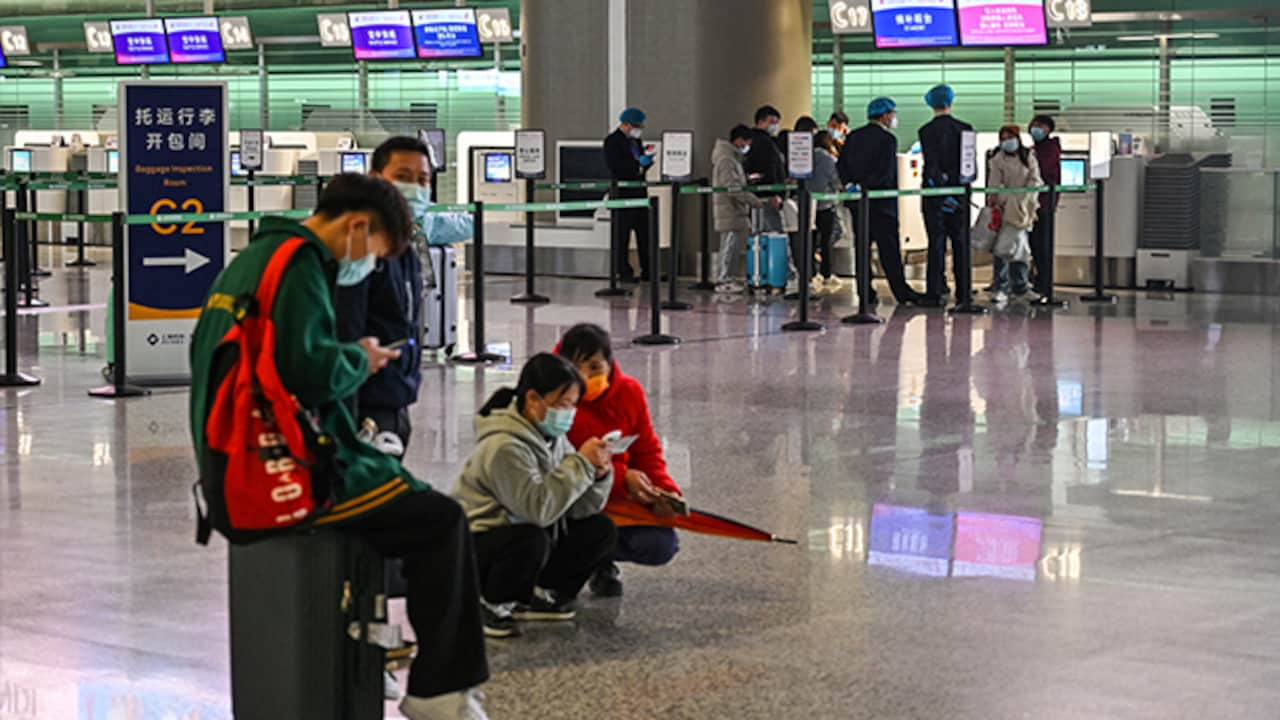
Inside the terminal, the human cost of the fog accumulates in quiet, weary ways. Rows of molded plastic chairs fill with passengers whose journeys have evaporated. A businessman checks his watch for the fourth time in a minute, his meeting in Jakarta slipping away into the haze. A family traveling to visit aging parents sits huddled around a phone, watching the battery percentage tick downward while flight status monitors stubbornly flash red with cancellations.
(Hypothetical scenario, for illustrative purposes) Imagine standing at the departure gate, your lungs burning slightly even indoors, listening to the metallic drone of the public address system announcing yet another delay. You came prepared with surgical masks, but the fine particulate matter—the microscopic PM2.5 soot—finds its way past cloth and paper, settling deep into the lining of the throat. It is an invisible weight. It is the cost of living on an island where earth and fire are locked in a perpetual, toxic embrace.
Why does this happen with such relentless predictability?
To understand the grounded reality of Borneo’s recurring smoke crisis, you have to look down, past the concrete and past the trees, into the soil itself. Kalimantan sits atop massive deposits of peat—layers of partially decayed organic matter accumulated over thousands of years in waterlogged, swampy ecosystems. Under natural conditions, these peatlands act as massive sponges, holding moisture and locking away gigatons of carbon beneath a watery shield.
When the dry season arrives, or when El Niño stretches the dry months into a punishing drought, that water recedes. The sponge dries out. And when human hands apply fire to clear land for agriculture or palm oil plantations—or when a stray spark catches in the tinder-dry brush—the peat does not merely burn on the surface. It smolders underground.
It is a subterranean furnace. You can douse the flames licking at the top layer of grass, but miles away, deep beneath the black earth, fire crawls through the hidden veins of ancient organic matter, feeding on trapped oxygen, refusing to die. It leaks out through fissures in the soil, venting plumes of acrid smoke that drift for hundreds of miles, caught in regional wind patterns until they settle like a physical weight over cities and airports.
The pilots flying routes across the Indonesian archipelago know this threat intimately. Captain Rifai, a veteran aviator with thousands of flight hours logged across regional hubs, understands the unique terror of the Borneo haze.
"It is not like a cloud," he explains, describing the phenomenon from the cockpit perspective. "Clouds are water vapor. You can fly through them with instruments, or climb above them if your ceiling is high enough. This smoke is particulate. It is dense, oily, and it layers itself in thermal inversions. You can climb to ten thousand feet and still find yourself swimming in a yellow soup. At a certain point, safety outweighs schedule. You cannot land where you cannot see the ground beneath your wheels."
When visibility falls below the strict operational minimums set by aviation authorities—often requiring at least a thousand meters of forward clarity for safe visual approach—air traffic controllers have no choice. Flights are grounded.
The economic ripple effects spread outward instantly. Cargo planes carrying perishable goods, fresh produce, and vital medical supplies are left sitting idle on runways in Java and Sumatra, unable to make the hop across the Java Sea. Small business owners in Palangka Raya, Banjarmasin, and Pontianak watch their supply chains stutter and freeze. Tourists cancel bookings, hotels sit empty, and the rhythmic pulse of regional commerce slows to a sluggish, exhausted crawl.
Yet, the economic toll, steep as it is, feels secondary to the biological reality.
Step outside for five minutes, and your eyes sting. Children cough in their sleep, their chests rattling with a bronchitis that parents treat with humidifiers and herbal tonics bought from local pharmacies. Clinics fill up with patients gasping for air, clutching inhalers, their immune systems besieged by a relentless atmospheric assault. Schools close their doors, sending children home to stay indoors behind sealed windows, turning the vibrant social life of the neighborhoods into an isolated, indoor waiting game.
There is an eerie quiet to a city swallowed by smoke. The midday sun does not shine; it hangs in the bruised grey firmament as a dull, pale copper coin, stripped of its warmth and light. Streetlights flicker on at two in the afternoon because the gloom is absolute. People move through the streets like ghosts, wrapped in protective gear, their voices muffled by fabric masks.
Governments and local authorities scramble with emergency interventions. Water bombing helicopters roar into the sky whenever visibility permits a brief window of operation, dumping thousands of gallons of water onto hotspots tracked by satellite imaging. Cloud-seeding planes fly sorties to provoke artificial rain over stubborn burning zones, hoping to drown the subterranean fires in an induced downpour. Firefighters, forestry workers, and local volunteers trek into remote, swampy terrain with hoses and shovels, fighting a grueling war against an enemy that burns beneath their very boots.
But these measures are reactive. They are bandages placed over a gaping wound that reopens every time the seasonal rains fail or human impatience strikes the match too early.
The deeper problem requires a transformation of how peatlands are managed, protected, and restored. Rewetting drained peat swamps, enforcing strict zero-burn policies on agricultural land, and shifting local farming techniques away from fire-dependent clearing methods are monumental tasks. They require political will, financial investment from regional and international bodies, and a fundamental shift in how rural communities interact with the land.
Until those structural changes take deep root, the cycle remains unbroken.
Back at Tjilik Riwut Airport, the afternoon announcements drone on. Passengers continue to wait. The grey veil outside thickens as evening approaches, turning the day into an unbroken twilight of ash and smoke.
A single cargo plane sits parked on the far side of the runway, its fuselage gleaming faintly through the smog, waiting for a wind that refuses to blow, and a sky that refuses to clear.