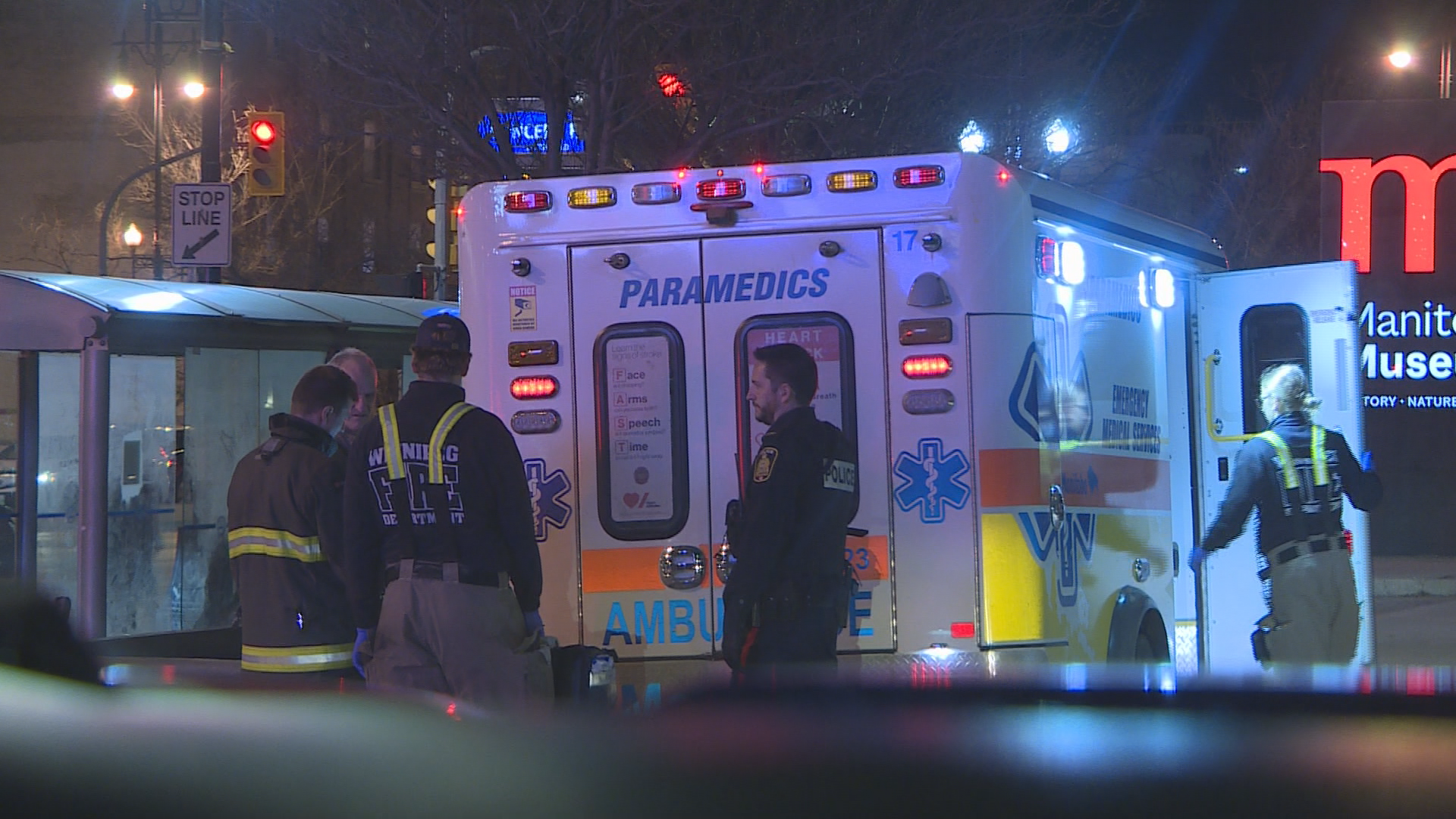
The siren does not cry for the statistics. It cries for a twenty-two-year-old named Liam, slumped in the bathroom of a fast-food joint on Portage Avenue, his skin the color of a winter sky just before dusk.
Every first responder in Winnipeg knows the specific frequency of that wail. It cuts through the thick, heavy hum of the prairie humidity in July and slices clean through the brittle, bone-chilling freeze of January. For decades, that sound usually meant one thing. It meant a Friday night blowout gone wrong. It meant the familiar, stale reek of cheap beer, a shattered patio window, or a driver who thought they could manage the turn on Main Street after four too many whiskey cokes.
Alcohol was the old enemy. It was predictable in its chaos.
But the city is changing, and the air has grown much heavier.
The Winnipeg Fire Paramedic Service (WFPS) recently released data that confirms what the boots on the ground have whispered through chattering teeth for months. For the first time in the city’s history, emergency calls for suspected opioid overdoses have surpassed those for alcohol-related medical crises.
Let that sink into the pavement.
The traditional titan of public health crises has been dethroned by a synthetic ghost. A ghost that measures its lethality not in fluid ounces, but in micrograms.
The Rhythm of the Shift
To understand how we arrived at this tipping point, you have to sit in the passenger seat of a dual-trained paramedic unit. Consider the sheer volume of the burden. The WFPS responds to hundreds of calls every single day. Historically, a massive chunk of those dispatches involved chronic alcoholism, acute intoxication, and the various physical fallouts of a culture deeply intertwined with drinking.
Then came the synthetic wave.
It started as a trickle years ago, a worrisome trend in the background of national news. But over the last year, the numbers spiked like a fever. Paramedics found themselves burning through doses of naloxone—the opioid reversal drug—at a rate that seemed mathematically impossible just five years prior.
The shift is not just a line graph on a city council briefing memo. It is a fundamental alteration of the job description for the men and women in uniform.
When you respond to an alcohol call, there is usually a conversation, even if it is slurred. There is a narrative. A person is combative, or they are weeping, or they are passed out but breathing heavily, their heart pumping a recognizable poison through their veins. You know the trajectory. You know the timeline.
Opioids offer no such dialogue.
An overdose is a sudden, violent silencing of the central nervous system. The brain simply forgets to tell the lungs to move. Air stops. The heart stutters. The transition from a living, breathing human being with a childhood and a favorite hockey team to a cold statue happens in the span of a few quiet minutes.
That is the terrifying efficiency of fentanyl. It does not wait for you to hit rock bottom. It just drops the floor out from under you.
The Invisible Geography
There is a common, comforting lie that cities tell themselves when a crisis like this takes root. People like to pretend it is contained. They want to believe the problem is cordoned off in the North End or restricted to the back alleys of the downtown core where the neon lights don't quite reach.
If you believe that, you aren't paying attention.
The modern overdose map of Winnipeg is a web that stretches into every corner of the map. It is in the pristine, manicured suburban basements of Waverley West, where a high school student takes a pill they bought online, thinking it is a prescription anti-anxiety medication to help them study for finals. It is in the parking lots of industrial parks in St. Boniface, where a construction worker tries to numb a chronic back injury so he can pull another twelve-hour shift to pay his mortgage.
The poison is democratic. It does not care about your tax bracket or your last name.
The reason for this universal reach lies in the economics of modern drug manufacturing. Alcohol is bulky. It requires breweries, fermentation, glass bottles, shipping crates, and retail infrastructure. It is loud.
Fentanyl is silent. A package the size of an envelope can contain enough pure chemical powder to kill an entire neighborhood. It is slipped into counterfeit pills, pressed to look exactly like legitimate pharmaceuticals, or mixed into cocaine and methamphetamine to increase potency. Most of the people who need a paramedic's intervention didn't even know they were taking an opioid in the first place.
They thought they were partying. Or they thought they were self-medicating. They didn't know they were playing Russian roulette with a gun that has five loaded chambers.
The Human Toll Behind the Headlights
Imagine the exhaustion of the person behind the wheel of the ambulance.
Paramedics are built for adrenaline, but they are not built for repetition without resolution. The psychological weight of this shift in call volumes is immense. On a heavy shift, a single crew might revive the same individual twice, or conversely, administer maximum doses of naloxone only to watch the heart monitor go flat anyway.
The old joke among emergency workers used to be about the "frequent flyers" of the drunk tank—characters known by name, managed with a mix of stern lecturing and familiar pity. There is no humor in the new reality. The stakes are too absolute. Every call feels like a race against a stopwatch that started ticking ten minutes before the phone even rang.
And what happens to the rest of the system when the sirens are constantly running for overdoses?
The math is brutal. When a paramedic crew is performing CPR on a sidewalk, they are not available for the grandmother having a stroke in Transcona or the toddler who swallowed a coin in River Heights. The surge in opioid calls acts like a clog in the city's circulatory system. Emergency rooms fill up. Offload times at hospitals stretch from minutes into agonizing hours. The entire apparatus of public safety begins to groan under the weight of a crisis it was never fully designed to carry alone.
This is not a problem that can be policed away, nor is it something that can be solved simply by buying more ambulances. It is a symptom of a deeper, more systemic ache within the community. The rise in calls reflects a desperation, an isolation that has grown sharper in recent years. People are looking for an escape, and the market has responded with the most lethal escape route ever devised by chemistry.
The Weight of the Air
The city is quietest just before dawn. The traffic on the Disraeli Bridge dies down to a rare, distant rumble, and the Red River flows thick and dark beneath the concrete.
In the bay of a fire station, a paramedic sits on the bumper of his truck, holding a lukewarm coffee in both hands. His knuckles are scraped. His uniform smells like diesel smoke and the antiseptic wipes used to clean the stretcher.
He remembers when the worst part of the job was dealing with the belligerent regulars outside the bars at closing time. He misses them. He misses the predictability of a town that just drank too much.
Now, he watches the sun crest the horizon, casting long, golden shadows across the empty streets. He knows that somewhere in a bedroom that looks just like his own son's, someone is waking up, or perhaps they never went to sleep. They are reaching for a small, blue pill. They are looking for relief.
And somewhere on the dashboard of his rig, the dispatch screen is waiting to light up again, summoning him to go drag another soul back from the edge of the dark.