They popped champagne in Okaloosa County while watching a national monument go under. They called it a second life. They called it marine conservation. They called it a win for Florida tourism.
They were wrong on all three counts. If you liked this post, you should read: this related article.
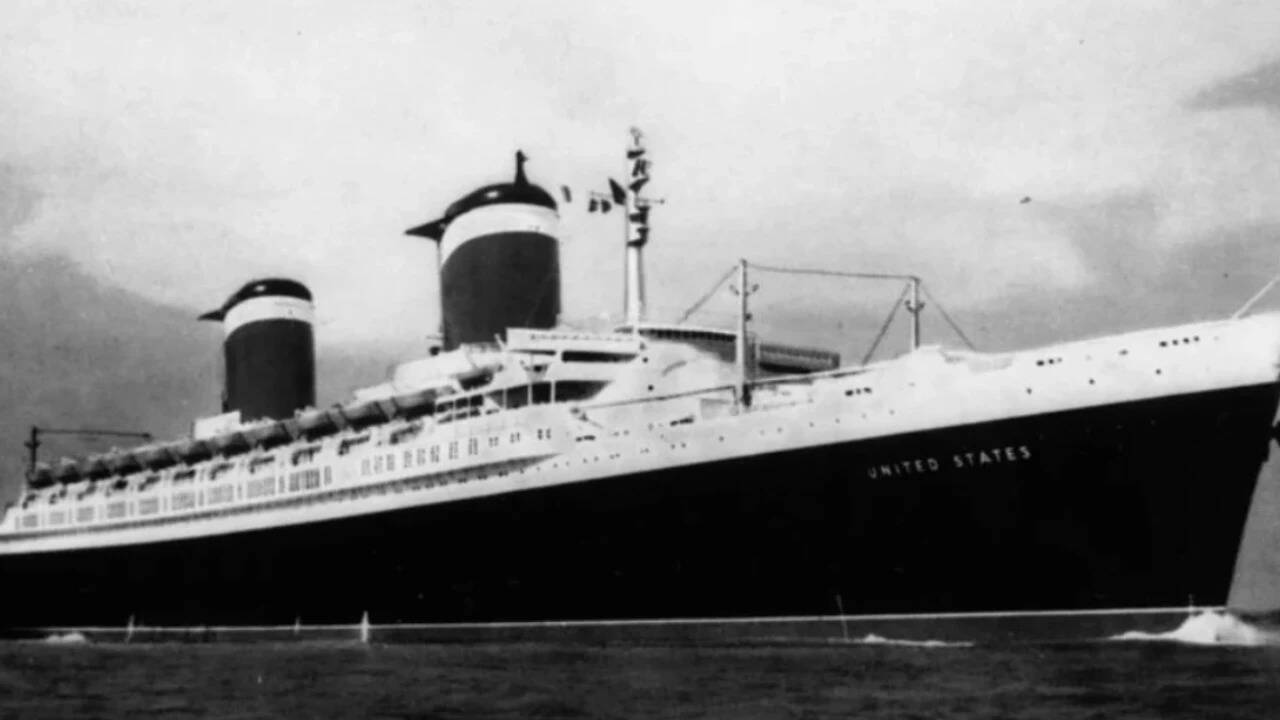
When the SS United States—the fastest ocean liner ever built, a vessel that still holds the Blue Riband for the quickest transatlantic crossing—was intentionally scuttled off the coast of Destin-Fort Walton Beach, the mainstream press dutifully parroted the press releases. The narrative was neat, sentimental, and entirely sanitized. An aging Cold War titan, saved from the ignominy of the scrapyard, reborn as the world’s largest artificial reef.
It is a comforting bedtime story. It is also an expensive piece of maritime greenwashing that masks decades of civic cowardice, questionable ecological math, and a massive transfer of public wealth into a localized dive-tourism subsidy. For another angle on this development, see the latest update from The Washington Post.
If you want to understand what actually happened on the Gulf floor, stop listening to county tourism boards and start looking at naval architecture, benthic ecology, and municipal balance sheets.
The Lie of the Noble Burial
The lazy consensus surrounding the sinking of the SS United States rests on a false binary: either the ship went to a scrapyard in Brownsville, Texas, to be cut into razor blades, or it went to the bottom of the Gulf of Mexico to become a coral paradise.
That framing lets everyone off the hook. It absolves the federal government, maritime preservationists, and billionaire philanthropists who had thirty years to figure out a viable adaptive reuse strategy for a 990-foot piece of American engineering genius.
Let’s be brutally honest about what an artificial reef deployment actually is. Stripped of the glossy brochures, it is ocean dumping with a public relations budget.
Before a ship can be sunk under Environmental Protection Agency (EPA) guidelines, it has to be remediated. For a vessel built in 1952—an era when asbestos was treated like a miracle fiber and polychlorinated biphenyls (PCBs) were standard in wiring and paint—remediation is not a quick power-wash. It is a multi-million-dollar hazardous waste extraction project. Crews spent months tearing out miles of insulation, wiring, bulkheads, and decking in Mobile, Alabama, before the tow south.
By the time the hull was clean enough to pass federal inspection, virtually nothing of the historic interior remained. What sank off Florida was not a time capsule of mid-century American design. It was a hollow, stripped-out steel shell. Calling that "preserving history" is like gutting the Empire State Building down to its I-beams, dropping it in the Hudson River, and selling scuba tickets to look at the elevator shafts.
The Ecological Mirage of Steel Reefs
Marine biologists have been quietly pushing back against the "build it and they will come" reef dogma for years, yet their data rarely makes it into local news segments.
Here is the uncomfortable truth: sinking a massive steel hull does not automatically create new marine life. In many documented cases, artificial reefs simply act as fish aggregation devices (FADs).
Think about what a FAD does. Instead of increasing the total biomass of red snapper or grouper in the Gulf of Mexico, a giant shipwreck acts like a magnet, pulling fish away from surrounding natural hard-bottom habitats and concentrating them in one convenient, GPS-marked spot.
For charter boat captains, that is fantastic. You don't have to burn fuel hunting for fish; you just drop anchor over the big ship. For the fishery itself, it can be catastrophic. Concentrating scattered fish populations into a single high-profile target makes them exponentially easier to overharvest. Unless strict no-take marine reserves are enforced over the wreck—which almost never happens with county-funded dive reefs—you haven't built a nursery. You've built a slaughterhouse with better parking.
Furthermore, a steel ocean liner is a terrible substitute for a natural coral reef. Natural reefs in the Gulf are built on calcium carbonate structures that offer thousands of micro-crevices, varied light exposure, and chemical properties that encourage stony coral recruitment.
A 990-foot passenger liner, even heavily stripped, consists largely of vast, flat, vertical steel walls and dark interior compartments. The upper decks sit too deep for many photosynthetic corals to thrive, while the lower hull quickly becomes dominated by invasive species—specifically lionfish and orange cup coral (Tubastraea coccinea), both of which thrive on artificial steel structures in the northern Gulf and actively crowd out native organisms.
I have worked alongside marine engineers who watched multi-million-dollar reef projects turn into rusty, silt-choked dead zones within a decade because the planners prioritized tourist spectacle over benthic hydrology. You do not need a 53,000-ton ocean liner to grow coral. Concrete reef balls, limestone boulders, and low-relief modular structures outperform sunken ships on virtually every ecological metric—and they do it for a fraction of the cost.
Follow the Municipal Money
If the ecological argument is shaky and the historical preservation argument is nonexistent, why did Okaloosa County spend upwards of $10 million of taxpayer and bed-tax money to buy, clean, tow, and sink the ship?
Because of economic alchemy.
Tourism boards love a superlative. "World's largest artificial reef" is a headline that buys millions of dollars in earned media. In the short term, the stunt works. Wreck divers from around the globe will book flights to Destin, rent hotel rooms, eat at seafood restaurants, and pay local operators to drop them onto the promenade deck of America's flagship.
But let's look at the economics of wreck diving with a clear eye, without the tourism board's rosy multipliers.
First, look at the depth. The SS United States stands roughly 100 feet from keel to funnel. To keep the top of the stacks clear of commercial shipping lanes—a non-negotiable requirement from the U.S. Coast Guard and the Army Corps of Engineers—the hull has to sit in roughly 180 feet of water.
Do the math on that.
A standard recreational Open Water diver is certified to a maximum depth of 60 feet. An Advanced Open Water diver is capped at 130 feet. At 180 feet, you are well past recreational limits. You are in the realm of technical diving, requiring trimix gas blends, decompression schedules, redundant tanks, and specialized training.
The vast majority of tourists visiting the Florida Panhandle cannot legally or safely dive to the main deck of the ship, let alone the keel. They will be limited to hovering over the upper superstructure—the bridge and the funnels—while 80 percent of the asset sits below them in the dark, accessible only to the top two percent of certified divers.
You spent ten million dollars to build an underwater theme park where almost nobody is tall enough to ride the main attractions.
The Structural Engineering Blind Spot
Naval architect William Francis Gibbs designed the SS United States in the late 1940s with a singular obsession: speed and survivability. Built with heavy federal subsidies as a dual-use vessel—capable of carrying 14,000 troops at speeds exceeding 38 knots in the event of a war with the Soviet Union—the ship was constructed using massive amounts of aluminum in its superstructure to save top-side weight.
That aluminum superstructure is a ticking clock underwater.
When you submerge a ship built with a steel hull and an aluminum superstructure into warm, oxygenated saltwater, you create a giant battery. It is called galvanic corrosion. Steel and aluminum sit at different positions on the anodic index. In seawater, the less noble metal—the aluminum—rapidly sacrifices itself to protect the steel.
Unlike the USS Oriskany, an all-steel aircraft carrier sunk off Pensacola in 2006, the upper decks of the SS United States will experience accelerated structural degradation. Within fifteen to twenty years, the iconic aluminum funnels and upper promenade decks will begin to buckle, collapse, and shear off under the stress of Gulf hurricanes and galvanic decay.
When a 990-foot hull begins to pancake underwater, the Coast Guard and the county suddenly face a massive liability problem. Shifting steel plates trap divers. Collapsing overhead environments turn a marquee attraction into a death trap, forcing local authorities to either spend millions more on underwater demolition or close the wreck entirely.
The tourism board’s 50-year economic projections rarely factor in the cost of managing a disintegrating megastructure in a hurricane alley.
What People Actually Should Be Asking
If you search online for news about the SS United States, the top questions are predictable: How deep is the SS United States wreck? Can beginners dive it? How long did it take to sink?
Those are the wrong questions. They treat the sinking as a neat engineering spectacle rather than a massive policy failure. Here are the questions taxpayers, preservationists, and divers should actually be asking:
Why did the U.S. fail to save its flagship when other nations saved theirs?
Look at the Queen Mary in Long Beach, California. Look at the SS Rotterdam in the Netherlands. Look at the QE2 in Dubai. All of these vessels were successfully converted into floating hotels, museums, and convention centers. The SS United States sat rotting at Pier 82 in Philadelphia for nearly three decades not because it couldn't be saved, but because every redevelopment deal collapsed under the weight of exorbitant pier rents, shifting municipal politics, and a lack of coordinated federal backing. Sinking it wasn't a triumph; it was an admission that America couldn't manage a real estate project on a boat.
Who pays when the wreck becomes a hazard?
Once a vessel is scuttled under a state or county artificial reef permit, the permit holder assumes perpetual liability for navigational safety and environmental compliance. If a Category 5 hurricane shifts the hull or causes structural collapse that threatens nearby shipping channels or pipelines, the local taxpayers—not the federal government, and not the non-profit conservancy that handed over the title—hold the bag.
Are we sacrificing real marine restoration for underwater vanity projects?
Every dollar spent towing a historic ocean liner across the Gulf is a dollar not spent restoring coastal seagrass beds, oyster reefs, and salt marshes—the actual ecological engines of the Florida coastline. Oyster reefs filter water, buffer storm surges, and produce staggering amounts of juvenile fish and crustaceans. They just don't look as cool in a GoPro video.
The Uncomfortable Reality of the Contrarian View
Let’s be fair. Is sinking the SS United States objectively worse than cutting it up with blowtorches in a Brownsville scrapyard?
No. If those were truly the only two options left on the table in 2024—and given the eviction order from Pier 82 in Philadelphia, the clock had undeniably run out—then sending the ship to the bottom of the Gulf is a better outcome than turning it into scrap metal. At least the hull remains intact in one place. At least technical divers get a world-class challenge. At least the ship's name stays in the public consciousness for another generation.
To pretend otherwise would be disingenuous. Once the eviction notice was enforced and no buyer stepped forward with $50 million in liquid capital to fund a dry-docking and static berth, the preservationists were out of moves.
But acknowledging that scuttling was the least-bad option at the eleventh hour is worlds apart from celebrating it as a visionary triumph.
How to Fix Maritime Preservation Before the Next Icon Sinks
The tragedy of the SS United States is not that it sank. The tragedy is that we are going to repeat this exact same cycle with the next generation of historic American vessels—from Cold War naval ships to iconic coastal ferries—unless we change the playbook.
If coastal cities, preservation groups, and marine agencies want to stop burning millions on last-minute sinkings, they need to adopt three hard rules:
- Decouple artificial reef budgets from vanity vessels. If a county wants to build fish habitat, mandate that at least 80 percent of artificial reef funds go toward scientifically proven, low-relief calcium carbonate structures placed at depths accessible to standard recreational divers and juvenile fish. Stop using marine conservation grants to subsidize deep-water wreck tourism.
- Establish a federal maritime adaptive-reuse trust. Right now, historic ships fall into a regulatory no-man's-land between the National Park Service, the Maritime Administration (MARAD), and local port authorities. Without pre-permitted waterfront berths and tax-increment financing mechanisms ready before a ship is retired, private developers will always get bled dry by pier rent before they can turn a wrench.
- Audit the true lifecycle cost of "free" ships. When the Navy or a conservancy offers a historic ship to a municipality for $1, there is no such thing as a free boat. Municipalities must be forced to publish full 30-year environmental, galvanic corrosion, and storm-liability actuarial tables before spending a dime of public money on remediation and towing.
William Francis Gibbs built the SS United States to outrun every vessel on the Atlantic, and for seventy years, nothing ever caught her. It took decades of bureaucratic paralysis, short-sighted real estate battles, and a check from a Florida tourism board to finally put her under.
Do not call it a rebirth. Call it what it is: a surrender dressed up in scuba gear.