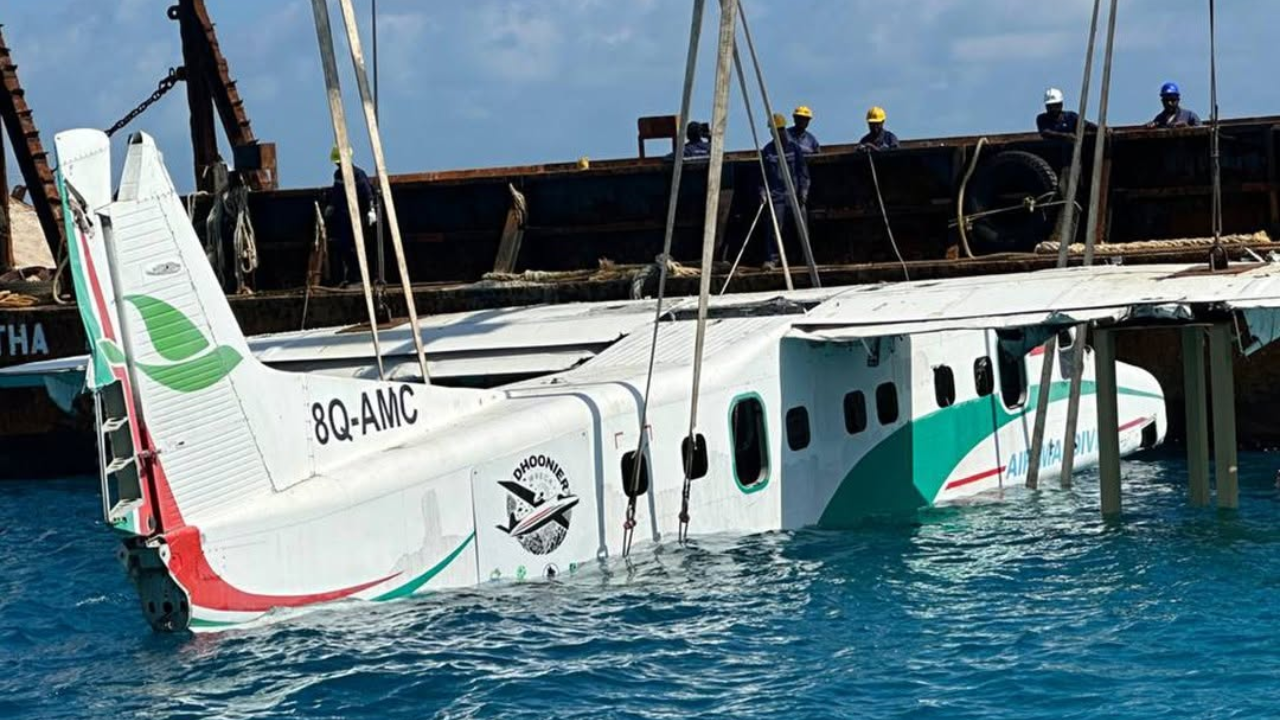
Sinking retired airplanes in the Maldives makes for great resort marketing. It does almost nothing to save coral.
Read the breathless coverage surrounding the two decommissioned aircraft sent to the bottom of Maldivian waters for 2026 coral restoration projects, and you will find the exact same lazy consensus repeated word for word. Big metal equals instant habitat. Divers take photos. Resorts get press. Everyone claps.
It is theater. Expensive, photogenic underwater theater.
I have watched marine projects and coastal tourism operators burn fortunes chasing spectacle instead of ecological reality. When a resort drops a stripped-out fuselage onto white sand or rubble, the headline writes itself. A Boeing or Airbus resting on the seabed looks dramatic on a dive map. It gives guests a story to tell over dinner. It creates a tidy before-and-after narrative for sustainability reports.
Nature does not grade on press release aesthetics.
The Myth of the Instant Reef
An airplane is not a coral reef. Calling it one confuses biomass attraction with genuine reef restoration.
Let us get the terminology straight before another dollar gets spent on aluminum tubes. Artificial reefs are structures placed on the seabed to influence physical processes, shelter marine life, or attract fish. Coral restoration is the active intervention aimed at re-establishing self-sustaining coral populations, genetic diversity, and calcifying reef framework over time.
Dropping an aircraft onto the ocean floor creates an artificial structure. Fish love overhangs. Schools of snappers and fusiliers will hang around a fuselage because it breaks up open water and offers shade or current shelter. That part is real. Aggregation happens fast.
Aggregation is not production.
A structure that gathers existing fish from nearby areas is not necessarily creating new fish biomass or rebuilding a damaged reef system. Worse, if you place a heavy metal object directly onto unconsolidated sand or unstable coral rubble, shifting currents and storm surges can scour the surrounding sediment, bury adjacent colonies, or shift the entire wreck. Marine engineers and reef ecologists—figures like Austin Bowden-Kerby, who has spent decades working on community-led coral restoration in the Pacific, and organizations such as Coral Reef Alliance and Reef Check—have repeatedly emphasized that physical stability, water quality, and ecological function matter far more than novelty shapes.
A plane is a novelty shape. Corals do not care that a fuselage once carried passengers from London to Male. They care about substrate stability, light, flow, temperature stress, and whether they can actually grow and reproduce without being smothered or torn loose.
Why Resorts Love Metal More Than Coral
Follow the incentives in the Maldives and the whole picture snaps into focus.
A Maldivian resort sells escapism, exclusivity, and visual wonder. A diver swimming through the hollow cabin of a sunken aircraft gets an immediate adrenaline hit and a memorable video. That experience can be packaged into a paid specialty dive, a conservation experience add-on, or a sustainability highlight on a property website.
Coral gardening, by contrast, is slow, repetitive, unglamorous work.
It means maintaining nurseries, attaching fragments, cleaning algae, monitoring bleaching events, dealing with crown-of-thorns starfish or storms, and accepting that large percentages of outplanted corals can die during extreme heatwaves. There is no dramatic fuselage silhouette in a nursery rack. There is no instant viral hook in watching a tiny nubbin of Acropora slowly encrust a base over eighteen months.
So the industry gravitates toward the grand gesture. Sink a plane. Tie some coral fragments to frames near it. Call it restoration.
That is not stewardship. That is content production with marine life as props.
What People Actually Ask—And Why the Questions Are Wrong
When news breaks about sunken aircraft and 2026 coral restoration in the Maldives, search queries follow a predictable script. People want to know how fast coral grows on metal, whether sunken planes hurt the ocean, and if this is the future of reef recovery.
Every one of those questions starts from a flawed premise.
Does sinking an airplane harm the ocean?
If fluids, fuels, hydraulic oils, batteries, insulation, and loose toxins are thoroughly stripped and cleaned before deployment, a clean metal hull is not a chemical bomb. The real risk is operational and ecological: improper preparation, structural collapse during storms, sediment scouring, or placing an artificial object where it alters local currents and damages nearby natural habitat. Asking "is it toxic?" misses the bigger point. Even a completely clean aircraft can be ecologically mediocre or poorly sited.
How fast does coral grow on a sunken plane?
Slowly. Much slower than algae, turf, sponges, and barnacles. Bare metal or painted surfaces do not magically invite healthy coral settlement overnight. Corals need suitable settlement cues, clean water, and protection from grazing pressure or algal overgrowth. Even when corals are manually attached to structures, growth rates depend on species, depth, temperature, and local water quality—not the aircraft's model number.
Is sinking planes the future of coral restoration?
No. If sinking retired planes were the scalable answer to reef decline, we would already have solved the problem with decommissioned ships, tanks, and subway cars decades ago. The Maldives has over a thousand islands and vast reef systems facing warming oceans, coral bleaching, sedimentation from coastal construction, and human pressure. You cannot scale your way out of that with occasional aircraft drops.
The Nuance the Headlines Miss
Here is where a lazy contrarian would say: "Sunken planes are garbage, ban them all."
That is too simple. The real nuance is sharper.
An artificial structure can serve as a physical foundation or a dedicated dive site that draws recreational pressure away from fragile natural reefs—provided it is engineered for the site, cleaned to strict environmental standards, placed away from healthy natural coral cover, and not sold to the public as a miracle cure for reef collapse.
Think about that second function: diversion.
Imagine a scenario where a busy resort has a nearby natural reef already stressed by warm water and boat traffic. If a well-placed artificial site pulls novice divers and photographers away from fragile branching corals, that can reduce physical fin damage on the natural reef. That is a practical visitor-management argument.
It is still not a coral restoration breakthrough.
Diverting tourists is crowd control. Restoring a reef is ecological recovery. Confusing the two lets operators claim conservation credit for what is essentially a reef-side attraction.
The Uncomfortable Truth About Coral Restoration Itself
While we are dismantling clichés, let us be honest about coral restoration more broadly.
Even good coral restoration—using nurseries, micro-fragmentation, or outplanting resilient genotypes—cannot out-swim unmitigated ocean warming on its own. Marine heatwaves bleach corals across wide regions regardless of whether a colony sits on a natural bommie, a concrete module, or a metal frame.
If water temperatures spike past thermal thresholds for weeks, restored corals bleach and die right alongside wild ones.
I have seen conservation projects pitch restoration as if planting enough fragments will make a reef "heat-proof." It will not. Restoration buys time, preserves genetic stock, helps rebuild local cover after localized damage, and supports recovery between major heat events. It is a triage and recovery tool, not a shield against global thermal stress.
Anyone telling you a sunken plane plus 2026 coral planting equals a saved reef is selling hopium.
Where My Approach Falls Short—And Why I Still Stand By It
Being contrarian is easy when you do not have to build anything. Let me state the downsides of my own position plainly.
First, spectacle does raise awareness. A striking story about a sunken aircraft in the Maldives gets millions of eyeballs that a dry scientific paper on calcifying rates or larval connectivity will never touch. A small fraction of those readers will actually learn how reefs work and care enough to support real science or responsible travel.
Second, funding is scarce. If a resort or foundation is willing to spend money on a marine project only when there is a headline-worthy centerpiece, walking away from that budget altogether means zero dollars for the water instead of some dollars.
Third, long-term monitoring is hard. Critics—including me—often demand rigorous multi-year ecological tracking, yet long-term post-deployment monitoring is expensive and frequently underfunded in tourism-driven projects.
Even with those trade-offs, I stand by the critique. We should not lower our standards for what counts as restoration just because a project looks cool underwater. When marketing outpaces ecological evidence, the public gets misled and real conservation loses credibility.
What Actually Works If You Care About Reefs
If you are a traveler, resort operator, or conservation supporter who actually wants healthy reefs rather than a cool underwater photo op, stop chasing gimmicks and do this instead:
- Demand real metrics, not photo ops. If a property touts coral restoration, ask what species were planted, survival rates after one year, water temperature monitoring, and who conducts independent ecological checks. A picture of a diver next to a fuselage tells you nothing.
- Prioritize local stressors you can actually control. Nutrient runoff, untreated wastewater, poorly planned dredging and land reclamation, anchor damage, and heavy boat traffic wreck reefs locally. Fix those first.
- Pick operators that fund science and nursery diversity. Look for programs maintaining diverse coral genotypes and partnering with legitimate marine researchers rather than treating reef work as a seasonal PR stunt.
- Manage human behavior in the water. Buoyancy control, zero touching or standing on reef structures, and keeping distance from marine life cost nothing and prevent constant low-grade harm.
- Be honest about the limits. Support climate action and credible marine protection alongside local restoration. Never mistake a localized project for a permanent fix.
An airplane at the bottom of the Indian Ocean is a striking piece of underwater scrap. Nothing more.
Stop calling metal a miracle, and start measuring what actually lives.