The heavy glass doors of the Taipei office building slid open with a soft, sterile hiss, admitting men who carried warrants instead of business cards. For months, the investigation into the great silicon drain had skirted the periphery of the global artificial intelligence boom. It had focused on shipping manifests, obscure logistics firms, and the jagged edges of secondary supply chains. But on a quiet Tuesday, the inquiry crossed a sacred threshold. It stepped directly inside the house of the architect of modern machine intelligence.
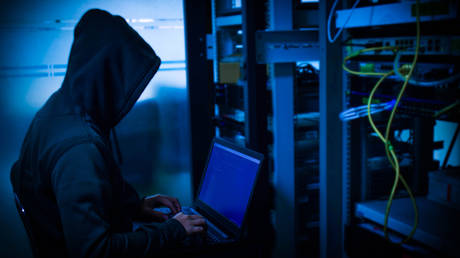
A single employee, known to investigators only by his surname Chang, sat at a desk cluttered with monitor screens displaying lines of telemetry and global fulfillment codes. Hours later, his workspace was empty, his home searched, and his freedom suspended by the Keelung District Prosecutors Office. The charge on paper was dry and bureaucratic, citing falsified business documents and document forgery. Yet the underlying reality pulsed with the high-stakes tension of a geopolitical thriller. Fifty advanced Super Micro servers, housing thousands of prohibited computational cores, had slipped through the net. They were bound for the waiting server racks of mainland China, routed through the quiet harbors of Japan like contraband whiskey during prohibition.
Consider what happens when a single silicon chip carries more economic weight than a ton of crude oil.
Global export controls have turned advanced semiconductors into digital gold. Washington draws red lines across maps, dictating that processors capable of training large language models cannot cross certain borders without heavy licenses. But borders on maps are flat; supply chains are three-dimensional, chaotic webs spanning thousands of miles. When immense wealth concentrates in silicon squares no larger than a coaster, gravity pulls them toward the highest bidder. If the front door is locked by federal decree, the black market builds a ladder to the window.
Investigators allege that the path of least resistance ran through falsified end-user certificates and clever paperwork alchemy. Imagine staring at a shipping manifest that lists a data center expansion in Tokyo. Everything looks pristine. The stamps are crisp, the corporate entities check out, and the compliance boxes are neatly ticked. Except the hardware never intends to unpack its bags in Japan. It pauses, pivots, and boards a vessel heading west across the East China Sea, vanishing into the hungry maw of domestic Chinese cloud clusters starved for accelerated computing power.
The architects of these covert shipments relied on a fascinating legal loophole in Taiwan itself. Local statutes do not explicitly classify the unauthorized export of artificial intelligence accelerators as a standalone criminal offense. Because of this legislative gap, prosecutors cannot simply charge individuals with chip smuggling. Instead, they must hunt the paper trail, leaning heavily on allegations of fraud, forgery, and breach of trust. Every raid, every detained executive, and every seized computer terminal is part of an effort to punish the deception used to trick the bureaucracy, rather than the movement of the metal itself.
Seven individuals now sit behind the walls of this expanding dragnet. The dragnet has already swept up figures linked to server manufacturing giant Super Micro Computer and regional distribution networks. Yet the arrival of investigators at an Nvidia workstation marks a psychological shift. It signals that the corporate giants sitting at the very center of the technological universe are no longer immune to the gravitational pull of the gray market.
Publicly, corporate leadership maintains a stance of absolute defiance. Representatives have repeatedly noted that unauthorized diversion is a nonstarter, pointing out that high-end accelerators require intricate software ecosystems, ongoing driver updates, and continuous technical support to function at scale. Jensen Huang has long argued that a black-market data center assembled from smuggled parts is ultimately a dead end, a brilliant engine starved of fuel without official maintenance and enterprise backing.
Theory, however, often fractures upon contact with desperate demand. When the price for a forbidden accelerator on the underground market climbs high enough, the incentive to test the compliance walls becomes overwhelming. Middlemen form shell companies, logistics coordinators look the other way, and corporate employees sign paperwork they should have scrutinized twice.
The investigation continues to widen, moving outward from coastal patrols and customs offices toward the executive suites of Taipei. What began as an accidental discovery by maritime officers investigating an unrelated smuggling operation has transformed into a systemic audit of how the modern world guards its most precious intellectual property.
The servers in question are already humming in dark rooms far away, processing algorithms and spitting out answers. But back where the paperwork was stamped and the signatures were inked, the human cost of the silicon gold rush is only beginning to settle.