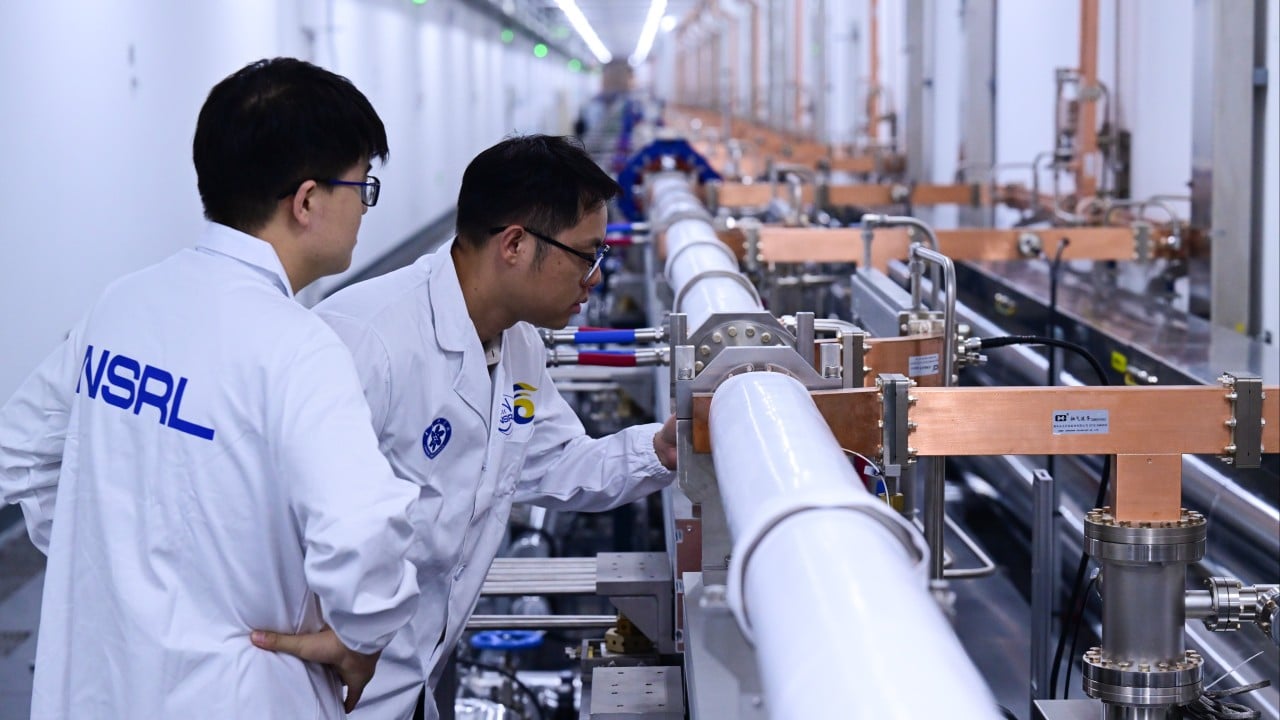
The air inside the cleanroom smells of isopropyl alcohol, ozone, and millions of dollars burning through the quiet hours of a Tuesday night. Outside, the city sleeps under a gray blanket of smog and neon, but inside, under the harsh glare of yellow safety lights designed to protect photosensitive silicon, time behaves differently.
Chen does not look up from his workstation. His eyes are bloodshot, reflecting the cascading green lines of an oscilloscope tracking voltage stability across a microscopic wafer. He has not seen the sun in three days. Around him, twenty other engineers sit in similar postures of intense, quiet exhaustion, hunched over terminals that control machines worth more than small nation-states. They are not writing software for social media feeds or video streaming algorithms. They are building a central nervous system out of sand and copper. Discover more on a connected subject: this related article.
For decades, the world of computing was flat. It lived behind glass screens, inside plastic boxes sitting on mahogany desks or tucked into the denim pockets of hurried commuters. Computers processed data; humans provided the physical agency. We walked, we lifted, we navigated the chaotic friction of the physical world while our digital tools waited patiently for our fingertips to tap a command.
That era is ending. Additional journalism by MIT Technology Review explores related views on this issue.
The machines are waking up. They are stepping off the server racks and out of the simulated environments of university labs to walk among us. They sort packages in windowless warehouses the size of airplane hangars, sweep industrial floors at midnight, and navigate unpredictable sidewalks choked with pedestrians, stray dogs, and fallen leaves. But to do any of this without crashing into a wall or dropping a fragile cargo, a robot needs more than mechanical muscle. It needs a brain that operates at the speed of instinct.
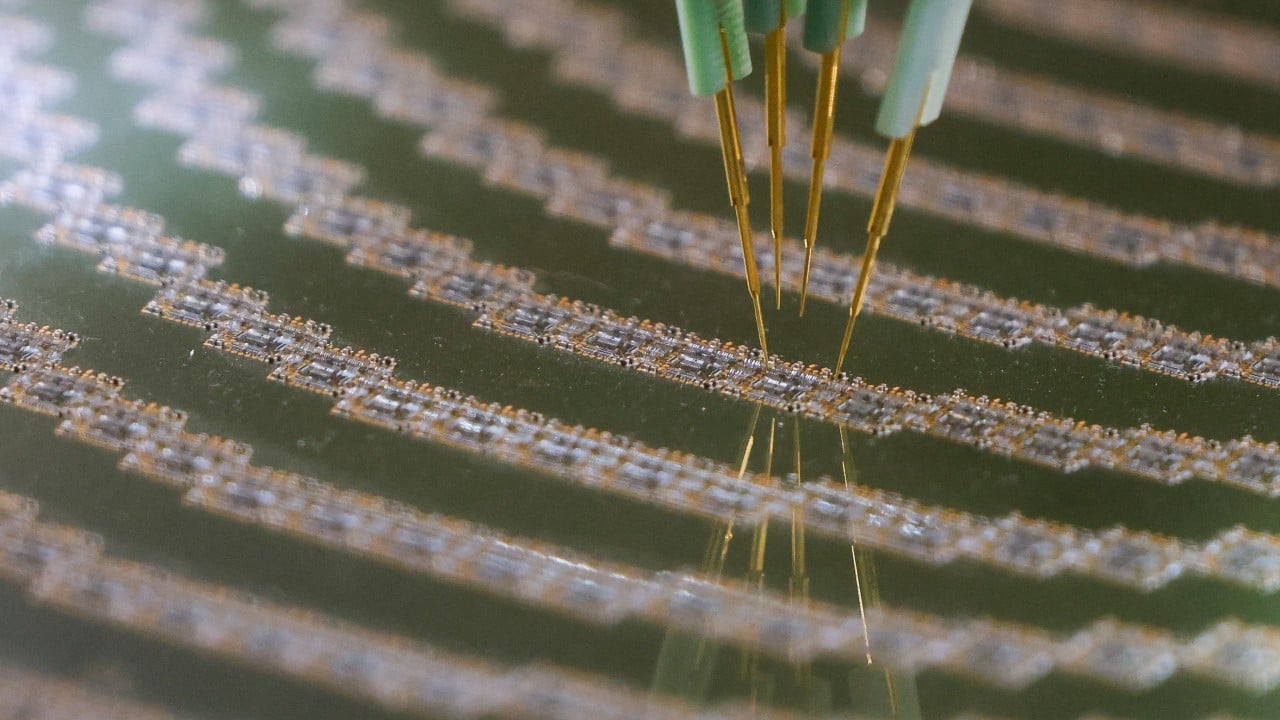
That is where the semiconductor designers come in. Building a chip that can process real-time spatial mapping, kinematic calculations, and sensory input without melting from thermal overload is one of the hardest engineering challenges of our time. It requires a rare alchemy of physics, material science, and pure financial stamina. Semiconductor fabrication is a notoriously unforgiving mistress. One microscopic speck of dust during the photolithography stage, and a batch of chips worth a king's ransom becomes useless silicon sludge.
Enter the backers. In the high-stakes game of hardware development, venture capital is rarely enough. You need industrial titans with deep pockets and massive supply chains to throw their weight behind your vision. When a giant like Xiaomi steps into the ring, the entire industry takes notice. Xiaomi is not merely a smartphone maker; it is an omnipresent octopus of consumer electronics, smart appliances, and industrial automation. Their backing is a stamp of credibility that tells the financial world this is not just another speculative science fiction pitch deck. This is hardware with a destination.
Behind the sleek promotional videos and glossy press releases, however, lies the grinding machinery of corporate finance. Designing advanced silicon is an expensive obsession. Millions vanish into research and development before a single commercial unit rolls off the assembly line. To survive, these companies must eventually leap from the cozy, closed ecosystem of venture funding into the glaring, brutal sunlight of public markets.
Recent developments show that this particular Xiaomi-backed robotics chip designer has successfully cleared significant regulatory and structural hurdles, paving a clear path toward a massive public debut. Sources close to the proceedings indicate that the firm is eyeing a landmark initial public offering on the Hong Kong Stock Exchange, targeting a capital raise of roughly one hundred million dollars.
One hundred million dollars. In the realm of modern finance, it is a staggering sum, yet in the brutal economics of semiconductor manufacturing, it is merely runway fuel. It buys lithography time, talent acquisition, mask sets, and test wafers. It pays for the sleepless nights in the cleanroom. It bridges the terrifying gap between a brilliant prototype that works in a controlled lab and a mass-produced component capable of powering millions of autonomous machines across the globe.
To understand why this matters, you have to look past the financial ticker symbols and examine the fundamental bottleneck of modern robotics.
Consider a standard consumer drone or an autonomous delivery cart navigating a crowded downtown street. A pedestrian steps off the curb while staring at a smartphone. The machine has milliseconds to react. It must capture visual data through its camera lenses, parse that data using neural networks, calculate the pedestrian's vector, determine its own braking distance, and execute a physical maneuver—all before the human even realizes they made a misstep.
If that computation happens on a general-purpose processor designed for a smartphone, the chip will draw too much power, drain the battery in minutes, and heat up to dangerous temperatures. If it relies on cloud computing, the millisecond delay introduced by wireless latency can mean the difference between a safe stop and a costly collision.
The solution is edge computing powered by specialized architecture. Chips built specifically for robotics do not just compute; they translate raw physics into binary choices instantaneously. They are engineered to handle massive parallel processing streams of sensor data—LiDAR, radar, optical cameras, and inertial measurement units—without breaking a sweat.
Building such a chip is an exercise in extreme compromise. You must pack billions of transistors onto a sliver of silicon smaller than a postage stamp while keeping power consumption low enough for a battery-powered robot to operate for an entire shift. Every nanometer matters. Every trace of copper routing is a battleground against electrical resistance and thermal dissipation.
When a design house manages to clear the rigorous evaluation phases, pass rigorous compliance checks, and secure the financial backing required to scale, it signals a maturation of the entire robotics sector. We are moving past the era of novelty dancing robots designed for corporate trade show stages. We are entering an era of utilitarian automation where mechanical helpers are woven invisibly into the fabric of daily logistics, manufacturing, and urban infrastructure.
The decision to target the Hong Kong Stock Exchange for this capital injection is itself a strategic statement. Hong Kong remains a vital gravitational pull for capital bridging mainland technology ambitions with international investors. As regulatory frameworks tighten globally and supply chains undergo seismic realignments, securing public funding in a major financial hub provides the ammunition needed to weather geopolitical headwinds and aggressive foreign competition.
Yet, for Chen and his engineering team back in the lab, the stock ticker and the press releases are distant abstractions. Their world remains strictly constrained by the edge of the microscope and the rhythmic hum of cooling fans.
Around 4:00 AM, the simulation finishes running.
Chen leans forward, his breath catching in his throat as the verification metrics flash green across the monitor. The architecture holds. The power draw is within acceptable thresholds. The latency metrics are razor-thin. For a fleeting second, the exhaustion lifts, replaced by that rare, intoxicating thrill known only to those who coax lightning through stone.
He saves the configuration file, stretches his stiff shoulders, and looks out the reinforced window of the cleanroom. The sky outside is beginning to trade its bruised purple for a pale, uncompromising blue. Somewhere out there, across continents and supply chains, warehouses are expanding, delivery fleets are organizing their routes, and the world is quietly bracing for a new generation of mechanical workers.
They do not know it yet, but those future machines are already being born right here, etched in silicon, fueled by a hundred million dollars of ambition, and forged in the quiet desperation of a room full of people who refused to stop typing until the code finally made sense.
The bell on the trading floor has not rung yet. The IPO paperwork is still settling on mahogany desks in towering skyscrapers. But the real work—the hard, dirty, beautiful work of waking up the physical world—is already well underway.