For years, the night on Lundy Island belonged to teeth.
They crept through the bracken when the salt spray was thick and the lighthouse beam swept across the Bristol Channel, turning the dark water into a shifting sheet of obsidian. They weighed mere ounces, yet their presence was catastrophic. To walk the granite paths of this isolated three-mile scrap of England in the late twentieth century was to walk a quiet graveyard. Underground, hidden beneath the turf where ancient seabirds had nested for millennia, an invisible invasion was devouring the future.
Rrats. Millions of them, arriving originally on shipwrecked timbers, multiplying in the dark, feeding on something precious and irreplaceable.
Imagine walking out to the cliffs at dusk, waiting for the sky to fracture with life, and hearing only the wind. No whistling calls. No heavy, rushing wings whistling overhead like falling leaves. Just an empty, scouring Atlantic gale.
That absence used to break my heart.
I remember standing on the western cliffs decades ago, watching the heavy Atlantic swells batter the granite below. It is a lonely place, Lundy. The sea isolates it from the rush of modern life, leaving you exposed to the elements. But the real tragedy wasn't the isolation. It was the quiet. The puffins, those clumsy, brightly-beaked clowns of the sea who spend winters bobbing on icy waves before returning to the very same burrow year after year, were vanishing.
They didn't just leave. They were eaten alive in the dark.
Consider what happens when an invasive predator enters a pristine ecosystem. Seabirds like puffins and Manx shearwaters are evolutionary innocents. For thousands of years on isolated islands, they evolved no defenses against ground-hunting mammals. They lay a single egg on the bare earth of a burrow and sit on it, trusting the isolation of the sea to protect them. They are heavy, awkward on land, and completely defenseless.
Rats found those eggs easy pickings. They found the fluffy, defenseless chicks even easier.
Year by year, the numbers dwindled. The local population of puffins plummeted to a pathetic handful, numbering fewer than ten pairs by the turn of the century. Ten pairs. On an island once choked with thousands of them. The Manx shearwaters faced a similar doom, pushed to the absolute brink of local extinction. The island was slowly dying from the bottom up, stripped of its soul by an army of small, sharp teeth.
Something drastic had to happen.
In 2003, conservationists made a terrifying, high-stakes gamble. They launched a massive eradication project, a meticulously planned operation across the island’s steep, treacherous terrain to clear every single rat. It was a massive undertaking, drawing criticism from those who doubted the ethics or the feasibility of such a total culling on a wild nature reserve. Critics pointed to the sheer scale of the island, the hidden caves, the vertical cliffs.
Yet, the project pushed forward.
Silence descended on the eradication teams as months turned into years. They monitored traps. They combed every acre. They waited for the ecosystem to exhale.
And then, the magic happened.
The recovery did not happen overnight. Nature moves at its own stubborn, deliberate pace. But the removal of the pressure unleashed a hidden resilience. The turf began to heal. The seeds dropped by passing gulls finally took root without being devoured. And underground, the ancient burrows stood empty no longer.
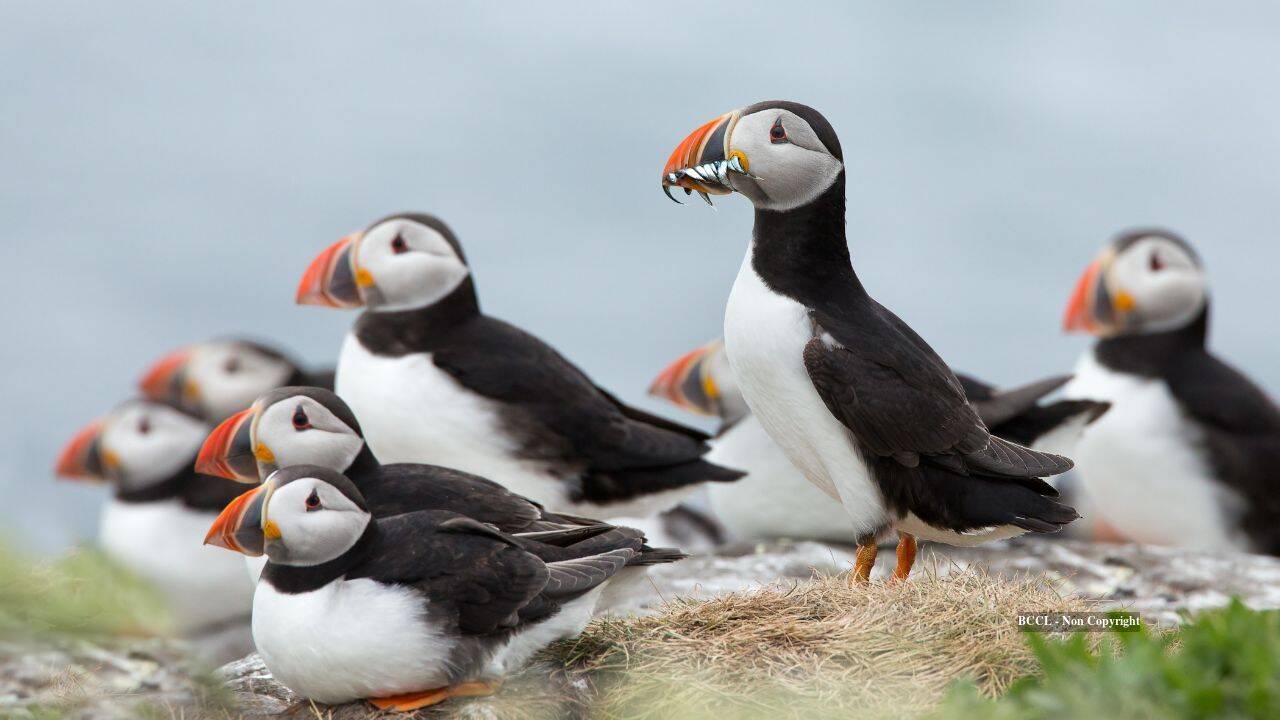
Fast forward to the latest census counts, and the transformation is nothing short of miraculous. Lundy is officially rat-free, and the seabirds have roared back to life. Recent counts reveal that puffin numbers have soared, with more than forty thousand seabirds now calling the island home during the breeding season.
Forty thousand.
Think about that number. It represents a deafening, chaotic, glorious cacophony of life.
Walk those same western cliffs today, and the air smells entirely different. It is rich with the potent, earthy musk of guano and damp feathers. You hear them before you see them—a low, resonant rumbling from beneath the earth, the soft purring calls of thousands of Manx shearwaters returning under the cover of night. And during the day, the water below churns with activity. Bright orange bills flash against the dark water. Black and white torpedoes splash down awkwardly onto the surface, diving deep to chase sandeels, surfacing with bills crammed full of shimmering silver fish.
The island has reclaimed its rhythm.
This is what happens when you remove a single, devastating friction point from a delicate system. You do not just save a species; you restore an entire ancient dialogue between the ocean and the sky. The puffin is back, not as a museum exhibit or a fading memory etched into old photographs, but as a living, breathing testament to what is possible when humans decide to undo their mistakes.
The lighthouse beam still sweeps across the Bristol Channel every night, cutting through the salt haze. But now, it sweeps over thousands of safe, warm burrows, guarding a secret that was nearly lost forever.
The wings have returned. And the dark no longer belongs to the teeth.