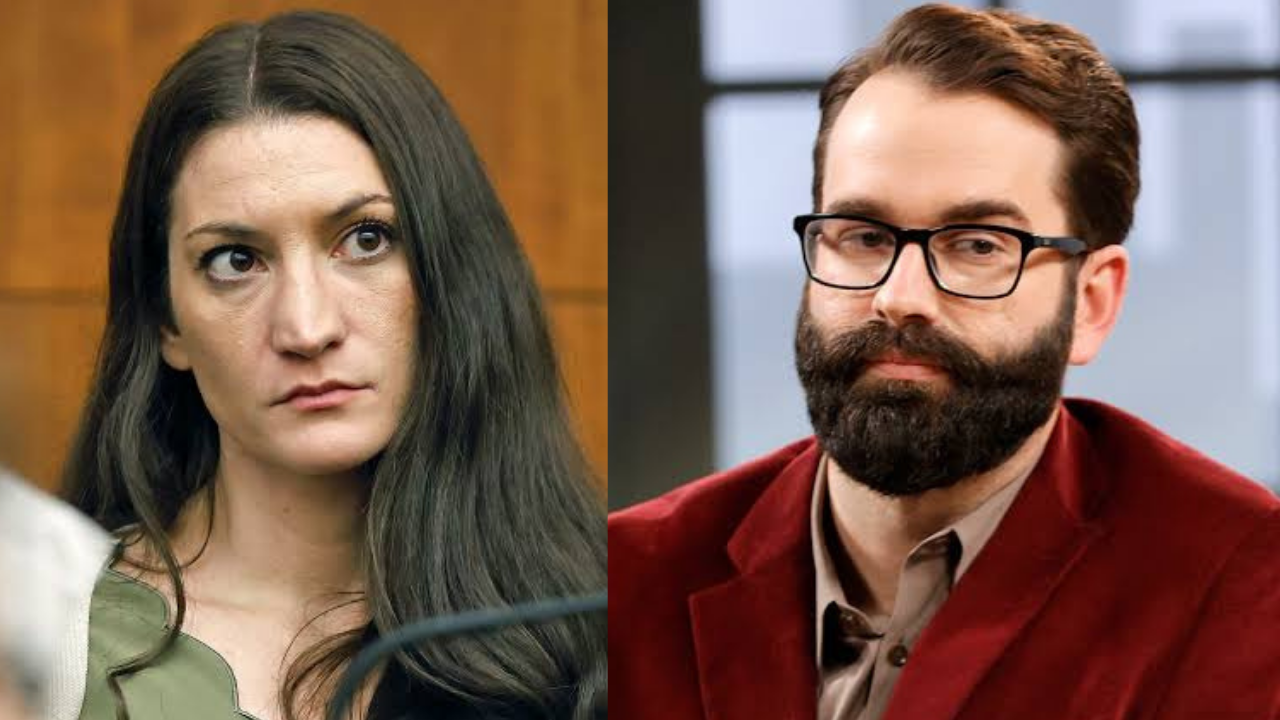
The courtroom air tasted like cold iron and damp wool. Outside, a late-winter slush coated the pavements of Massachusetts, muting the frantic pulses of a media machine that had feasted on a tragedy for years. Inside, twelve men and women sat behind closed doors, trapped in a room of shifting arguments and fractured memories.
They were stuck.
The jury remained deadlocked. Weeks of grueling testimony, medical jargon about postpartum psychosis, harrowing 911 audio replayed until the frequencies lost their edges, and still, the scale refused to tip. Guilt or illness. Murder or mercy. The law demands a binary outcome for a human condition that often exists in total, suffocating darkness.
And then came the outside noise.
Matt Walsh, speaking from the pulpit of his digital broadcast, pointed a finger at the screen and denounced them. Not just the accused, but the defenders. The voices online trying to parse how a mother of three could descend into an unheralded abyss and emerge on the other side of unthinkable violence. To the commentators, it was a battle line. Pick a side. Condemn the act. Erase the context.
Cruelty is easy when you reduce a life to a headline.
I know what it feels like to stand on the edge of that mental precipice, staring down at a fog so thick it swallows your own identity. When my second child was born, the world didn't burst into a joyful technicolor commercial. It narrowed to a pinhole of absolute terror. Sleep dissolved into hallucinations of danger. Every shadow held a threat; every breath felt borrowed. You smile for the pediatrician. You hide the shaking hands. You tell yourself you are fine because the alternative is too monstrous to admit aloud.
Most of us step back from the ledge. The scaffolding holds.
For Lindsay Clancy, the scaffolding shattered.
The trial exposed the raw mechanics of a mind breaking under the weight of severe postpartum psychiatric illness, compounded by a cocktail of powerful medications prescribed in rapid, desperate succession. Medical experts took the stand, mapping out the architecture of a brain under siege. They spoke of delusions, of ego-dystonic thoughts—horrors foreign to the true self, thrust upon a terrified mother by a hijacked nervous system.
Yet, the public arena demanded retribution. It wanted a villain without nuance.
This is where the commentary misses the human heartbeat. Figures like Walsh lean into the visceral outrage of the act, treating the defense of mental health struggles as an elaborate excuse, a loophole for the wicked. They look at the broken bodies of those children and demand a simple, unyielding fury.
Who can blame them for the anger? The dead children are the only absolute truth in the room. Their absence is permanent. Their silence is heavy.
But outrage is a poor instrument for justice. It mistakes a medical catastrophe for a moral failure.
Consider what happens when we refuse to look at the machinery of mental collapse. We build a society that tells mothers they must be superhuman, and when they fracture under the impossible load, we brand them monsters rather than patients who slipped through the net of a failing medical safety net. We pretend that sanity is a permanent address rather than a fragile lease.
The jury knows this. That is why they are deadlocked.
They are wrestling with the chasm between legal accountability and clinical reality. How do you judge an act committed by someone who was, by all medical accounts, no longer occupying the same reality? How do you weigh the devastation of the victims against the evidence of a profound, chemically induced psychosis?
There is no neat resolution to this story. There is no clever legal maneuver that brings the laughter back to that Duxbury home.
The commentators will keep shouting into their microphones. The internet will keep dividing itself into opposing camps of pitchforks and apologies. The deadlock will eventually break, one way or another, yielding a verdict that will satisfy neither grief nor logic.
As the snow melts outside the courthouse, the real tragedy remains untouched by the arguments inside. It lingers in the empty rooms, in the heavy air of unanswerable questions, and in the quiet realization that some storms are so violent they leave nothing behind except the wreckage of who we used to be.