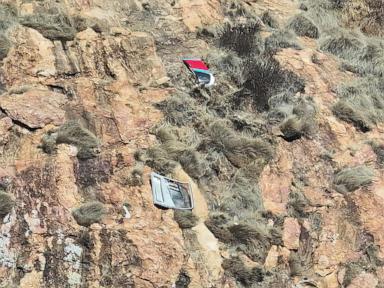
The morning air over Samburu County starts as a brittle, piercing blue. If you have ever stood in the shadow of Mount Ololokwe, you know the way the light hits the ancient stone, turning the basalt into a canvas of copper and ash. It is a landscape that demands quiet reverence. On a Wednesday morning, a chartered Eurocopter EC130 B4 lifted off from the Loisaba Conservancy. It carried seven souls into that vast Kenyan sky. Six passengers and a pilot. Among them, four American citizens who had traveled halfway across the globe to witness the raw majesty of East Africa.
Then came the silence.
At 9:13 a.m., the connection shattered. The helicopter went down in a rugged, unforgiving stretch near the Ewaso Nyiro area.
News travels strangely across oceans. In Washington, a brief diplomatic update crosses desks. Dry words. Standard protocols. A State Department spokesperson issues the confirmation that four Americans—later updated to five in joint reports alongside local tallies—perished in the wreckage. Consular assistance is being provided. Condolences are formally extended. The machinery of international bureaucracy turns with cold, polite precision.
But behind those sterile press releases lies an absolute rupture of ordinary human lives.
Consider what happens next for a family sitting thousands of miles away in an American suburb. One moment, they are checking a time zone difference, wondering if their loved one has spotted an elephant herd or managed to snap a photograph of the acacia trees cutting against the horizon. The next moment, a notification or an official knock brings an unendurable reality. The distance between a holiday of a lifetime and an absolute finality shrinks to zero in a single second.
This is the hidden weight of travel news that charts disasters in distant coordinates. We consume statistics like weather reports. Four dead. Seven total casualties including the local charter crew. A Eurocopter down. An ongoing investigation by the Kenya Civil Aviation Authority. The numbers strip away the texture of existence. They erase the morning coffee shared before boarding. They omit the nervous laughter of first-time helicopter passengers looking down at the sprawling bush. They hide the profound grief of local operators like Tropic Air and rescue teams from the Kenya Red Cross who rushed toward the smoke-choked foothills of Mount Ololokwe, hoping against hope to find a miracle in the brush.
The tragedy also exposes the fragile vulnerability threaded through modern exploration. We live in an era where the most remote corners of the planet are marketed as accessible playgrounds. Charter flights sweep tourists from luxury conservancies to distant valleys in minutes, bridging wild divides with spinning blades and turbine engines. We forget that the wilderness remains indifferent to our technology. Gravity does not negotiate with an unexpected mechanical failure or a sudden mountain downdraft.
Investigations will take weeks, perhaps months. Experts from civil aviation boards will comb through twisted metal, analyze flight data recorders, and map out the final trajectory over Samburu. They will look for answers in fuel mixtures, rotor stress, and altimeter readings. They will write comprehensive reports meant to ensure it never happens again.
Yet no report can mend the tear left in the fabric of the lives affected.
The sun still rises over Mount Ololokwe. The wind moves through the acacia thorns along the Ewaso Nyiro riverbed. Down below, the earth reclaims its silence, leaving behind only the memory of a journey cut tragically short beneath the African sky.