Cairo in January smells of dust, damp stone, and roasting corn. It is a city that breathes in whispers. For a young man with a notebook and an inquisitive mind, those whispers felt like an invitation rather than a warning.
He was twenty-eight. His name was Giulio.
In the winter of 2016, Giulio Regeni was walking through streets that thousands navigate daily without a second glance. He was a Cambridge doctoral student, fluent in Arabic, obsessed with the quiet, subterranean world of independent labor unions in Egypt. To him, these workers weren't political threats. They were people whose daily survival depended on solidarity and invisible contracts forged in tea shops and cramped apartments. He wanted to understand how they organized beneath the heavy hand of a security state.
He did not know that curiosity could be treated as a capital offense.
On the evening of January 25, 2016—the fifth anniversary of the uprising that unseated Hosni Mubarak, a day when Cairo's streets were choked with undercover police and palpable paranoia—Giulio left his apartment in Dokki. He was heading to Tahrir Square to meet a friend. He never arrived.
What followed was a nightmare stretched across ten agonizing days.
Imagine a silence that fills a home thousands of miles away. In Friuli, Italy, his parents stared at phones that refused to ring with good news. They flew to Cairo, thrusting themselves into a labyrinth of bureaucracy, pleading with officials who offered polite smiles and stone walls. The Egyptian authorities suggested everything except the truth. A car accident. A robbery gone wrong. A personal dispute. They spun a revolving door of explanations designed to exhaust grief into compliance.
Then came February 3.
His body was found dumped in a ditch near the Cairo-Alexandria highway.
Even now, the forensic details read like a medieval horror text carved into modern flesh. Cigarette burns. Broken bones. Concussions. Signs of systematic, prolonged torture that lasted for days. The message was explicit, brutal, and addressed to anyone who dared look too closely at the machinery of state control. It was a terrifying reminder that some stones are not meant to be lifted.
For years, the official narrative from Cairo remained frozen in defensive hostility. Cooperation was promised, then withheld. Files were blocked. Witnesses vanished or recanted under pressure. Governments in Europe, eager to maintain lucrative arms deals and intelligence-sharing partnerships with Cairo, coughed into their sleeves and looked away. Geopolitics has a cold stomach. It digests human tragedy with astonishing ease.
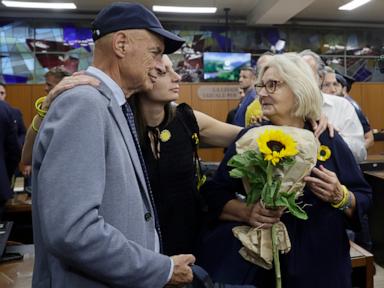
But Paola Regeni, Giulio's mother, refused to let the world swallow her son's memory.
Sitting in parliamentary hearings, her voice steady and edged
The Weight of Ten Years in a Silent Courtroom
news
Justice is rarely an explosion. Most of the time, it is a slow accumulation of dust, a patient stacking of paper files until the pile becomes too heavy for power to ignore.
In a quiet courtroom in Rome, the air smelled of old paper and suppressed breath. Outside, the city hummed with its eternal rhythm, indifferent to the heavy history unfolding behind closed doors. Inside, silence reigned. It was the kind of silence that arrives when a decade of grief finally runs into the unyielding wall of a judicial decree. Three men, thousands of miles away behind the protective parapets of the Egyptian security apparatus, were just handed ten-year prison sentences.
They were not sitting in the dock. They did not hear the judge speak.
Yet the room shook anyway.
To understand why this moment matters, you have to rewind to a cold winter in Cairo nearly ten years ago. Giulio Regeni was twenty-eight. He was a Cambridge doctoral student with a notebook, a curiosity about independent labor unions, and an absolute faith in the innocence of asking questions. In the architecture of modern authoritarianism, curiosity is often misread as subversion. To someone whose job is to see threats in the shadows, a young scholar mapping street vendors' unions looks less like an academic and more like an unlocked door.
Then came January 25, 2016.
Cairo swallowed him. For days, his face flickered across international news screens, a ghost image shared by frantic friends and a devastated mother. When his body finally surfaced on the ditch-lined edge of the Cairo-Alexandria highway, it told a terrifying story. It was a ledger of systematic brutality. Every bruise, every fractured bone, every cigarette burn was a message written in a language of absolute control.
Governments lie when they are cornered. The first official explanations arrived like bad fiction. A traffic accident. A botched robbery by a criminal gang that magically possessed police uniforms and specialized surveillance equipment. Each narrative was discarded as quickly as it was spoken, insult added to devastating injury. Cairo officials shrugged behind diplomatic immunity and state secrets, banking on the idea that the world has a short memory, that trade deals and geopolitical alliances always outweigh the life of a single Italian researcher.
They miscalculated Paola Regeni.
Imagine standing at the edge of an abyss, refusing to step back. Imagine turning your private heartbreak into a relentless public instrument. For years, Paola and her family refused the quiet erasure that states often demand of grieving relatives. They did not accept condolences wrapped in diplomatic silence. They demanded a courtroom.
Rome prosecutors walked a tightrope. They gathered digital footprints, witness accounts, medical reports, and internal memos, mapping out the architecture of an abduction orchestrated by state actors. They proved what everyone already suspected but no court had yet dared to codify: that an individual could be snatched off the street by men wearing the badge of the state, tortured in a secret facility, and discarded like refuse.
The trial itself was an uphill battle against diplomatic frostbite. Egypt refused cooperation. Prosecutors tried defendants in absentia, a legal mechanism that critics sometimes dismiss as toothless theater. What good is a trial when the convicts are safely beyond extradition?
Ask the families of the disappeared. Ask the bureaucrats who thought they could outlast the calendar.
A ten-year sentence issued by a Rome tribunal is not merely about three individual security officials. It is a fracture in the armor of impunity. It establishes a judicial boundary marker: borders can shield men from handcuffs, but they cannot entirely erase a paper trail written in blood and stubborn truth. It says that sovereign power does not grant a license to vanish people in the dark.
Consider what happens next across the Mediterranean. The diplomatic corridors will bristle. Statements will be drafted, filed, and ignored. Trade delegations will continue their quiet work beneath chandeliers, pretending that human rights are an inconvenient footnote to economic pragmatism.
Yet something fundamental has shifted.
The defendants remain out of reach, but they are no longer anonymous cogs in a machine of state denial. Their names are recorded in a public register of convicted criminals. Every time they travel, every time they look over their shoulders at an airport terminal or a foreign border, they will carry the invisible weight of that Rome courtroom. They are cornered by history.
Down the hall, the lights flicker off. The journalists pack their recorders. The family steps out into the Roman evening, blinking against the sudden glare of streetlights. The grief does not vanish with a gavel strike. A decade of absence cannot be undone by a judicial formula. But the silence has finally been broken.
And somewhere in the dark, a state learns that memory is longer than power.