History rarely announces itself with a mushroom cloud. More often, it leaks out through quiet whispers in provincial hospitals, guarded statements from grieving relatives, and the heavy silence of state archives that refuse to yield their final secrets. When a grieving mother steps forward to defend the memory of her son, a scientist swept away by a sudden and violent biological catastrophe, the world prefers to look away. It is easier to believe in natural outbreaks, random anomalies, and the gentle laws of epidemiology than to confront the engineered dark arts of the twentieth century.
The Soviet bioweapons apparatus, known primarily through the sprawling infrastructure of Biopreparat, was designed to operate beyond the margins of international treaties and human conscience. Decades after the collapse of the Soviet Union, the ghosts of programs like Project Vector continue to cast a long shadow over modern security, public health, and biosecurity protocols. The public narrative has long oscillated between sensationalized spy thrillers and sterile academic denials. Yet, the reality on the ground in cities like Yekaterinburg—formerly Sverdlovsk—remains a grim testament to the hazards of state-sanctioned pathogen manipulation.
The Anatomy of a Cover Story
When lethal agents escape containment, institutions instinctively protect themselves long before they protect the public. In April 1979, an anthrax release from military compound 19 in Sverdlovsk triggered a localized epidemic that killed dozens of citizens, though the exact toll remains a subject of fierce debate among historians and toxicologists. Soviet authorities blamed tainted meat purchased on the black market. They pointed fingers at local butchers and livestock handlers. They constructed an elaborate, bureaucratic fiction designed to deflect attention away from aerosol generation and military negligence.
Decades later, the pattern repeats itself with different agents and different locations, but the playbook remains remarkably consistent. Families of researchers who perish under unusual circumstances are often caught between personal grief and institutional intimidation. When a scientist falls victim to a rare hemorrhagic fever or an antibiotic-resistant strain during routine laboratory work, the official diagnosis frequently bends to accommodate political sensitivities. The mother of the fallen researcher speaks out not merely to salvage her son's professional reputation, but to pierce the wall of institutional denial that treats human lives as expendable collateral in great power competition.
Inside the Sealed Laboratories
Modern biodefense research walks a razor-thin line between deterrence and provocation. Facilities equipped to handle Biosafety Level Four pathogens operate behind multiple rings of physical security, HEPA filtration units, and negative pressure systems. Yet, systems are only as reliable as the human beings operating them. Fatigue, procedural shortcuts, and inadequate safety culture have historically posed greater threats than external sabotage or sophisticated espionage.
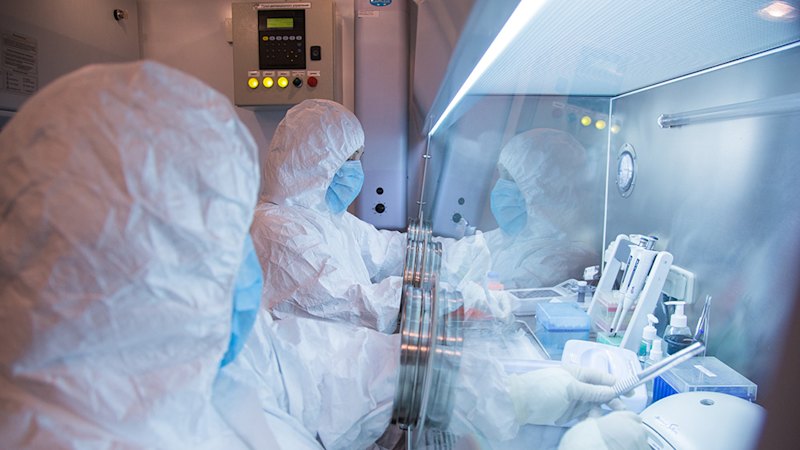
Consider the physical reality of working inside a high-containment suite. Researchers spend hours encased in heavy positive-pressure suits supplied with external air hoses, handling lethal agents through glove ports or specialized cabinets. Manual dexterity drops. Communication becomes muffled and difficult. Under these conditions, a microscopic tear in a glove or a momentary lapse in concentration can transform a routine assay into a critical exposure event. When such incidents occur behind closed doors, the institutional reflex is containment of information rather than transparency.
The scientific community often assumes that advanced automation and genomic sequencing have eliminated the risks of accidental laboratory-acquired infections. This is a dangerous illusion. As laboratories around the globe race to characterize emerging viral families and enhance surveillance capabilities, the volume of handled material multiplies exponentially. Every vial of harvested tissue or recombinant vector represents a potential vector for release.
The Geopolitics of Biological Transparency
Trust in global health institutions relies on open data sharing and independent verification. When states weaponize biology or maintain offensive capabilities under the guise of defensive research, they poison the well of international cooperation. The legacy of the Soviet program is not merely a collection of abandoned bunkers and rusted centrifuge rotors; it is a persistent deficit of trust between nations.
Verification protocols under the Biological Weapons Convention remain notoriously weak compared to the rigorous inspections managed by the International Atomic Energy Agency for nuclear materials. Without intrusive on-site inspections and whistleblower protections, clandestine research can hide in plain sight within university departments, commercial pharmaceutical fronts, or dual-use agricultural facilities.
Public health analysts tracking potential spillover events must constantly weigh natural zoonotic transmission against the possibility of research-related incidents. This ambiguity complicates outbreak response, fuels conspiracy theories, and undermines public confidence in official health guidelines. When authorities dismiss legitimate safety inquiries as misinformation, they feed the very skepticism they seek to suppress.
The mother defending her son from allegations of recklessness or negligence is fighting a proxy war against a machine that values secrecy above truth. Her voice reminds us that behind every geopolitical statistic and intelligence assessment lies a human cost paid by families who never signed up to be casualties of the cold war or its lingering aftermath. As long as state actors prioritize narrative control over biological safety, the shadow of Vector Four will continue to loom over the scientific enterprise.