A tanker moves across a dark sea with its transponder dark.
Thousands of miles away in Washington, a desk lamp illuminates a stack of briefing papers that outline a shifting global architecture. Between the silent ship on the water and the paperwork in the capital lies a friction that is quietly reshaping how global power trades its most vital resource.
For months, the rhythm of international commerce has been dictated by an unacknowledged dance. Oil flows from the fields of Siberia toward the sprawling ports of Asia, ignoring the architectural boundaries drawn by Western sanctions. New buyers step forward, turning discounted barrels into refined fuel, electricity, and industrial momentum. But energy is never just a commodity. It is leverage, currency, and survival wrapped into one thick, black liquid.
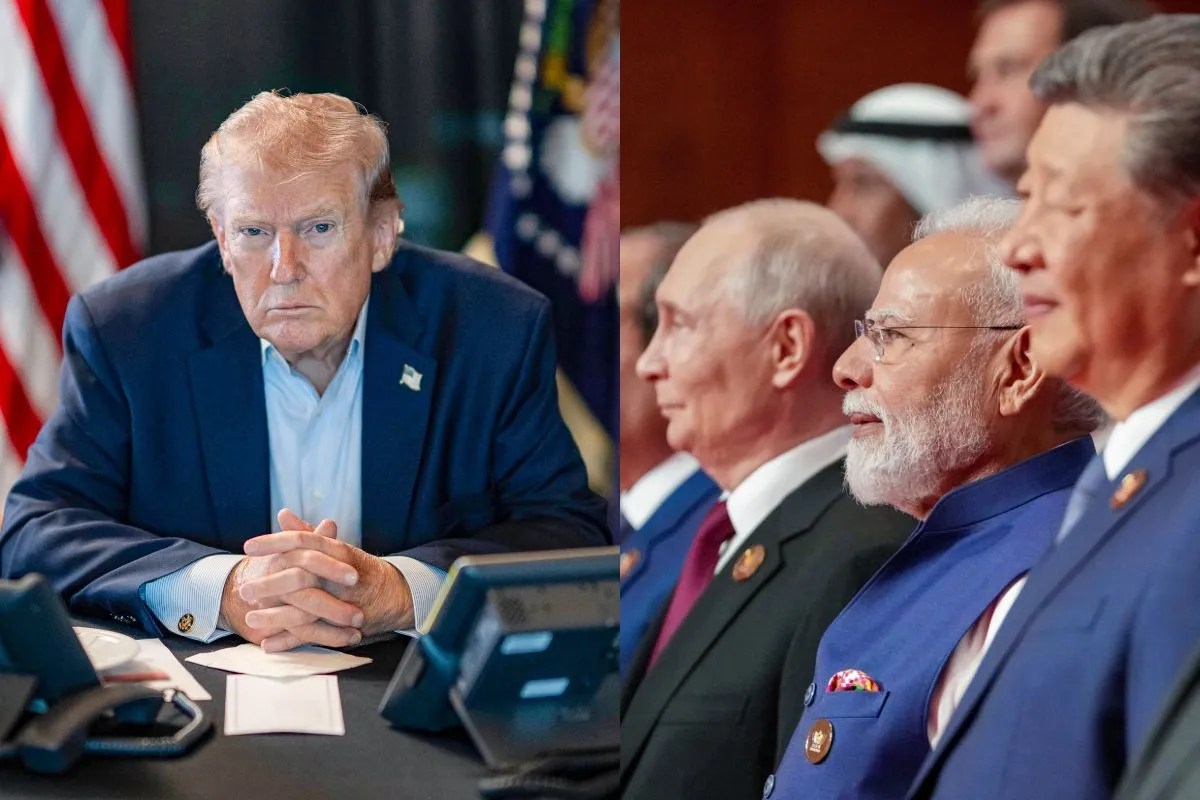
When the BRICS summit concluded recently, optimism hung thick in the air. Leaders stood shoulder-to-shoulder, speaking of alternative payment systems, de-dollarization, and a multipolar world order designed to bypass traditional financial corridors. Yet, ink dries faster than geopolitical habits change. Almost as the summit flags were being folded, Washington issued a sharp reminder that old gravity still holds sway.
The warning was clear. Keep buying discounted Russian crude in defiance of price caps, and face the sharp edge of secondary tariffs.
To understand why this friction matters, one must look beyond the sterile vocabulary of gross domestic product and trade deficits. Consider the position of a refinery manager in northern China or a state energy planner in New Delhi. For them, energy security is not an abstract theory debated in think tanks. It is the literal heartbeat of factories, agricultural pumps, and millions of homes that must stay lit through every season. When crude sells at a steep discount, passing it up feels like economic self-sabotage.
Sanctions create a peculiar market logic. When official channels close, shadow networks emerge. Tankers change flags mid-voyage. Insurance is re-routed through non-traditional maritime registries. Payments shift away from the greenback toward local currencies, quietly eroding the decades-old monopoly of the American dollar as the undisputed universal currency of energy.
Washington watches this evolution with growing unease. The architects of American foreign policy understand a fundamental truth: dominance is maintained not merely through military might, but through the ability to police the pipes and wires of global finance. If major economies can successfully bypass sanctions with impunity, the entire scaffolding of economic statecraft begins to crack.
Tariffs are the blunt instrument chosen to arrest this drift. By threatening penalties on nations that purchase Russian oil above established thresholds, the United States attempts to impose a cost heavy enough to outweigh the discount. It is a high-stakes game of economic brinkmanship.
Push too hard, and you risk driving targeted nations closer together, accelerating the very alternative financial systems you sought to prevent. Push too softly, and the sanctions become mere suggestions, losing their bite entirely.
Beneath the geopolitical posturing lies a profound irony. The very measures designed to isolate an economy have instead rewired global trade routes, forcing a permanent bifurcation of energy markets. One system operates under Western supervision, constrained by price caps and compliance checks. The other operates in the twilight, driven by bilateral agreements, alternative shipping lanes, and pragmatic self-interest.
In New Delhi and Beijing, the calculation remains remarkably simple. National interest trumps external reprimands. A rapidly developing nation of over a billion people cannot afford the luxury of moral foreign policy when cheap energy sits just across the northern border. They will absorb the diplomatic friction, calculate the risk of potential tariffs, and continue to fuel their industrial engines.
The tanker on the dark sea cuts through the waves, its hull heavy with crude that defies the old rules of the world. It carries more than oil. It carries the weight of a transition, moving slowly and inexorably toward an uncertain horizon where no single capital holds the monopoly on commerce.