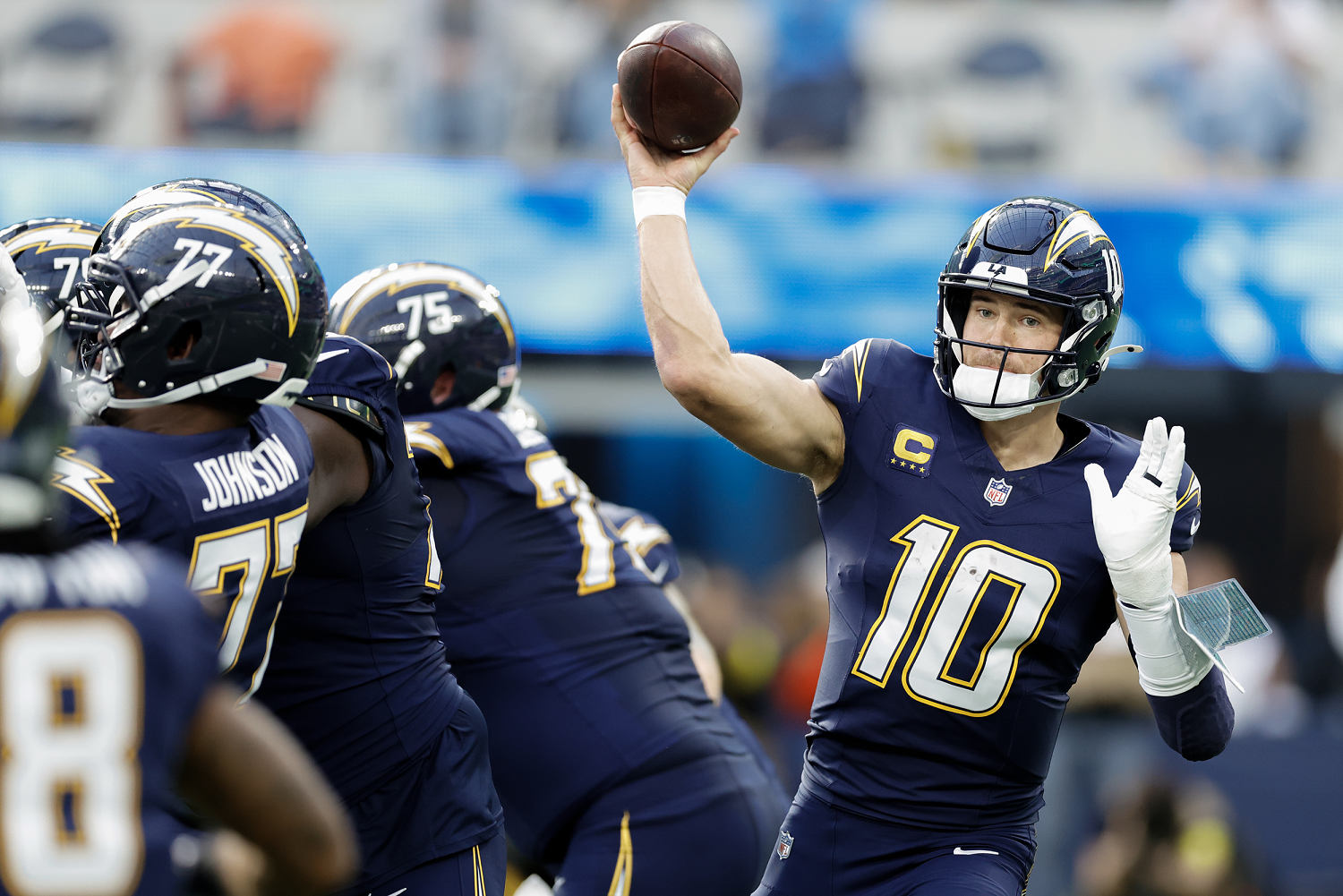
Autumn arrives in the National Football League not with a whisper, but with the hollow, echoing sound of panic echoing off empty lockers and morning-after talk radio.
The air outside the facility is crisp, carrying the scent of dying grass and concession stand propane. Inside, however, the air is thin and radioactive. September is barely old enough to vote, yet somewhere in the basement of a nondescript office building in suburban New Jersey or Kansas City, a head coach is staring at a white greaseboard like it holds the architectural blueprints for his own professional execution.
We love to rush to judgment. It is our national pastime, an addiction born of a culture that demands instant validation or immediate ruin. One Sunday afternoon of missed assignments, blown coverages, and botched field goals is all it takes to convince millions of people that a franchise is structurally unsound, cursed, or fundamentally broken.
Consider the fan sitting in Section 112, row twelve. He spent six months convincing his spouse that this year, finally, the cap space management would align with the drafting brilliance. He bought the jersey with the stitched-down numbers. He paid for the parking pass that costs more than a weekend in Montreal. And now, four hours later, his team is down by fourteen points to an opponent they were supposed to dismantle with surgical efficiency.
His beer is warm. His throat is raw. His chest feels tight.
Is it time to panic?
The sports media industrial complex would have you answer with a resounding, foaming-at-the-mouth yes. They thrive on the narrative of sudden collapse. They want you to believe that a zero-and-two start is a terminal diagnosis, a coroner's report delivered before the autopsy is even half finished.
Except football is not a sprint. It is a slow, grinding war of attrition played out over sixteen weeks of physical violence and mental exhaustion.
To understand why panic in September is almost always a fool's errand, you have to look past the box score and into the microscopic machinery of a modern roster. You have to understand how these men live, how they bleed, and how they rebuild themselves every seven days.
A locker room on a Tuesday morning after a loss smells like icy hot, damp cotton, and quiet desperation.
The television monitors are muted, flashing silent highlights of missed tackles. The players sit at their stalls with their heads bowed over their smartphones, scrolling through the digital lynch mob that has formed in their mentions. They know what the world thinks. They know the radio hosts are already drafting their obituaries.
In the coach's office upstairs, the coffee pot is on its fourth cycle. The head coach is wearing a hooded sweatshirt with the sleeves cut off, his eyes bloodshot from a night spent watching twenty-two different camera angles of a third-down conversion that went horribly wrong.
He is not panicking. Panic is a luxury for people who do not have to make decisions under live fire.
Instead, he is hunting for ghosts.
Why did the left tackle miss his slide protection? Was it communication, or was it physical fatigue? Did the safety bite on the play-action because he was young, or because the scheme asked him to do something unnatural?
These are the questions that separate the professionals from the mourners. While the public looks at the final score—a twenty-four to seventeen defeat against a conference rival—the coaching staff looks at the underlying process. Did they move the ball? Did they create explosive plays? Did the defense generate pressure, even if the quarterback got rid of the ball a fraction of a second too soon?
Sometimes, a team plays reasonably well and loses because of three fluky turnovers, a deflected pass that lands in the wrong hands, and a missed thirty-eight-yard field goal into a swirling wind. The box score says disaster. The tape says variance.
Variance is the invisible ghost that haunts every autumn Sunday. It is the bounce of an oblong leather ball that has no loyalty to anyone. It is the holding penalty called on the backside of a fifty-yard touchdown run. It is the hamstring that tightens up during pre-game warmups.
To panic because of variance is like screaming at the rain for getting your jacket wet.
Look back through the archive of autumns past, and you will find the ghosts of teams that terrified their fan bases before hoisting the silver trophy in February.
Remember the team from Massachusetts a few years back that looked utterly lifeless through the first month? Their offensive line was a sieve, their veteran quarterback looked like he was throwing a medicine ball, and the local columnists were writing elegies for a dynasty.
The panic was deafening. The radio callers were apoplectic.
They won twelve of their next thirteen games.
Or consider the squad from the NFC East that stumbled out of the blocks with three consecutive losses, plagued by injuries and defensive breakdowns. They didn't panic. They simplified their playbook, trusted their conditioning, and let their young playmakers grow up on the fly. By January, they were the most dangerous outfit in the bracket.
September football is an extended preseason played under live ammunition. New coordinators are installing complex schemes. Rookies are experiencing the speed of the professional game for the first time without the training wheels of August. Veterans are playing their way into game shape because the league eliminated two-a-day practices and reduced contact to preserve human cartilage.
When you ask a body to perform at maximal velocity after months of controlled rehabilitation, things break. Timing falters. Hands are slow. Feet are heavy.
This is not a crisis. This is biology.
Yet, every year, we act as though the first month of the season is an infallible crystal ball. We take a small sample size—three games, two games, sometimes just one half of football—and we extrapolate it across an entire seventeen-game marathon.
It is mathematically absurd. It is emotionally exhausting.
And yet, we cannot look away.
Why do we do this to ourselves?
Because football is our modern religion, and Sunday is our weekly pilgrimage. We invest our hopes, our childhood memories, our regional pride, and our precious weekend leisure time into laundry worn by twenty-something-year-olds we have never met.
When they lose, a small piece of our week is diminished. When they look incompetent, we feel exposed. It feels personal.
That is why the panic feels so urgent. It is an emotional defense mechanism. If you convince yourself in September that your team is completely hopeless, you insulate yourself against the pain of a heartbreaking loss in December. If you expect nothing, you can never truly be betrayed.
But what kind of life is that? What kind of fan watches a sport designed for dramatic uncertainty and demands absolute, unyielding perfection from the opening kickoff?
The teams that don't want to find out if the panic is justified are the ones run by seasoned executives and battle-hardened coaches who have seen this movie before. They know that the locker room will turn on itself if leadership shows even a flicker of doubt.
When a franchise quarterback throws three interceptions in a blowout loss on national television, his coach does not bench him on Tuesday morning. He puts his arm around him in the film room, points out the one read he made correctly in the third quarter, and tells him to fire the next one with conviction.
Confidence is a fragile, manufactured thing. It is built in the dark, away from the cameras, during grueling Wednesday practices when the rain is coming down sideways and the legs feel like lead.
You cannot manufacture confidence by panicking.
Listen closely to the silence that falls over a stadium when the home team walks off the field with a two-and-four record.
The popcorn boxes are crushed underfoot. The plastic cups are rolling down the concrete steps like tumbleweed in an empty desert. The ushers are bagging up the trash, ready to lock the gates until next Sunday.
Outside, the traffic is gridlocked. Horns blare. People roll down their windows to shout opinions into the cold night air about firings, trades, and wholesale organizational overhauls.
Inside the bowels of the concrete bowl, the equipment managers are already packing trunks for a cross-country flight. The laundry machines are humming, spinning jerseys caked in mud, sweat, and green turf stains.
The players shower in silence. They pull on their street clothes—expensive denim, designer hoodies, headphones clamped over their ears. They walk past the reporters with their eyes fixed on the floor, answering questions with monosyllabic armor.
"We've got to execute better."
"That starts with me."
"We'll look at the tape."
It sounds like cliché, but underneath it is something harder. It is the quiet resolve of men who know that the schedule does not stop for grief. Next Sunday is coming whether they are ready or not. The opponent will not care about their bruised egos or their restless nights.
So the panic remains outside, howling at the gates like the autumn wind.
Inside, the lights stay on. The tape rolls. The corrections are made. And somewhere in the dark, a football team starts the slow, impossible work of rising from the dead, one yard at a time.



