Strategic Vulnerabilities in Nuclear Modernization
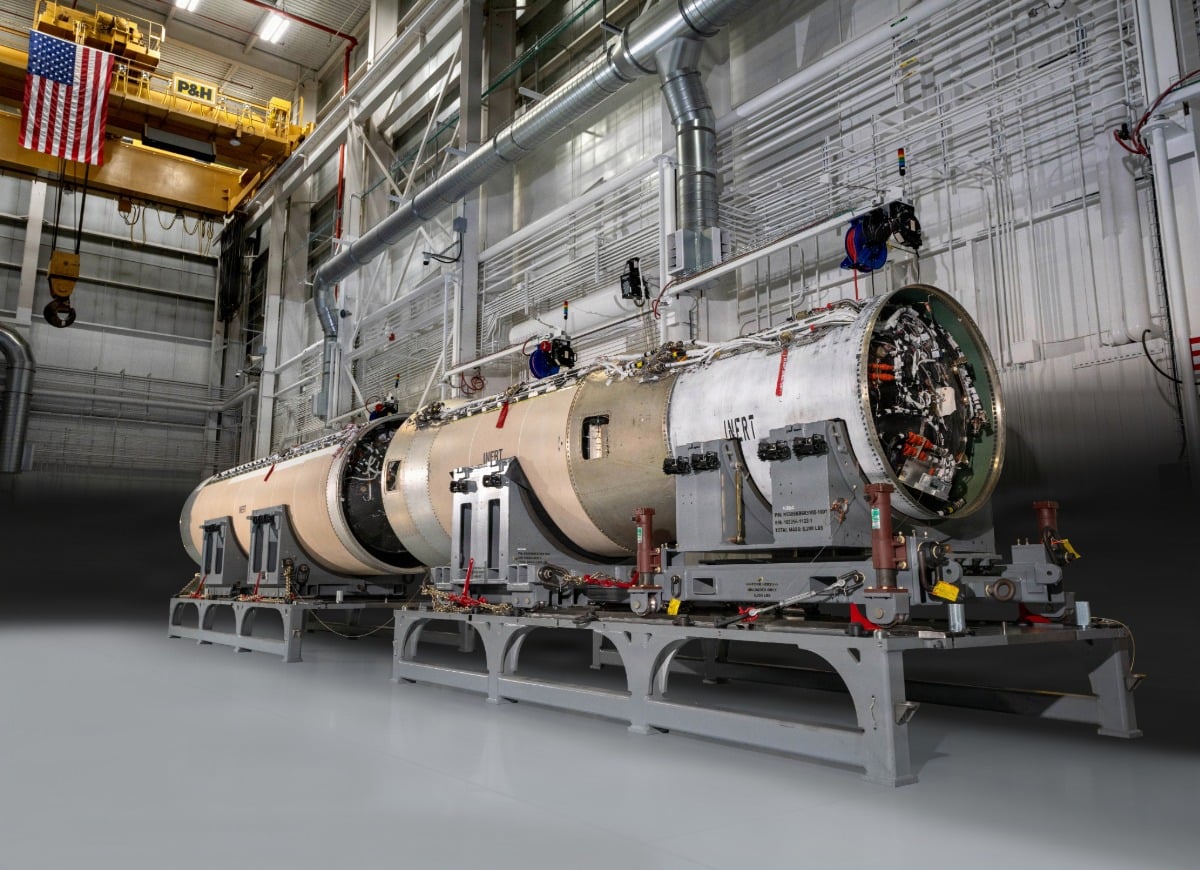
The United States Department of Defense relies on the LGM-35A Sentinel program to replace the aging Minuteman III intercontinental ballistic missile (ICBM) system, which has formed the land-based leg of the nuclear triad since 1970. The transition from Minuteman III to Sentinel represents not merely a hardware upgrade, but a overhaul of command-and-control architectures, launch infrastructure, and system reliability metrics. When the Pentagon integrates research institutions such as the Johns Hopkins University Applied Physics Laboratory (APL) into the Sentinel framework, it addresses three systemic failure points inherent to large-scale defense acquisitions: system verification, technical debt in legacy architecture, and independent domain oversight.
The engagement of University Affiliated Research Centers (UARCs) like Johns Hopkins APL is a structural necessity driven by the inherent friction between private defense prime contractors and public procurement bodies. Defense contractors operate under commercial incentives that prioritize delivery timeline and milestone payment structures. These incentives frequently run counter to rigorous technical validation. Integrating an independent academic research entity alters the risk profile of the acquisition cycle by establishing an authoritative, non-commercial technical arbitrator.
The Structural Drivers of UARC Engagement
The decision to enlist specialized research entities stems from clear operational and technical bottlenecks in the ICBM modernization pipeline.
1. Independent Technical Assessment and Oversight
Prime contractors face inherent conflicts of interest when evaluating their own subsystem designs. Johns Hopkins APL provides third-party validation across critical technical vectors, including flight dynamics, guidance systems, and nuclear survivability. By deploying independent physics-based modeling and empirical testing, the laboratory mitigates the risk of systemic design flaws remaining undetected until physical manufacturing phases, where retrofitting incurs exponential cost multipliers.
2. Systems Engineering and Lifecycle Analysis
Modern intercontinental ballistic missiles operate in hyper-complex environments requiring seamless integration between silo infrastructure, solid-propellant rocket motors, re-entry vehicles, and secure communication networks. The transition to the Sentinel platform demands a transition from legacy analog interfaces to digital engineering models. UARCs apply MBSE (Model-Based Systems Engineering) frameworks to trace requirements from top-level strategic mandates down to individual subsystem specifications, reducing architectural drift across the decades-long operational horizon.
3. Cyber Resilience and Secure Communications
The threat profile confronting the Sentinel program extends beyond kinetic interception to advanced electronic warfare, cyber intrusions, and high-altitude electromagnetic pulse (HEMP) events. Evaluating command, control, and communications ($C3$) nodes requires specialized expertise in cryptographic hardware isolation, radiation hardening, and resilient signal propagation. Research laboratories bridge the gap between theoretical physics advances and practical hardware hardening required to guarantee command authority under post-detonation atmospheric conditions.
Economic and Operational Risk Mitigation Mechanisms
Modernizing the land-based nuclear deterrent involves managing technical, cost, and schedule risks under strict regulatory and budgetary constraints. The Nunn-McCurdy Act mandates congressional notification and potential program termination if procurement unit costs breach defined percentage thresholds over baseline estimates. The incorporation of rigorous, data-driven research partnerships operates directly on the cost and risk functions of defense acquisition.
+-----------------------------------------------------------------------+
|                       PROGRAM RISK VECTORS                            |
+------------------------------+----------------------------------------+
| Technical Complexity         | Interface Disconnects                  |
| Manufacturing Scale          | Cost Growth (Nunn-McCurdy Thresholds)  |
+------------------------------+----------------------------------------+
                                   |
                                   v
+-----------------------------------------------------------------------+
|                    UARC MITIGATION MECHANISMS                         |
+------------------------------+----------------------------------------+
| Physics-Based Simulation     | Independent Interface Verification     |
| Red-Teaming & Stress Testing | Objective Cost-Performance Trade-offs  |
+------------------------------+----------------------------------------+
                                   |
                                   v
+-----------------------------------------------------------------------+
|                         SYSTEMIC OUTCOMES                             |
+------------------------------+----------------------------------------+
| Early Defect Identification  | Controlled Unit Acquisition Cost       |
| Hardware Hardening           | Long-term Operational Reliability      |
+------------------------------+----------------------------------------+
Risk Function 1: Reducing Design Iteration Costs
In major defense acquisitions, the cost to correct a design error grows by roughly an order of magnitude at each major phase of development:
- Phase 1: Conceptual Design - Baseline cost to revise software logic or architectural schematics.
- Phase 2: Component Prototyping - Modest cost expansion requiring re-tooling of specific benchtop prototypes.
- Phase 3: Integration & System Testing - Substantial financial penalty involving structural redesign and hardware scrapped.
- Phase 4: Operational Deployment - Maximum cost exposure, requiring fleet-wide retrofits, silo modifications, and operational downtime.
By forcing technical validation into Phase 1 and early Phase 2 through high-fidelity computer simulations and hardware-in-the-loop testing, Johns Hopkins APL truncates the financial tail risk associated with late-stage design flaws.
Risk Function 2: Decoupling Intellectual Property Bottlenecks
A primary challenge in long-term defense maintenance is contractor lock-in, where proprietary interface standards prevent third-party maintenance or software updates. UARCs assist the Department of Defense in establishing open-architecture standards. This structural shift ensures the military maintains technical data rights, allowing modular upgrades to guidance units, targeting processors, or telemetry hardware without renegotiating monolithic contracts with primary vendors.
Technical Constraints and Operational Realities
While the integration of independent technical advisors enhances system reliability, it introduces specific organizational and logistical frictions that must be managed.
- Communication Bottlenecks: Inserting an independent analytical body creates additional reporting nodes. Technical findings must filter through programmatic layers, which can introduce administrative latency if disagreement arises between prime contractor engineers and UARC evaluators.
- Capacity Limits: UARCs operate under distinct labor constraints compared to commercial defense giants. Scaling technical teams rapidly to address emergent engineering crises can strain academic and non-profit lab resources.
- Scope Creep in Validation: Rigorous scientific evaluation can lead to continuous requests for design optimization. Program managers must strictly balance scientific perfection against rigid military deployment schedules and hard budgetary ceilings.
Strategic Implementation Framework
To maximize the efficacy of research partnerships in strategic defense programs, acquisition authorities must execute a structured operational sequence.
Step 1: Establish Strict Data Interoperability Protocols
Define standardized digital modeling formats across all participating entities. The prime contractor, subcontractors, government program offices, and UARC evaluators must operate on a single source of truth within a unified Model-Based Systems Engineering (MBSE) environment. This prevents discrepancies between independent physics models and actual manufacturing schematics.
Step 2: Implement Early-Stage Red-Teaming Protocols
Authorize the UARC to perform adversary-style stress testing on subsystem designs prior to physical fabrication. This includes simulating extreme thermal loads, physical degradation, radiation environments, and sophisticated electronic jamming scenarios against simulated guidance and payload components.
Step 3: Enforce Open Architecture Mandates
Contractually require that all subsystem interfaces conform to non-proprietary standards defined or validated by the independent technical advisor. This step permanently preserves long-term modernization options, enabling seamless hardware insertion cycles every decade without necessitating full-system re-architecting.
Step 4: Align Incentives Around Empirical Validation Thresholds
Structure contract milestone payments to prime developers contingent upon successful third-party verification by the designated research laboratory. Tying financial compensation directly to verified physical performance metrics rather than self-reported completion status aligns contractor execution with technical reality.