People love gimmicks. When headlines drop about booze leaving Earth's atmosphere, skeptics roll their eyes and write it off as a publicity stunt engineered by bored marketing teams. You see a flashy press release, you think of billionaire joyrides, and you move on.
Hold on a second.
The recent university satellite project planning to age whisky in orbit isn't just about crafting an expensive bottle for deep-pocketed collectors. It's an aggressive stress test for molecular physics. Microgravity changes everything about how liquids behave, interact with wood, and mature over time. If you want to understand how organic compounds react under extreme physical shifts, sending a barrel past the stratosphere is a wild, yet surprisingly logical, experiment.
The Problem With Traditional Aging
Earth-bound maturation is slow and agonizingly predictable. Pour distillates into an oak cask, stash it in a damp warehouse in Scotland or Kentucky, and let nature do the heavy lifting for a decade or two. Temperature fluctuations drive the spirit into the wood pores, pulling out tannins, vanillins, and color compounds.
It works. It has worked for centuries. But it relies entirely on terrestrial gravity to push and pull that liquid through the staves.
Take gravity out of the equation and convection currents stop behaving normally. Without natural thermal convection driving the liquid up and down, diffusion takes over entirely. That means the interaction between the spirit and the charred oak changes fundamentally. We aren't just speeding up time; we are altering the chemical pathway of maturation itself.
What Actually Happens in Orbit
Spaceflight is hostile. Satellites endure massive vibrational forces during launch, followed by continuous exposure to cosmic radiation and near-zero gravity.
Previous zero-gravity beverage experiments yielded fascinating anomalies. When Ardbeg sent miniature vials of terpene molecules to the International Space Station back in 2011, the molecules aged in orbit returned with drastically different profiles compared to their earthly control samples. The interaction with the wood extractives was sped up, showing shifts in maturation chemistry that left traditional distillers scratching their heads.
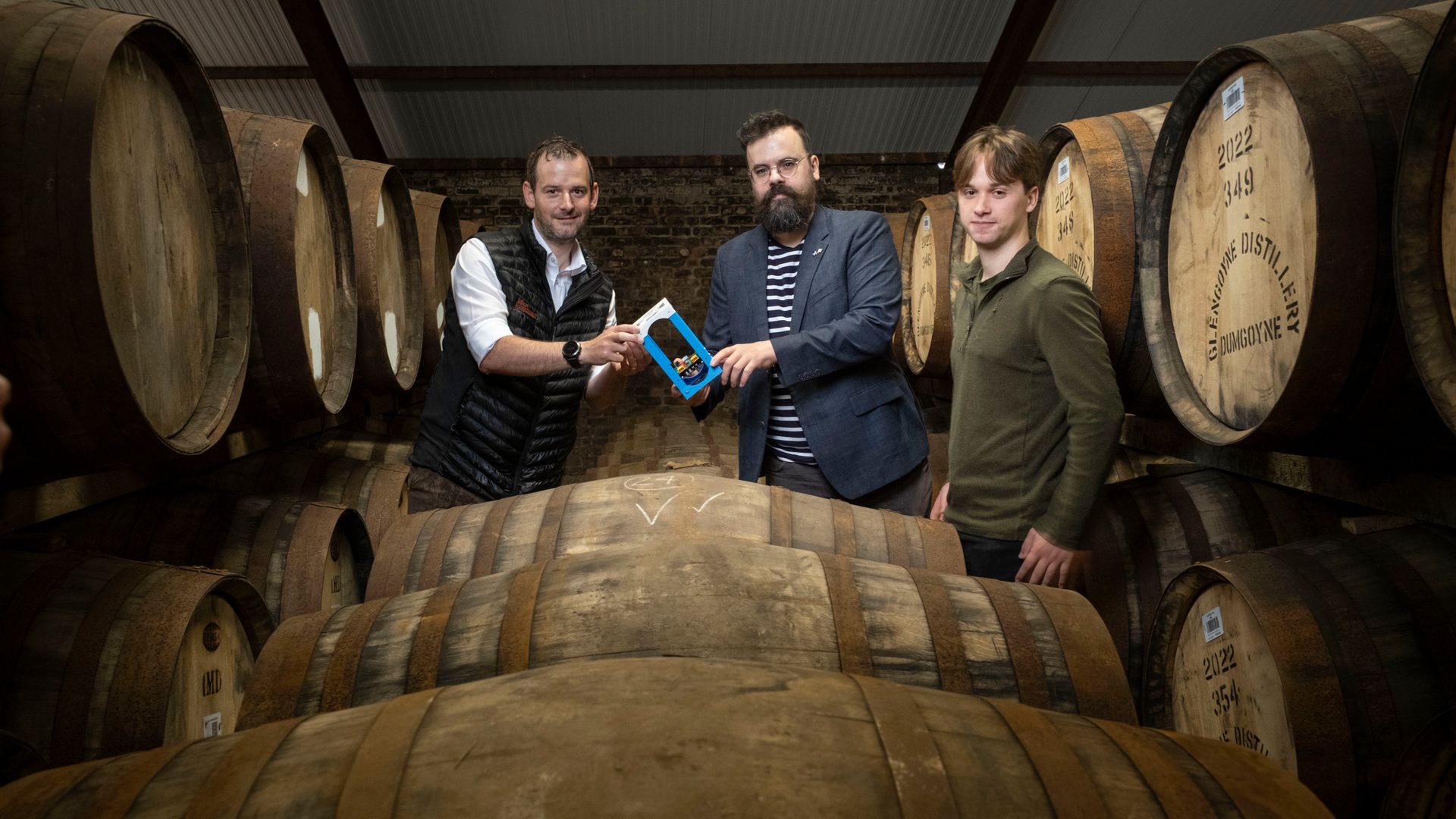
This university satellite project takes that early groundwork and scales it up. Instead of tiny laboratory vials floating in a space station locker, researchers are designing custom-built payload modules inside a functioning satellite. These containers keep tiny amounts of spirit in direct, continuous contact with specialized wood staves while hurtling through low Earth orbit at thousands of miles per hour.
Radiation plays a massive role here. Cosmic rays bombard materials in space in ways that simply do not happen behind lead-shielded warehouses down here. While nobody expects the whisky to become radioactive, ionizing radiation can break down stubborn chemical bonds, triggering reactions that mimic decades of chemical breakdown in a fraction of the timeframe.
Why This Matters Beyond the Bottle
Let's address the elephant in the room. Why waste satellite payload space on alcohol when we could be launching climate sensors or communication gear?
The truth is that materials science benefits immensely from studying how complex liquids behave in microgravity. The food and beverage industry represents a massive economic sector, but the underlying thermodynamics apply directly to pharmaceuticals, chemical manufacturing, and long-term life support systems for deep space colonization.
When you figure out how to force optimal molecular extraction without standard gravity, you learn things about fluid dynamics that translate directly to biotech labs. Drug delivery systems, polymer chemistry, and synthetic compound synthesis all rely on understanding how complex mixtures diffuse across boundaries. A barrel of spirit acts as a dense, messy, highly reactive organic matrix. If you can control how it matures in orbit, you can control almost any liquid system.
The Reality Check on Space Booze
Will you be pouring a glass of orbit-aged single malt at your local pub anytime soon? Absolutely not.
Logistics alone kill the commercial viability. Launch costs, payload weight restrictions, and the tiny volume of spirit that can fit inside a university microsatellite mean the resulting bottles will cost astronomical sums. They won't hit commercial shelves. They will likely end up auctioned off for charity, bought by eccentric collectors, or sitting in a university display case as a monument to clever engineering.
The value isn't commercial. It is purely experimental.
Where We Go From Here
Space exploration is slowly shifting from government-exclusive science to accessible, modular research. University-led satellite projects democratize access to low Earth orbit. Students and independent researchers are running tests that used to require billions in state funding.
The next time you see a headline about luxury items heading into the void, look past the marketing gloss. Underneath the hype lies genuine scientific curiosity. Whether the resulting spirit tastes incredible or completely foul matters very little. What matters is what we learn about the physics of the barrel when the floor drops out from under it.