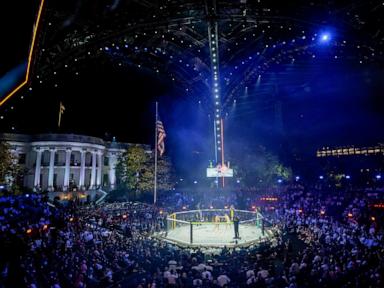
Federal prosecutors recently expanded their net, bringing the total number of indicted individuals to eight in a chilling conspiracy targeting a high-profile UFC event. The details emerging from the federal docket outline a coordinated effort to transform a crowded sports arena into a mass-casualty theater. While initial reports treated the incident as an isolated disruption, a deeper examination of the evidence reveals a terrifying reality. This was not a gathering of disorganized amateurs. It was a sophisticated operation that exploited distinct vulnerabilities in modern venue security and intelligence gathering.
The indictment documents paint a picture of meticulous planning that spanned several months. The suspects, operating across multiple state lines, utilized encrypted communication channels to coordinate logistics, surveillance, and weapon procurement. Their objective focused on a massive pay-per-view event, a venue packed with tens of thousands of fans, high-profile celebrities, and top-tier political figures. By targeting an environment where security resources are notoriously strained by the sheer volume of attendees, the conspirators sought maximum impact and global visibility.
The Evolution of the Soft Target
Sporting events have fundamentally changed. They are no longer just games. They are massive, multi-layered entertainment spectacles that present unique challenges for law enforcement and private security firms. The sheer scale of a modern UFC event makes it an attractive target for bad actors looking to inflict maximum damage.
The security apparatus of a major arena is designed to handle routine logistical challenges. Security guards manage crowd control, ticket verification, and the confiscation of standard prohibited items like alcohol or minor contraband. They are rarely equipped or trained to detect a coordinated, military-style infiltration executed by multiple operatives acting in concert. When eight individuals divide tasks—ranging from perimeter scouting to weapon stashing—the traditional security perimeter begins to fracture.
Intelligence agencies call this perimeter fatigue. As thousands of spectators stream through metal detectors, the pressure to keep lines moving creates natural blind spots. The conspirators counted on this operational friction. Their plan relied on exploiting the frantic window of time just before the main card fights began, when staff energy is focused on seating VIPs and managing chaotic concourses.
The Logistics of a Distributed Network
The most alarming aspect of the federal case is how the cell operated without triggering traditional counter-terrorism tripwires. The eight indicted individuals did not fit the classic profile of a centralized terror cell. They operated as a distributed network, minimizing direct contact and using localized supply lines to gather equipment.
- Decentralized command structure No single leader directed every action, making it difficult for federal investigators to intercept a central node of communication.
- Localized acquisition Weapons and tactical gear were purchased in small quantities across different jurisdictions to avoid triggering automated purchasing alerts.
- Digital camouflage The group used obscure, peer-to-peer messaging applications that do not store data on centralized corporate servers.
This methodology allowed the suspects to operate under the radar for months. Traditional surveillance models rely on identifying a known threat actor and tracking their outward connections. When a group forms organically through private online forums and radicalizes in isolation, law enforcement is left playing catch-up. The breakthrough in this case did not come from an advanced algorithmic sweep. It came from a routine traffic stop and a sharp-eyed local officer who noticed a discrepancy in a vehicle's registration, uncovering a cache of tactical gear that eventually tied back to the larger conspiracy.
Where the Intelligence System Failed
The fact that the plot progressed to the point of an active indictment involving eight people is a systemic failure. Federal agencies frequently boast about their domestic surveillance capabilities, yet this operation grew to a massive scale right under their noses. The gaps in the system are structural, built into the very way intelligence is shared between federal, state, and local entities.
Bureaucratic siloing remains a persistent threat to public safety. Local police departments are often flooded with low-level data, while federal agencies guard high-level intelligence behind security clearances. When a plot is distributed across state lines, the pieces of the puzzle remain scattered. A suspicious purchase in one state, an unusual rental agreement in another, and a pattern of digital surveillance at the venue are treated as isolated incidents rather than coordinates of a single, lethal trajectory.
Furthermore, private arena security companies operate with minimal oversight regarding counter-terrorism training. These firms are businesses focused on minimizing liability and managing labor costs. They rely heavily on part-time staff paid slightly above minimum wage. Expecting a temporary worker to identify the pre-attack surveillance techniques utilized by the suspects in this case is completely unrealistic.
The Political and Cultural Value of the Target
To understand why a UFC event was chosen, one must look at the cultural footprint of the sport. Mixed martial arts has transitioned from a niche subculture into a dominant force in global entertainment. The events draw massive television audiences and attract high-profile political figures, creating a high-stakes environment where any incident guarantees global news saturation.
Terrorism is fundamentally a form of violent communication. The suspects were not just looking to inflict casualties; they wanted to hijack the cultural narrative. An attack on an event closely associated with American sports culture sends a specific message of vulnerability. It demonstrates that even the most heavily secured, high-energy gatherings are susceptible to disruption.
The financial implications for the industry are equally severe. If a plot of this magnitude had succeeded, the economic fallout would have devastated the live entertainment sector. Insurance premiums for major arenas would have skyrocketed, making it financially unviable for many venues to host high-profile events. The resulting security protocols would have turned stadiums into militarized zones, permanently altering the fan experience.
Rethinking Public Assembly Security
The indictment of these eight individuals must serve as an urgent warning for the live entertainment industry. The current reliance on private, undertrained security contractors supplemented by a minimal police presence is no longer sufficient to counter modern threats. A fundamental overhaul of how we protect mass gatherings is required.
First, the integration of real-time intelligence sharing between venue management and federal law enforcement must become mandatory for any event drawing over a specific attendance threshold. Private security firms can no longer operate in an information vacuum. They need access to localized threat assessments and actionable intelligence regarding potential tactics.
Second, the training standards for event staff must be elevated. Basic bag checks and metal detector screenings are obsolete against a coordinated group utilizing diversionary tactics. Staff must be trained in behavioral detection and threat identification, focusing on anomalies in crowd behavior and perimeter irregularities.
The legal proceedings against the eight suspects will undoubtedly reveal more details about their motivations and the specific mechanics of their failed plot. However, waiting for the trial to conclude before implementing systemic changes is a luxury we cannot afford. The vulnerabilities exposed by this conspiracy remain wide open, and other networks are watching closely, learning from the mistakes of those who were caught. The failure to adapt ensures that the next plot may not be stopped in time.