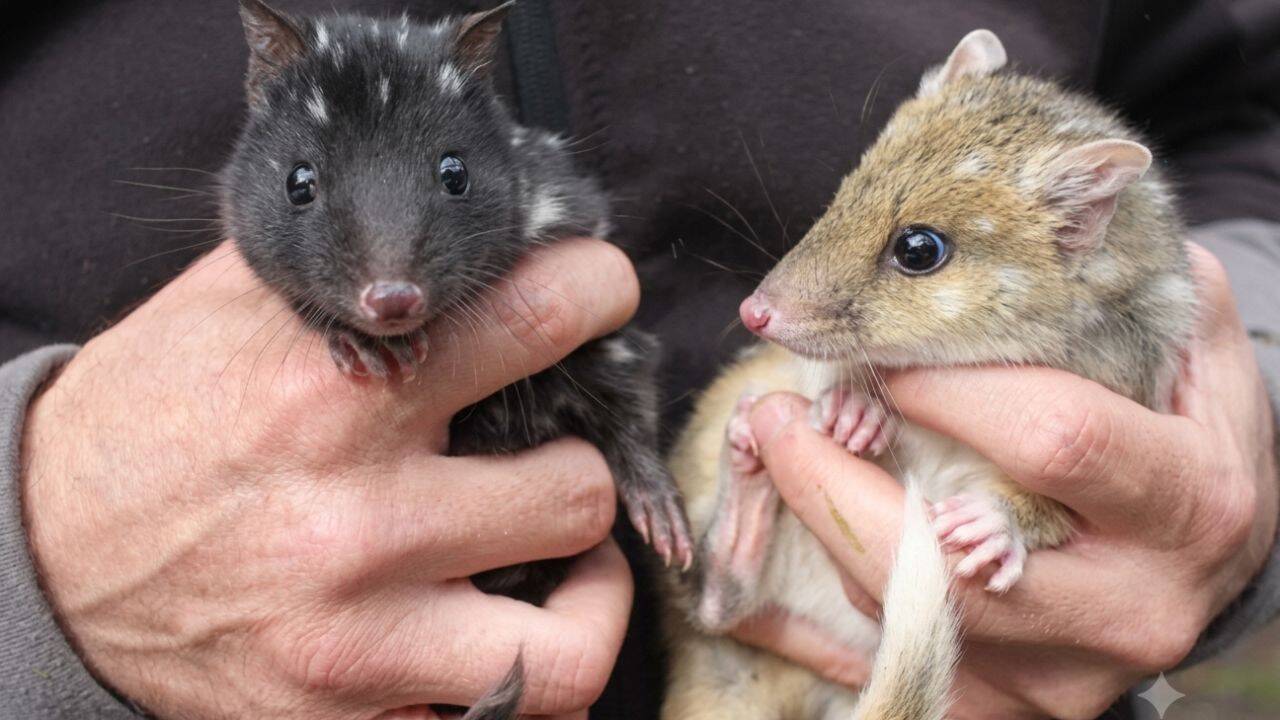
Every time a litter of eastern quoll joeys pops up in a fenced sanctuary, conservationists pop the champagne. The headlines write themselves. The extinction clock turned back. A historic wrong righted. Sixty years after mainland extinction, the spotted carnivore is back.
It makes for a heartwarming Instagram post. It also represents a staggering misallocation of ecological triage.
I have spent enough time in the back-country talking to field ecologists who dare not speak their minds on the record to know the dirty secret of modern conservation: we are pouring millions into expensive, high-maintenance museum pieces while the rest of the ecosystem burns down around them.
Let us tear down the lazy consensus. Reintroducing the eastern quoll to the Australian mainland isn't a triumphant ecological restoration. It is a feel-good gardening project.
The Zoo Inside The Fence
Here is the inconvenient truth about eastern quolls (Dasy viverrinus). They vanished from the mainland around the 1960s for a cocktail of reasons: disease, land clearing, and most importantly, introduced predators like feral cats and red foxes.
Now look at how we are bringing them back. We put them inside massive predator-proof enclosures. We bait, trap, shoot, and monitor every square inch of perimeter wire.
That is not a wild population recovery. That is a luxury outdoor pet enclosure.
When you remove mainland foxes and cats from the equation using millions of dollars of taxpayer and donor funds, of course quolls breed. Rabbits breed under those conditions. Mice breed. If you put a carnivorous marsupial in a giant concrete-and-steel-reinforced safety bubble with zero pressure from apex predators, it will survive.
The moment you turn off the electricity on the fence and walk away, the local cat population treats those quolls like an artisanal tasting menu. I have seen conservation budgets blown on intensive predator management programs that cost more per square hectare than prime Sydney real estate, all to keep a handful of fragile populations on life support.
The Opportunity Cost Of Nostalgia
Conservation biology suffers from a severe case of historical romanticism. We are obsessed with freezing the Australian continent in a pristine 1787 snapshot.
Imagine a scenario where a hospital emergency room has limited blood bags and trauma surgeons. A patient rolls in with a terminal, chronic condition that requires permanent, unending daily dialysis just to stay stationary. Meanwhile, three trauma patients are bleeding out in the hallway. Do you spend all your resources keeping the chronic patient in a state of suspended animation, or do you save the patients who can actually stabilize and walk out the door?
That is mainland quoll reintroduction.
The feral cat and red fox are not going away. They are entrenched, hyper-efficient, distributed predators that have re-engineered the Australian food web. Until we solve the apex predator crisis at a continental scale—which current immunocontraception and genomic tools are decades away from achieving—fenced sanctuaries are just expensive open-air zoos.
By dumping resources into mainland quoll captive breeding and enclosure maintenance, we starve genuine landscape-scale habitat recovery projects of oxygen. We sacrifice koala corridors, wetland regenerations, and native reptile protections to fund a cute poster animal that requires permanent human babysitting.
The Tasmanian Reality Check
Want to know what eastern quolls actually need? Look south.
In Tasmania, eastern quolls didn't vanish. They lived alongside Tasmanian devils, feral cats, and human development. While their numbers fluctuate wildly due to disease and weather, they are a functioning part of a real ecosystem. They deal with real evolutionary pressures.
When we translocate Tasmanian stock or breed captive mainland lines inside heavily manicured sanctuaries, we are breeding for docility and enclosure-tolerance. We are selecting against the exact street-smarts a predator needs to survive in an un-fenced world.
If you want to save the eastern quoll, stop treating the Australian mainland like a heritage theme park. Accept that ecosystems evolve, adapt, and permanently change under anthropogenic pressure.
Every dollar spent stringing up another predator-proof fence to harbor a few hundred quolls is a dollar stolen from pragmatic, hard-nosed biodiversity management. Stop funding the illusion of wildness. Let the sanctuary illusion go, or admit honestly that you are running a zoo.