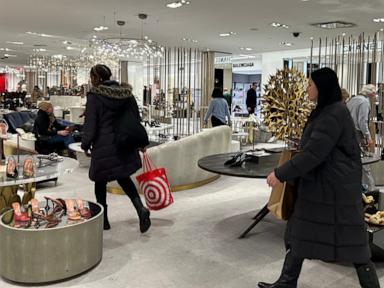
The era of the sprawling, everything-for-everyone department store is officially dead, and the newly restructured luxury titan that just walked out of bankruptcy court knows it.
On June 26, 2026, Saks Global shed its old skin, officially emerging from Chapter 11 bankruptcy under a completely new corporate banner: Exemplar Luxury Group. This isn't just a basic rebranding exercise or a superficial name change. It is a desperate, highly calculated survival strategy. By wiping out nearly 75% of its funded debt—slashing it from a suffocating $3.4 billion down to a nimbler $1.2 billion—and locking in $500 million in fresh post-bankruptcy financing, the company managed to cheat death.
But if you think this means luxury retail is back to normal, you're missing the bigger picture.
To understand how we got here, look at the math. The corporate entity fell apart just six months ago, filing for bankruptcy protection in January 2026. The main culprit wasn't just a bad holiday season; it was the staggering debt load taken on during its massive $2.7 billion acquisition of rival Neiman Marcus in late 2024. The architect of that ill-fated megamerger, real estate mogul Richard Baker, left the company entirely just weeks after taking the CEO reins during the January collapse.
Now, under the leadership of CEO Geoffroy van Raemdonck—the executive who previously steered Neiman Marcus through its own standalone restructuring—the company is betting everything on a radically downsized footprint. They've aggressively chopped away the dead weight, but the strategy carries massive risks for vendors, brands, and real estate markets alike.
The Brutal Math Behind the Store Closures
The version of this story told in glossy corporate press releases focuses entirely on "optimization" and "sustainable growth." The reality on the ground is a retail graveyard.
Before the bankruptcy filing, the company operated a vast empire: 33 Saks Fifth Avenue locations, 36 Neiman Marcus stores, the historic Bergdorf Goodman flagship in New York, and roughly 70 Saks Off 5th discount outlets.
That bloated network has been decimated. Exemplar Luxury Group emerges with just 49 full-line luxury stores total.
- Saks Fifth Avenue: Cut down to just 15 locations.
- Neiman Marcus: Down to 33 locations, including the impending permanent closure of its historic downtown Dallas flagship, which has operated since 1914.
- Saks Off 5th: Almost entirely liquidated, leaving a measly 12 outlet locations.
This aggressive downsizing proves that the luxury consumer has fundamentally decoupled from the traditional multi-brand department store. High-net-worth individuals are buying their clothing, bags, and watches directly from monobrand boutiques—think Chanel, Louis Vuitton, and Hermès flagships—or traveling for experiential luxury rather than wandering through multi-story department stores.
By shuttering more than half of the Saks Fifth Avenue locations and destroying the off-price division, van Raemdonck is trying to force the remaining stores into hyper-exclusive, ultra-profitable hubs. The company is leaning heavily on data, targeting a microscopic elite. According to corporate metrics, Exemplar employs roughly 1,500 elite sales associates who individually generate over $1 million in sales annually. The goal now is to pamper those specific shoppers while discarding the aspirational middle class entirely.
What the Restructuring Means for Independent Brands
If you're a luxury designer or an independent brand partner, this bankruptcy exit is a double-edged sword. During the lead-up to the January collapse, vendors were left holding the bag. In early 2025, former management openly admitted to massive backlogs of overdue payments, leaving independent brands to swallow unpaid invoices for months.
While federal judge Alfredo Perez approved debtor-in-possession financing that allowed $600 million to flow toward outstanding vendor debts, the trust has been severely shaken.
Exemplar Luxury Group has stated a goal to hit $9 billion in total gross merchandise value by 2030, driven heavily by full-price selling. To achieve this, they're pulling back on promotions. For independent brands, this means fewer markdown liabilities, but it also means vastly reduced volume. With only 15 Saks stores left standing, designers have lost critical regional showrooms that previously introduced their names to affluent suburbs across America.
The strategy might clean up Exemplar's balance sheet, but it shrinks the wholesale market significantly. If you sell to department stores, your distribution network just got suffocated.
The High Stakes Gamble on Full Price Luxury
Exemplar Luxury Group is betting its entire future on a thesis that hasn't been fully proven: that an aggressive contraction can spark double-digit earnings growth. Wiping away billions in debt gives them a clean runway, but a cleaner balance sheet doesn't automatically fix a broken business model.
The immediate next steps for luxury brands, commercial landlords, and retail analysts require moving away from traditional wholesale metrics.
- Audit Regional Exposure: Brands must immediately pivot their supply chains away from regional department store doors and invest in direct-to-consumer ecommerce channels or standalone boutiques in high-performing markets like Miami, New York, and Los Angeles.
- Monitor the Footprint Consolidations: Landlords holding leases for the shuttered Saks and Neiman locations face a brutal reality. These massive anchor spaces are incredibly difficult to fill in the 2026 real estate market, meaning property valuations in tier-two luxury malls are bound to crater.
- Watch the Senior Lenders: Control of the company has shifted entirely to senior lenders who wiped out the previous equity holders. These lenders are looking for an exit strategy, not a multi-decade retail legacy. If the company fails to hit its internal markers by 2028, expect a secondary sell-off of the underlying real estate assets.
The survival of Exemplar Luxury Group depends entirely on whether they can transform a corporate rescue mission into an actual destination that wealthy shoppers care about. They fixed the debt problem. Now, they have to fix the retail problem.


