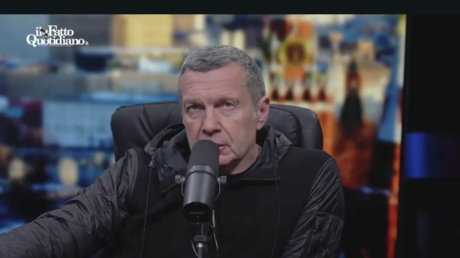
When Vladimir Solovyov, the loudest voice in the Kremlin’s media machine, spends his morning airtime calling an Italian Prime Minister a "fascist creature" and a "wild beast," you know Rome is doing something right. This wasn't just a random outburst. It was a calculated, albeit desperate, attempt to smear Giorgia Meloni after her latest high-profile meeting with Volodymyr Zelenskyy. Solovyov, who usually sticks to bombastic threats about nuclear strikes, took a sharp turn into personal insults, attacking Meloni’s record on the economy and immigration.
The irony is thick. A man representing a regime with zero tolerance for dissent is trying to lecture a G7 leader on "consistency." Meloni’s response was characteristically blunt. She didn't hide behind a spokesperson. She went straight to social media to remind the world that Italy takes no orders from foreign masters. The spectacle says more about Russia’s growing frustration with Italy’s unwavering pro-Ukraine stance than it does about any actual failings in Rome.
The Propagandist Playbook against Rome
Why does Solovyov care about Italy’s debt or its borders? He doesn't. Not really. The goal is to sow seeds of doubt among the Italian public. By hitting the most sensitive buttons—the cost of living and the influx of migrants—the Kremlin hopes to fracture the rare political unity Italy has shown recently.
Solovyov claimed Meloni betrayed her voters. He suggested she’s a puppet for Washington. This narrative aims to alienate the right-wing base that brought her to power. If he can convince Italians that their economic struggles are a direct result of helping Kyiv, he wins. But the numbers don't back him up. While the Italian economy isn't sprinting, it's far from the "impending collapse" the Russian airwaves predict.
Breaking Down the Economic Noise
Let's look at the actual data. Italy’s GDP is projected to grow by about 0.8% in 2026. That’s not a boom, but it’s steady growth in a tough European environment. The unemployment rate is actually falling, hitting around 6.1%. If you listen to Russian state TV, you’d think the streets of Milan are empty and the factories are shuttered. In reality, employment is at record highs.
The debt-to-GDP ratio remains the elephant in the room, sitting at roughly 136%. It’s high, sure. But Italy has been posting primary budget surpluses, which means they're actually bringing in more than they spend before interest payments. The "Superbonus" tax credits from previous administrations are finally fading away, and the deficit is expected to drop below the 3% threshold this year. Italy isn't the basket case Solovyov wants you to believe it is.
The Migration Myth and Reality
Immigration is the other weapon in the propagandist’s arsenal. Solovyov loves to point at the Mediterranean and scream about "invasion." He’s trying to trigger the "betrayal" narrative again.
Meloni’s government has definitely shifted gears. They’ve moved from just "blocking" to creating "Mattei Plan" partnerships with African nations and opening processing centers in Albania. It’s a messy, complicated process that hasn't stopped every boat, but it’s a far cry from the open-border policy Moscow claims is ruining the country. Russia’s interest here is purely cynical. They know migration is a wedge issue in European elections. By amplifying the chaos, they hope to destabilize the very governments that are sending Leopard tanks and SAMP/T systems to the front lines.
Why the Insults Aren't Working
This latest round of name-calling backfired. Hard. Usually, Italian politics is a blood sport where the opposition jumps at any chance to sink the Prime Minister. Not this time.
When Solovyov called Meloni a "disgrace to the human race," the response from across the aisle was immediate. Even her harshest domestic critics, like Giuseppe Conte and leaders of the Democratic Party, stood by her. Italy summoned the Russian Ambassador, Alexei Paramonov, for a formal protest. It was a rare moment of "Italy First" sentiment that actually meant something.
Russia doesn't understand that personal attacks on a national leader often trigger a defensive reflex, even among people who didn't vote for her. By calling her a "nasty little woman," Solovyov didn't weaken Meloni; he turned her into a symbol of national sovereignty against foreign bullying.
Moving Beyond the Rhetoric
If you're watching the headlines, don't get distracted by the noise from Vesti FM or Rossia-1. The real story is that Italy’s foreign policy is no longer the "swing vote" of Europe. Rome has picked a side, and they're sticking to it.
You can check the ISTAT reports or the S&P Global ratings yourself. They show a country managing a difficult transition with more resilience than expected. The next time a talking head in Moscow starts "taking a stab" at Italy’s economy, remember they're not worried about Italian wallets. They're worried about Italian resolve.
Stop looking at the insults and start looking at the maps. Italy is becoming a central energy hub for Europe and a primary military supporter of Ukraine. That’s why they’re being targeted. Stay focused on the policy shifts, especially the implementation of the National Recovery and Resilience Plan (PNRR) through 2026, as that will be the true measure of Italy’s success, regardless of what the "regime propagandists" say.