The air at fourteen thousand feet does not argue with you. It simply forgets to give you enough oxygen.
Stand on the ridges of the Solukhumbu, and you will hear a sound that sounds like a freight train, though there are no tracks for miles. It is the ice. Glaciers that have held their breath for ten thousand years are groaning, shifting, and letting go. Down in the valleys, where barley fields used to trace neat green geometry along the hillsides, the monsoon rains now arrive like a sudden eviction notice—deluge, flash flood, silence, mud.
Nepal is sinking beneath the weight of a warmth it did not author.
And yet, this small, bruised nation wedged in the teeth of the earth finds itself performing an impossible geometry. On one side sits New Delhi; on the other, Beijing. Between these two gravitational giants, Kathmandu has spent centuries learning the art of the tightrope walk. But when the Prime Minister of Nepal, Balendra Shah, steps up to the microphone at the United Nations to talk about the climate, the old language of diplomatic neutrality changes shape. It stops being about trade routes and buffer zones. It becomes a question of survival.
Consider what happens next in a world where meltwater lakes burst their banks.
In the high settlements, families who have farmed the same terraced earth for twenty generations look up at glacial moraines that now resemble bulging water balloons. They do not talk about geopolitics over evening tea. They talk about the whistle. Everyone knows the whistle—the low, terrifying shriek of an outburst flood tearing down the gorge, wiping away suspension bridges, prayer wheels, and stone houses in the space of a heartbeat.
Balendra Shah knows that whistle. When he takes the global stage, he is not merely reading a policy brief handed down by foreign ministries. He is carrying the noise of cracking ice into rooms lined with mahogany and bulletproof glass.
The diplomats call it balancing. They watch how Kathmandu nods to India for electricity grid cooperation and energy trade, while simultaneously signing belt-and-road memoranda with China for tunnels and trans-Himalayan connectivity. For decades, this dance was about steel, roads, and sovereignty. How do you keep your independence when your northern and southern neighbors cast shadows that stretch across your entire map?
The climate crisis rewrites the rules of the dance.
Neither New Delhi nor Beijing can build a wall high enough to keep the melting Himalayas out. When the glaciers empty, the great rivers of Asia—the Ganges, the Brahmaputra, the Yangtze, the Mekong—will stutter. Millions downstream in the plains of India and the river basins of China depend on the snowpack of the Hindu Kush Himalaya region to fill their cups, irrigate their crops, and cool their cities.
Nepal is the water tower of Asia. Right now, that tower is leaking.
When Prime Minister Shah stands before the international community to demand climate justice, he is executing a different kind of diplomacy. He is telling the giants that their rivalry is an expensive luxury. You can compete for influence over Kathmandu’s railways and hydropower dams all you like, he seems to say, but if the mountains go dry and the valleys wash away, there will be nothing left to govern.
This is where the cold statistics of carbon emissions collide with the raw, sweating reality of a farmer in Mustang watching his irrigation canals run dry in the middle of spring.
Listen to the numbers, but listen to them through the stone walls of a mountain home. Global temperatures have risen, but in the Himalayas, they are rising at a rate significantly faster than the global average. The white peaks are turning gray. The ancient snows are retreating upward, leaving behind unstable rock faces and expanding lakes that threaten entire downstream districts.
Nepal emits a fraction of a percent of the world's greenhouse gases. It drives few cars, runs few heavy industrial furnaces, and burns little coal compared to the industrial titans of the East and West. Yet it stands to lose nearly everything. It is the classic irony of our century: the ones who built the fire are safe inside air-conditioned towers, while the ones who gathered the wood are freezing outside in the smoke.
Balendra Shah’s pitch at the United Nations cuts through the polite diplomatic fictions because it forces a confrontation with this injustice. He is not asking for charity. He is presenting an invoice.
The challenge for a small nation caught between two heavyweights is that survival requires agility. If you lean too far toward the southern neighbor, the northern one grows suspicious. If you court the northern neighbor with too much enthusiasm, the southern supply lines tighten. This is the historic burden of Nepali leadership. Every prime minister must wear ballet shoes made of lead.
Yet, climate diplomacy offers a strange equalizer.
In the plush corridors of the UN, carbon does not check your passport. It does not care if you are non-aligned, democratic, communist, or monarchist. A glacial lake outburst flood does not pause at a border checkpoint to check whether the valley belongs to a sphere of influence.
When Nepal demands climate finance, technology transfer, and loss-and-damage funds from the global community, it is asking India and China to look past their border disputes and see the horizon. If the roof caves in, the living room floods for everyone.
Imagine a hypothetical morning in Kathmandu twenty years from now. The valley is choked not just with the usual exhaust of idling scooters, but with dust from dry riverbeds where mighty streams used to run. The hydropower turbines, starved of steady water flow, hum at half capacity. Rolling blackouts stretch across the capital. In the villages above, the last families pack their meager belongings into woven baskets and begin the long, quiet walk down to the crowded slums of the southern plains, becoming climate refugees in their own country.
That is the future Balendra Shah is trying to cancel.
To prevent it, he has to do something that makes foreign policy veterans nervous. He has to turn an environmental crisis into a security imperative. He has to convince Delhi and Beijing that protecting the Third Pole is not a charitable donation to a smaller neighbor, but a mandatory defense pact for the entire subcontinent.
It is a hard sell in a world distracted by trade wars, territorial skirmishes, and energy crunches. Leaders in capitals thousands of miles away are busy calculating next quarter's GDP or the next election cycle. They measure time in months. The mountains measure time in centuries.
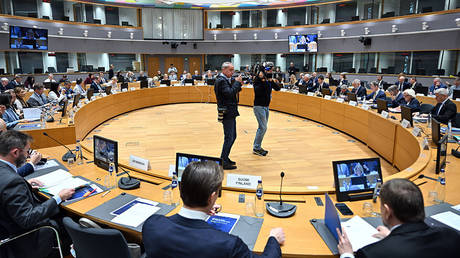
When the Prime Minister finishes his speech and steps down from the podium, the applause in the great hall is polite. Delegates rustle their papers. Translators take off their headsets. The cameras pivot to the next speaker.
Back in the Himalayas, the sun dips behind a jagged wall of granite and ice. The wind picks up, rattling the prayer flags strung across the high passes, sending bright scraps of cloth snapping into the thin, cold air. Down in the ravines, the water keeps rising.