The corporate media is feeding you a fairy tale about international football, and Toronto is buying it wholesale.
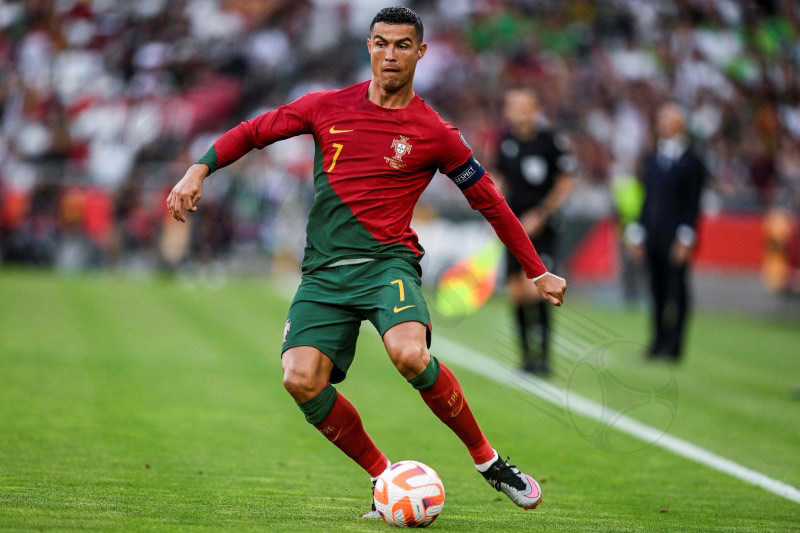
As Portugal prepares to face Croatia in the World Cup, the sports pages are plastered with a predictable narrative. They call it "Ronaldo Fever." They show BMO Field and Little Portugal draped in red and green. They interview fans who spent three weeks' rent on a secondary-market ticket just to glimpse Cristiano Ronaldo warm up. The lazy consensus is clear: this match is a monumental celebration of a legendary icon, a cultural touchstone for the Portuguese diaspora, and proof that Canada is now a major football hub.
It is a complete mirage.
The obsession with aging superstars is not elevating the sport in North America. It is suffocating it. While fans line the pockets of scalpers to witness the twilight of a 41-year-old brand, they are ignoring the actual, tactical masterpiece unfolding on the pitch. The real story in Toronto is not the cult of personality surrounding a declining forward. It is the tactical blueprint offered by Croatia—a nation of under four million people that consistently out-performs footballing giants by rejecting the superstar myth entirely.
We need to stop treating international friendlies and group-stage matches like Hollywood red carpets. If you want to understand where football is going, you have to look past the CR7 billboards.
The Financial Pathology of the Aging Icon
I have spent nearly two decades analyzing sports economics and the commercialization of global football. I have watched major sports franchises sink tens of millions of dollars into marketing campaigns built around single, aging athletes, only to watch the actual sporting infrastructure crumble underneath them.
Toronto is currently falling into this exact trap.
The ticket price spike for Portugal vs Croatia is not driven by a sudden appreciation for elite European tactical systems. It is speculative ticket-broking mixed with celebrity worship. When secondary market tickets hit four figures, local families and actual grassroots football fans are priced out. The people who fill the local academies—the kids who will actually form the future of Canadian soccer—are left outside the gates.
What does Toronto get in return for this massive transfer of wealth to ticket platforms and promoters? They get to see a version of Ronaldo that no longer exists in elite club football.
Let us look at the hard data, not the Instagram follower counts. Since his move to the Saudi Pro League, Ronaldo’s output must be viewed through a highly specific lens. The intensity, pressing metrics, and defensive actions required in modern European football have evolved rapidly. In high-level tournament football, a forward who does not contribute to the defensive shape is a luxury dynamic modern systems cannot afford.
Imagine a scenario where a manager designs a high-pressing, fluid system, only to have the entire defensive line compromised because the central focal point refuses to press the opposing center-backs. That is the tactical reality. Yet, the mainstream media narrative covers the Toronto match as if we are still watching the 2017 Real Madrid version of the player. It is an intellectual dishonesty that insults the intelligence of the fan base.
The Croatian Blueprint What Real Football Looks Like
While Toronto blinded itself with flashy branding, the real masterclass arrived in the modest bags of the Croatian squad.
Croatia does not possess a massive media apparatus. They do not have players who trend on TikTok for changing their hairstyle. What they have is an elite, sustainable development pipeline that should be the envy of every Canadian soccer executive.
The Midfield Engine Room vs The Isolated Forward
| Metric | The Superstar Approach (Portugal Focus) | The System Approach (Croatia Focus) |
|---|---|---|
| Tactical Relying Party | Individual moments of brilliance, isolation plays | Positional fluidity, overload in central zones |
| Defensive Contribution | Forward lines exempted from heavy pressing | Eleven-man defensive blocks, aggressive counter-pressing |
| Economic Allocation | Massive capital spent on marketing and marquee wages | Deep investment in youth academies and coaching education |
| Sustainability | High risk; performance craters when the star retires | High stability; seamless transition between player generations |
Croatia’s success—reaching the final four of successive World Cups—defies traditional sports economics. They do not rely on a single savior. Instead, they weaponize midfield continuity. The way Marcelo Brozović, Mateo Kovačić, and the timeless Luka Modrić retain possession in tight spaces is a clinic in positional discipline.
This is the nuance the mainstream broadcast completely misses. They will cut to a close-up of Ronaldo looking frustrated on the shoulder of the last defender, while entirely ignoring how Croatia’s midfield triangle is systematically suffocating Portugal’s passing lanes.
If Canadian football wants to progress past merely hosting World Cup matches to actually winning them, the lesson is not in Lisbon. It is in Zagreb.
Dismantling the People Also Ask Nonsense
Look at the questions fans are asking online ahead of this fixture. The premise of every single one is fundamentally broken.
"Is this Ronaldo's final match in North America?"
Who cares? Seriously. The obsession with "the last time to see X" is a marketing gimmick designed to trigger FOMO (fear of missing out) and justify egregious ticket prices. An international match should matter because of the collective tactical evolution of the teams involved, not because it serves as a stop on a single player's retirement tour. Treating elite athletes like museum exhibits degrades the competitive integrity of the sport.
"How can Canada replicate Portugal's football success?"
The average fan thinks Portugal's success is a result of producing generational anomalies like Ronaldo or Eusébio. It isn't. Portugal's actual success lies in their domestic league's ability to act as the ultimate scouting and development trampoline for South American and domestic talent. Clubs like Benfica and Sporting CP survive and thrive on elite scouting networks and player trading models, not on individual worship. If Canada wants to replicate Portugal, it needs to build a functional, profitable domestic transfer market, not buy jerseys with one name on the back.
The Downside of the Contrarian Reality
There is a distinct disadvantage to looking at the sport this way. It strips away the romance. It is incredibly easy to buy into the casual narrative, wear a matching jersey, and cheer when a celebrity does a trademark celebration. It makes you feel part of a global moment.
When you strip that away and analyze the game through structural efficiency, economic sustainability, and tactical geometry, you realize that much of the modern sports entertainment complex is hollow. You become the cynic at the party pointing out that a team's passing velocity is too slow, while everyone else is cheering a meaningless step-over.
But if we want the sport to grow genuinely in North America, cynicism is exactly what we need. We have had decades of soccer promoters selling us exhibition matches featuring past-their-prime stars, promising it would "spark a soccer revolution." The NASL tried it in the 1970s with Pelé. MLS did it with Beckham. It creates a temporary spike in interest, a blip on the financial radar, and then the circus leaves town.
What happens when Ronaldo retires? The fans who bought tickets solely for the name will vanish. They won't turn up to watch a local Canadian Premier League match on a rainy Tuesday. They aren't invested in the sport; they are invested in fame.
Shift the Lens or Stay Left Behind
The match at BMO Field is a crossroad for soccer culture in Toronto.
You can join the screaming crowds chasing a team bus, pretending that buying a piece of merchandise makes you part of a footballing elite. Or you can sit in the stands, ignore the cameras, and watch the way Croatia’s defensive line shifts in perfect synchronization to deny space in the channels.
One options makes you a consumer. The other makes you a student of the game.
Stop looking at the billboards. Watch the space between the players. That is where the real game is being played.