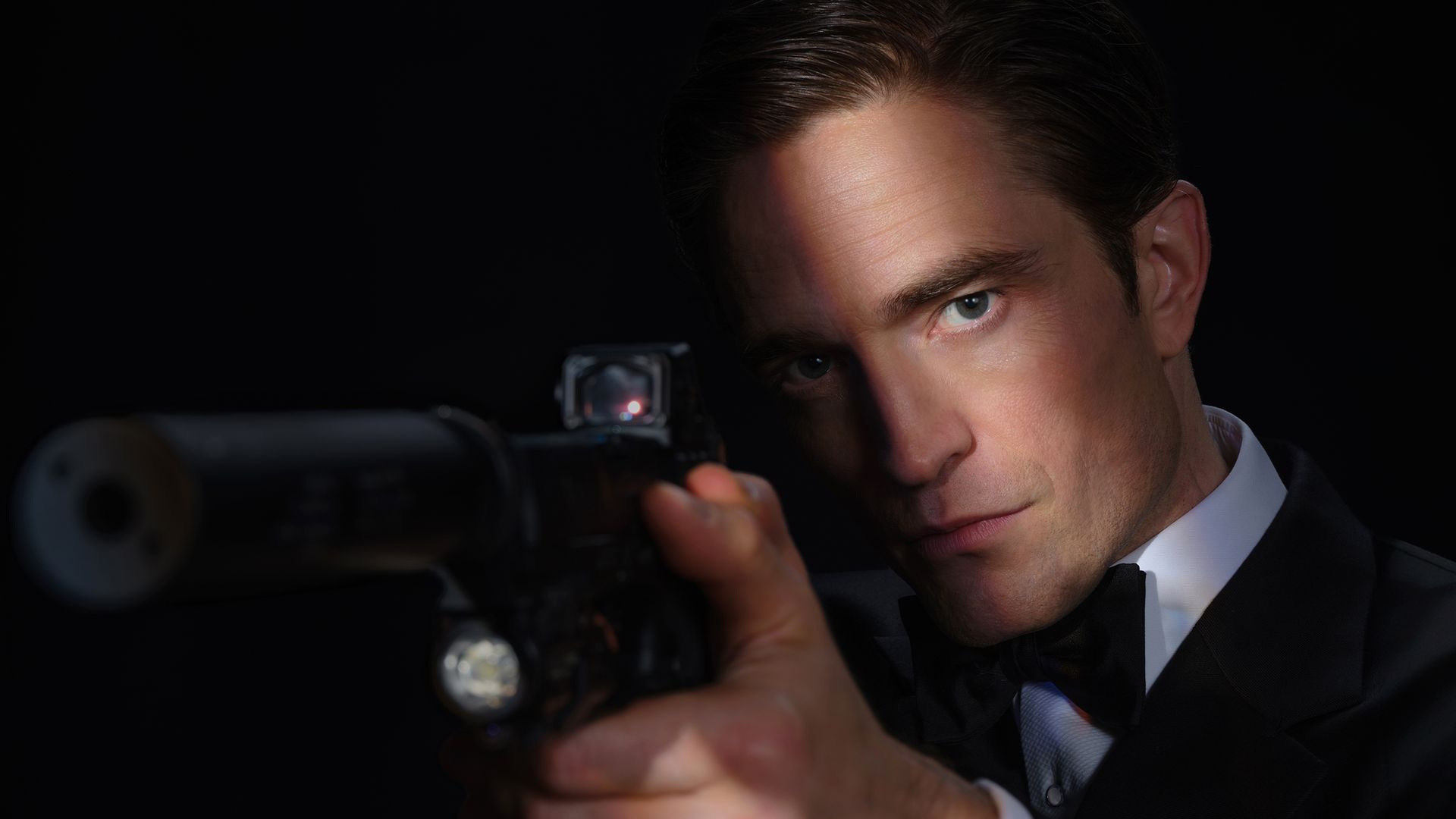
Robert Pattinson is not going to play James Bond after Daniel Craig. Despite relentless internet rumors, fan-made trailers, and speculative betting odds linking the former Twilight star to the tuxedo, the structural realities of Hollywood franchising make his casting virtually impossible.
When Daniel Craig stepped away from the role following No Time to Die in 2021, a massive vacuum opened at the center of British cinema. Nature abhors a vacuum, and entertainment blogs abhor an empty casting rumor mill even more. Pattinson’s name immediately surfaced as a stylish, brooding contender capable of carrying the emotional weight Craig brought to the character. On paper, the logic seems sound. He is English, roughly the right age, possesses undeniable box-office draw, and has spent the last decade proving his acting chops in challenging indie films. If you liked this post, you might want to check out: this related article.
Look past the surface appeal, however, and the entire premise collapses under the weight of studio politics, overlapping intellectual property, and the strict operational rules of Eon Productions.
The Batman Conflict Is an Insurmountable Wall
The single biggest obstacle standing between Robert Pattinson and Aston Martin keys is a cape and cowl. In 2022, Pattinson debuted as Bruce Wayne in Matt Reeves’ The Batman, a critical and commercial triumph for Warner Bros. That single decision effectively locked him out of the James Bond sweepstakes for the foreseeable future. For another angle on this development, refer to the latest coverage from Deadline.
Major Hollywood studios operate like rival nation-states, fiercely protective of their flagship intellectual properties. Warner Bros. did not invest hundreds of millions of dollars into building a grounded, detective-noir Batman universe just to share their leading man with Amazon MGM Studios, which now controls the distribution and corporate backing behind the Bond franchise.
Consider the sheer logistical nightmare of managing two global tentpoles simultaneously. A modern James Bond actor does not simply show up for a four-month shoot and go home. The commitment requires exhaustive physical conditioning, international location scouting, months of principal photography, extensive reshoots, and a punishing global press tour that spans continents.
The Batman requires the exact same level of devotion. Warner Bros. has already mapped out a multi-film arc for Pattinson’s Bruce Wayne alongside spin-off television properties on Max. Attempting to juggle both franchises would inevitably cause severe scheduling collisions, delaying multi-hundred-million-dollar production slates and costing studios tens of millions in holding fees.
More importantly, brand dilution is a cardinal sin in modern studio management. Eon Productions, led by longtime producers Barbara Broccoli and Michael G. Wilson, guards the 007 brand with an iron fist. They want an actor whose public persona is synonymous with James Bond, not someone audiences already recognize as the Dark Knight. You cannot ask global audiences to buy a ticket to see Bruce Wayne in Gotham in November, and then ask them to see the exact same actor playing a British secret agent in London the following spring. The visual and thematic overlap between a brooding billionaire vigilante and a brooding British intelligence officer is far too close for comfort.
Decoding the Eon Productions Casting Formula
To understand who actually gets cast as James Bond, you have to ignore tabloid speculation and look at sixty years of empirical history. Barbara Broccoli and Michael G. Wilson do not hire established megastars to play 007. They manufacture megastars out of moderately recognizable actors.
Look at the track record. Sean Connery was a former bodybuilder with a handful of minor credits. George Lazenby was a model with zero acting experience. Roger Moore was a television actor known primarily for The Saint. Timothy Dalton was a respected Shakespearean stage actor. Pierce Brosnan was famous for Remington Steele, a canceled NBC detective show. Even Daniel Craig, prior to Casino Royale, was largely known to general audiences as a supporting character actor in films like Layer Cake and Road to Perdition.
Eon avoids A-list movie stars for two very specific reasons: money and control.
An actor of Pattinson’s stature commands massive upfront salaries, backend profit participation, and significant creative input. He has spent the post-Twilight phase of his career meticulously curating his filmography, working with auteurs like Christopher Nolan, Claire Denis, Robert Eggers, and the Safdie brothers. Pattinson thrives on artistic freedom and unpredictable choices.
Signing a multi-picture James Bond contract is the exact opposite of artistic freedom. It is a golden handcuff agreement that dictates your appearance, your public behavior, your availability for commercial endorsements, and your creative direction for at least ten to fifteen years. Eon prefers actors who are hungry for the career-defining platform that 007 provides—actors who will happily sign a rigid four- or five-film deal without demanding script approval or massive backend points on their first outing.
The Age Trap Nobody Talks About
There is also the cold, hard math of Hollywood aging. Barbara Broccoli has stated publicly on multiple occasions that the next iteration of James Bond will be a "reinvention" of the character, not a simple continuation of the Craig era. Historically, whenever Eon executes a hard tonal reset, they skew younger to ensure longevity.
Pattinson was born in May 1986. By the time a new Bond film actually enters principal photography—accounting for script development, director selection, and pre-production—Pattinson will be well into his early forties. If Eon wants an actor to commit to a ten-to-fifteen-year tenure spanning four or five installments, casting someone already in their forties puts them right back into the Daniel Craig predicament by the third movie.
Craig was 38 when Casino Royale premiered in 2006. By the time No Time to Die finally reached theaters in 2021, he was 53, openly exhausted by the physical toll of the stunts, and eager to leave the franchise behind. Production cycles in modern blockbusters have stretched from every two years in the 1960s and 1970s to every four or five years today. To get four movies out of a single actor at that pace, Eon needs someone in their early-to-mid thirties. Pattinson has simply aged out of the optimal window for a multi-decade franchise reboot.
Why the Internet Keeps Pushing the Rumor
If the business realities make Pattinson’s casting a non-starter, why do entertainment sites continue to publish breathless articles claiming he is a frontrunner? The answer lies in the economics of digital media and the mechanics of search engine optimization.
Celebrity casting rumors are pure click currency. When a major franchise enters a dormant period between installments, there is no real news to report. Eon Productions operates in near-total secrecy; leaks from their camp are exceptionally rare. Yet entertainment websites are locked into relentless daily publishing quotas. To fill the void, writers manufacture narrative tension by pairing high-search-volume actors with high-search-volume franchises.
Robert Pattinson generates massive search traffic. James Bond generates massive search traffic. Putting both names in a headline guarantees clicks, social media shares, and ad impressions, regardless of whether a single credible source within MGM or Eon has ever uttered his name in a casting meeting.
Betting markets further distort the public perception of these rumors. British bookmakers like Ladbrokes and William Hill regularly release updated odds on the next James Bond. Entertainment journalists frequently cite these odds as evidence that an actor is "surging" in the race.
This is a fundamental misunderstanding of how novelty betting works. Bookmakers do not have insider access to casting directors' confidential files. They set their odds based entirely on where the public is placing bets, adjusting the lines to protect their own financial liability. If a viral TikTok video convinces a few hundred people to put twenty pounds on Robert Pattinson, the bookies shorten his odds to minimize their potential payout. Journalists then report on the shortened odds, which convinces more people to place bets, creating a self-sustaining cycle of baseless speculation.
What Pattinson Actually Wants From His Career
Even if Warner Bros. released him from The Batman, and even if Barbara Broccoli broke sixty years of precedent to offer him the role on a silver platter, there is very little evidence to suggest Pattinson would actually say yes.
Pattinson already survived the crushing machinery of a global mega-franchise once, and the experience left him deeply skeptical of mainstream studio stardom. During the height of Twilight mania, he was subjected to suffocating paparazzi intrusion, relentless scrutiny of his personal life, and intense typecasting that nearly derailed his credibility as a serious actor. He spent nearly a decade taking low-budget, high-risk roles specifically to dismantle the teen-idol image that threatened to trap him.
When he finally returned to big-budget filmmaking with Christopher Nolan’s Tenet and Matt Reeves’ The Batman, he did so on very specific terms. In Tenet, he played a supporting role—ironically, a character heavily reminiscent of a classic British spy—allowing him to enjoy the scale of a blockbuster without carrying the promotional burden on his shoulders. With The Batman, he signed on only because Reeves pitched a radical, character-driven psychological thriller rather than a standard assembly-line superhero movie.
Taking on James Bond would undo much of the autonomy he fought so hard to reclaim. Unlike Batman, where the character is defined by a mask and a rich gallery of eccentric villains, James Bond relies entirely on the star’s personal magnetism and adherence to a strict set of cultural expectations. Bond has to drink the right martini, wear the right tailored suit, drive the right car, and hit specific commercial beats to satisfy global distributors and corporate brand partners.
For an actor who notoriously enjoys subverting audience expectations—someone who famously admitted to making up bizarre lies during press interviews just to entertain himself—the rigid corporate diplomacy required of the man playing 007 would be suffocating.
The Real Blueprint for the Next 007
To spot the actual successor to Daniel Craig, stop looking at the top of the Hollywood A-list and start looking at the middle tier of British drama.
The next James Bond is currently working on a respected BBC or ITV miniseries, starring in an acclaimed independent film that premiered at Sundance or Cannes, or leading a critically praised play in London’s West End. He is likely between 30 and 35 years old. He has enough screen presence to command a close-up, enough physical credibility to handle brutal hand-to-hand combat, and a low enough public profile that audiences will see James Bond on screen rather than a famous movie star playing dress-up.
Furthermore, the industry dynamics surrounding Bond have shifted dramatically since Amazon acquired MGM in 2022 for $8.5 billion. While Barbara Broccoli and Michael G. Wilson retain creative control over the theatrical releases, they are now navigating a corporate parent hungry for content, subscriber growth, and global brand synergy.
This new corporate reality makes the casting process even more delicate. Eon will want an actor who can anchor a massive theatrical event while remaining fiercely loyal to their vision of cinema, resisting any pressure from tech executives to dilute the brand into streaming spin-offs. They need a partner who views the role as the pinnacle of their career, not a side project squeezed between superhero sequels.
Robert Pattinson has already found his defining dark icon in Gotham City, and he has carved out one of the most interesting, unpredictable careers in modern cinema. He does not need James Bond, and James Bond does not fit Robert Pattinson. The next time a viral headline claims the deal is practically done, check the source—you will find plenty of algorithmic guesswork, a few novelty betting slips, and zero reality.