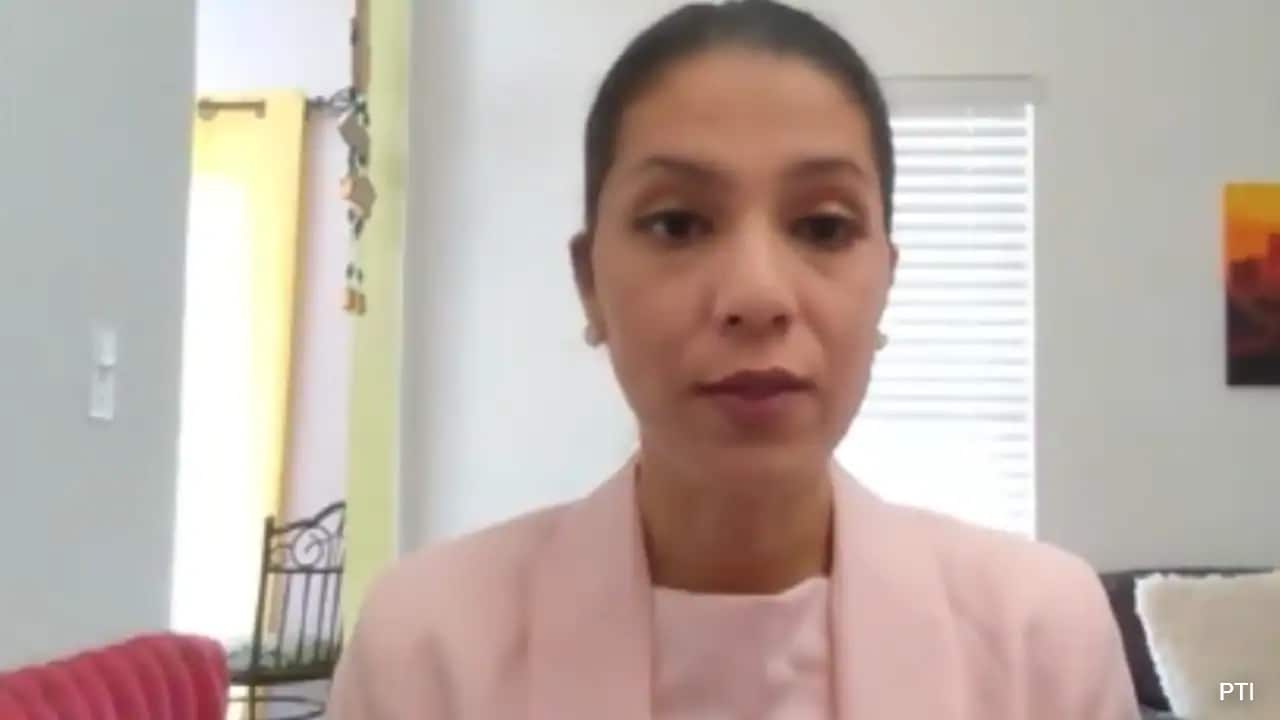
When the numbers settled on election night in early November 2026, the phone call did not go to a campaign strategist in Chicago or a political consultant in Washington. It went across an ocean, across time zones and decades, to a house in Ghaziabad.
"Mummy, I won."
Five words. Simple, breathless, unmistakable. Behind them stood twenty-plus years of quiet work, a first loss by roughly a thousand votes, a second run that broke through on the DuPage County Board, and a decisive victory in Illinois's 84th House District with nearly seventy-one percent of the vote—20,756 ballots to Republican opponent Brian Scopa's 8,520. With that result, Saba Haider became the first South Asian woman elected to the Illinois General Assembly.
Headlines love neat arcs. They love turning a life into a shortcut: school debates in Uttar Pradesh, a gold medal in wildlife sciences at Aligarh Muslim University, a move to the United States in her early twenties, a yoga mat in the western suburbs of Chicago, and then a seat in the state legislature.
Shortcuts lie.
Real political shifts rarely happen in a single speech. They happen in the unglamorous hours between speeches—when a volunteer stays on the line with a first-time voter who cannot find their precinct, when a parent decides their daughter can sleep in the jungle to study ecology, when someone loses a county race by a sliver and comes back anyway.
To understand why Saba Haider's win resonates far beyond Aurora, Naperville, or Oswego—and why her Ghaziabad upbringing matters so much—we have to look at the invisible stakes of representation and civic habit.
The Classroom That Taught Her How To Stand Up
Ghaziabad sits right on the edge of the National Capital Region in Uttar Pradesh, a place of constant motion where old family roots meet rapid urban growth. Haider's family traces its heritage to Bulandshahr, and she grew up in Ghaziabad where her father, Syed Ali Haider, worked as an engineer and her mother, Chandni, taught.
At home, values around social service and living for a larger cause were part of the daily air. At Holy Child School in Ghaziabad, speaking competitions and school debates gave her an early arena to test her voice.
Debate does something specific to a young person. It teaches you that disagreement is not a personal attack, that evidence matters, and that standing on your feet in front of a room full of peers requires preparation rather than bravado.
Later, at Ram Chameli Chadha Vishvas Girls' College and then at Aligarh Muslim University, Haider chose wildlife sciences—earning a gold medal in the field. Field ecology is not a tidy desk job. Studying ecosystems in the jungle demands patience, observation, and comfort with uncertainty. As Haider has noted, living in the jungle to study ecology was not an easy path, nor one many daughters were allowed to take.
Let's use a metaphor to see what field ecology has to do with public office. A healthy forest or wetland is a web of quiet dependencies: water tables, canopy cover, soil microbes, seasonal shifts. Pull one thread too hard without looking at the whole system, and something downstream starves. Governing a diverse suburban district works the same way. A property tax rule, a school funding formula, or a mental health clinic does not exist in isolation; it touches families, clinics, buses, and paychecks all at once.
Haider had no political dynasty behind her—no family seat, no party machine handed down like heirlooms. What she had was a habit of paying attention and an expectation that public life was meant to be engaged with, not merely watched from a sofa.
When Doubters Tell You What You Cannot Win
Doubt rarely arrives wearing a villain's cape. Most of the time, it sounds practical. It sounds like conventional wisdom.
Haider has spoken candidly about hearing that she could not defeat a white American male in her race. In American local and state politics, that kind of skepticism often hides behind electoral math: Turnout is low in primaries. Suburban swing voters vote a certain way. Immigrants face hurdles running in districts where they do not share every voter's background.
Some of those hurdles are real. Haider has never pretended identity is weightless or free of friction. She has explicitly acknowledged that immigrant communities face genuine difficulties, while arguing that treating a distinct background purely as a handicap misses what lived experience brings to the table.
Consider a hypothetical scenario to feel the weight of that dynamic. Imagine a voter named "Ramesh" (a hypothetical resident created for illustration) who has lived in a Chicago suburb for twelve years, works long shifts, pays taxes, and cares deeply about healthcare costs—yet has never cast a ballot in a primary election. To him, local government can feel distant, written in a language or procedure meant for insiders. When a campaign produces outreach in multiple languages and a volunteer patiently explains where to go and what a ballot looks like, politics stops being a spectator sport.
That was not a thought experiment in Illinois's 84th District. During her campaign, first-time voters called the campaign office unsure of their polling locations, and volunteers walked them through the process. Afterward, residents texted photos of their "I Voted" stickers with notes saying they had done their part and hoped she would win.
Here is the honest truth, and admitting it builds trust: representation alone does not solve every policy dispute. A historic milestone does not automatically lower grocery bills or fix every school budget on day one. Voters still judge lawmakers on competence, constituent service, and results.
Still, visibility changes who believes the door is unlocked. Haider has urged young South Asian women to look beyond their immediate local ecosystem for role models, put on blinders against noise and judgment, take calculated risks, and build a thick skin.
Two Democracies, Two Mirrors
One of the sharpest parts of Haider's reflection on her journey is how her life bridges two democracies that often misunderstand each other's strengths and blind spots.
In the United States, she pointed out, entry into politics can be more open if you are willing to put in the work—you do not necessarily need a family political legacy or vast personal wealth just to get on the ballot or build a grassroots coalition. Her own path moved through Parent-Teacher Association involvement, volunteering for Democratic campaigns, teaching yoga to people from many walks of life, losing a DuPage County Board bid in 2022 by roughly a thousand votes, and returning in 2024 to unseat an incumbent and chair environmental and strategic planning committees.
Losing by a thousand votes is a particular kind of ache. You come close enough to taste the responsibility, and then you have to live with the "what ifs." Many people walk away after a loss like that. Staying in the arena after a narrow defeat is often what separates a one-time candidate from a durable public servant.
Once on the county board and the public health board, Haider worked on issues tied directly to everyday security—including helping establish the Crisis Recovery Centre to offer walk-in mental health and addiction support regardless of insurance status. That is governance stripped of slogans: when a neighbor is in crisis at two in the morning, does a safety net exist?
At the same time, Haider has pointed out a striking contrast when comparing the two countries: voter participation. Despite everything people debate about elections, turnout in India's 2024 Lok Sabha elections hovered around sixty-five percent, whereas turnout in the 2026 U.S. midterms sat closer to forty-eight percent—and in her own primary, even with three weeks of voting available, turnout was roughly twenty percent.
Twenty percent.
Think about what a twenty-percent turnout means in practical terms. Four out of five eligible neighbors stay home during the very stage that often decides who even appears on the general election ballot. Democracy does not vanish overnight in low-turnout elections; it quietly narrows, leaving decisions to a fraction of the community.
Why This Story Matters Beyond One District
Why do stories like Saba Haider's travel so fast across borders and dinner tables?
Because people everywhere are wrestling with belonging, affordability, and whether their voices count. Voters in both the United States and India are pushing for accountability on things that hit households directly: healthcare access, education quality, and the rising cost of living.
There is also something deeply human about the thread connecting Ghaziabad to Illinois. A mother in Uttar Pradesh watching her daughter's journey from school debates and wildlife research to a state legislature. A daughter picking up the phone right after the votes are counted to share the news with her mother. Roots do not disappear when you cross an ocean; they anchor you while you grow new branches.
No single election settles every argument about immigration, identity, or partisan politics. Skeptics will always debate policy choices, and every term in Springfield will bring tough votes and compromises.
Yet the core lesson of Haider's path is hard to dismiss: history rarely waits for permission, and civic life belongs to the people who show up—not just on election morning, but in the months of listening that come before it.
Long after the campaign yard signs are pulled from suburban lawns and packed away in garages, the real test of any public servant begins in the quiet rooms where laws are written, budgets are balanced, and ordinary families hope someone remembered their name.