Commercial publishing houses operate under strict inventory velocity thresholds that systematically purge mid-century regional literature from print. When books fall out of circulation, cultural memory fractures. The centennial reissue of Ruth Suckow’s 1926 short story collection Iowa Interiors by Final Thursday Press offers a case study in how micro-presses bypass centralized publishing constraints to restore neglected literary capital. By pairing text recovery with site-specific visual exhibitions, this initiative demonstrates a sustainable model for regional cultural preservation.
The Backlist Failure Mode
Mainstream publishing conglomerates rely on high-turnover inventory models. Books with steady, low-volume annual sales are routinely remaindered and pushed out of print to clear warehouse space for high-velocity commercial releases. Ruth Suckow occupied a prominent position in American letters during the 1920s, championed by critics like H. L. Mencken for her unvarnished depictions of Midwestern community life. Despite initial acclaim by Alfred A. Knopf, her works drifted into relative obscurity as corporate publishing consolidated. You might also find this related story interesting: When The Voice Outlasts The Silence.
The economic barrier to keeping backlists alive involves capital allocation. Large houses calculate storage, digital conversion, and marketing overhead against projected unit sales over a five-year window. If a regional title fails to clear these margin targets, the copyright holder lets the work lapse or sit dormant. This creates a structural blind spot where literary history vanishes simply because the unit economics fail to satisfy mass-market corporate metrics.
Micro-Press Intermediation Mechanics
Final Thursday Press operates on an entirely different financial architecture. Releasing roughly one title per year, the press functions as a cultural trust rather than a venture-backed volume generator. This low-frequency production schedule eliminates inventory bloat and distribution bottlenecks. Production costs are offset through localized grant funding, academic partnerships, and targeted direct-to-consumer sales channels. As highlighted in recent articles by Deadline, the results are worth noting.
Editors Jim O'Loughlin and Julie Husband executed the centennial edition of Iowa Interiors by combining scholarly annotation with material upgrades. The 319-page volume includes the original short stories, an analytical introduction, and historical reviews reprinted from contemporary newspapers of 1926. This editorial rigor transforms a simple reprint into a definitive archival artifact. By controlling overhead and utilizing regional networks, independent presses prove that cultural preservation can occur outside the profit-driven imperatives of New York publishing houses.
Visual Translation and Exhibition Economics
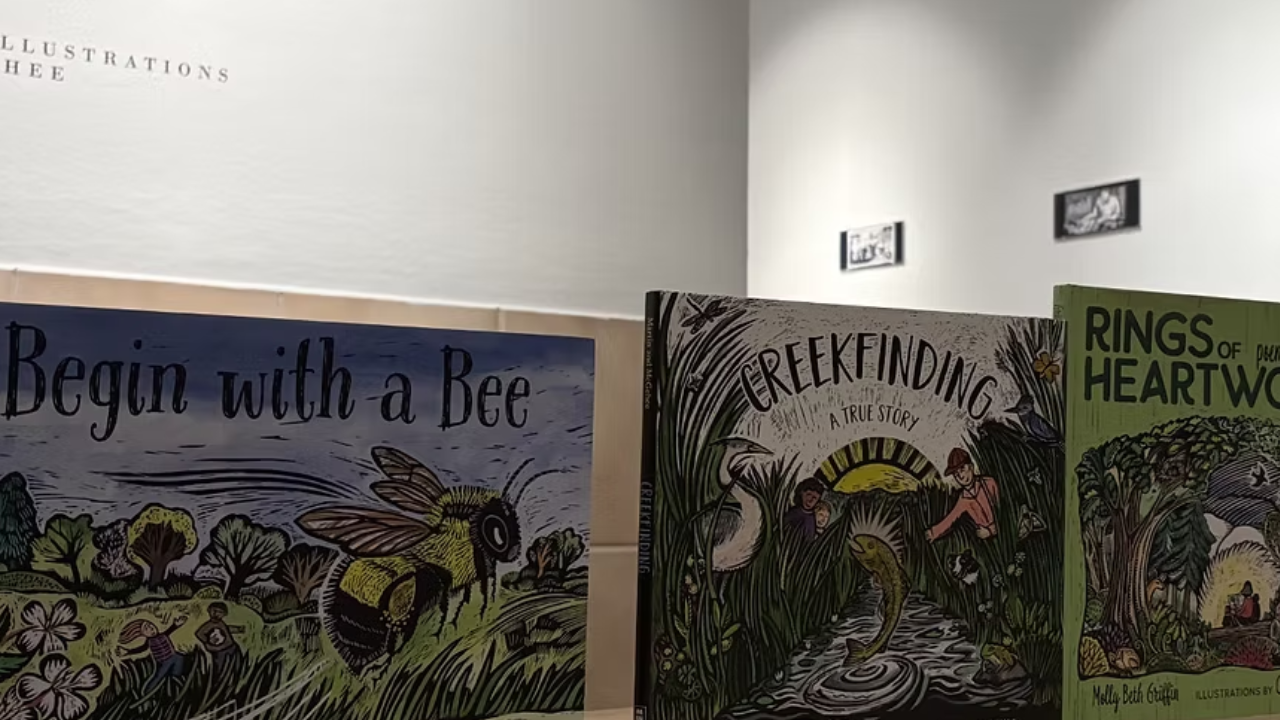
Restoring a century-old text requires more than typographic reproduction; it demands visual recontextualization. To bridge the temporal gap between 1926 and the present, the centennial edition incorporates commissioned scratchboard illustrations by Iowa City artist Claudia McGehee. Each story receives a dedicated visual anchor.
Scratchboard technique relies on carving through a dark ink layer to expose a white clay subsurface beneath, producing high-contrast, tactile images that mirror the stark economic realities and physical environments of early-twentieth-century rural life. The physical artwork transitioned from page to gallery walls through an exhibition at the Hearst Center for the Arts in Cedar Falls. This dual-format strategy accomplishes two distinct objectives:
- Generates localized media coverage that drives pre-orders and direct book sales.
- Elevates book illustration from a commercial afterthought to a co-equal fine art medium worthy of museum exhibition.
By anchoring the book launch to a physical exhibition running through late autumn, the organizers captured institutional foot traffic, transforming passive museum visitors into active literary consumers.
Institutional Interlocking and Preservation Networks
Sustaining regional literary heritage requires an active coalition of academic institutions, historical societies, and municipal arts centers. The Iowa Interiors centennial release did not occur in a vacuum; it was supported by the Ruth Suckow Memorial Association, the University of Northern Iowa English department, and local humanities programming.
This multi-layered institutional backing solves the distribution and marketing challenges that typically kill independent books. When a municipal art center hosts an exhibition of book art, local media outlets cover the event as a community milestone rather than a standard commercial product launch. Scholars provide contextual lectures during annual conferences, establishing immediate academic credibility and curricular adoption potential for undergraduate and graduate literature courses.
The mechanism relies on shared infrastructure. University presses and independent micro-publishers share talent pools, editing expertise, and promotional platforms with regional museums. This network reduces individual operating risk while maximizing audience reach across the state.
Strategic Scaling for Regional Publishers
Independent publishing faces persistent capital constraints that limit geographic expansion. While micro-presses excel at localized curation, scaling distribution beyond regional borders requires navigating dominant logistics monopolies and high distributor markups. Relying entirely on localized events and university partnerships caps growth potential.
To overcome this distribution ceiling, independent publishers must adopt hybrid direct fulfillment models that bypass traditional wholesale middlemen. Utilizing print-on-demand infrastructure for secondary markets while maintaining short-run offset printing for collector editions preserves quality standards without straining cash flow. Simultaneously, expanding digital educational resources for secondary and university instructors ensures a steady institutional adoption pipeline. The long-term viability of regional literary preservation depends on converting one-off centennial celebrations into permanent curricular fixtures.


