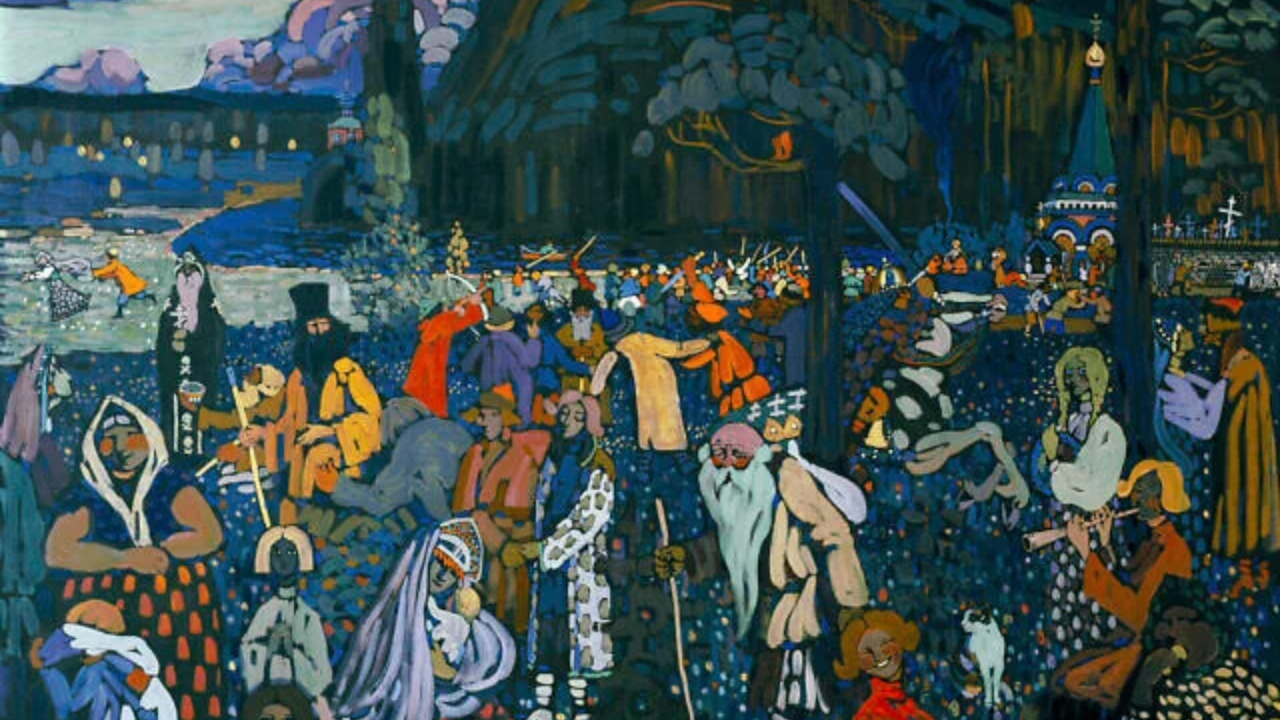
Restitution of Nazi-looted art turns a moral reckoning into a complex capital-allocation event, and a £31.56 million London auction hammer price tests every assumption about title clarity, liquidity, and reputational risk. A headline about a Wassily Kandinsky canvas returning to rightful heirs and clearing £31.56 million captures the drama of justice delayed, yet headlines rarely explain how clouded provenance converts into marketable equity. This analysis maps the structural mechanics behind art restitution, auction pricing power, and legal title remediation using the headline case as an analytical anchor, separating verified mechanics from informed hypotheses where full transaction records are not publicly disclosed.
The Architecture of Restitution and Title Remediation
A painting seized or forced onto the market under Nazi occupation carries an embedded legal defect that conventional commercial contracts cannot cure by boilerplate warranty alone. Standard art market transactions rely on chain-of-title continuity and good-faith purchase presumptions, both of which fracture when state coercion, persecution, or confiscation intervened between 1933 and 1945. Restitution operates as a title-remediation mechanism designed to extinguish or resolve adverse claims so that an asset can re-enter high-value commercial circulation without paralyzing legal exposure.
In practice, restitution outcomes depend on institutional leverage rather than abstract fairness alone. Claimants, national restitution panels, museums, and private holders negotiate across differing legal regimes, statutes of limitations, and evidentiary standards. A negotiated settlement or formal restitution decision establishes clear legal standing for the heirs, converting a disputed or morally encumbered work into an asset capable of commanding institutional or private-wealth bids at auction.
- Provenance verification: Establishing documentary continuity from creation through wartime displacement and subsequent transfers.
- Standing and negotiation: Confirming heirship or institutional authority and reaching an enforceable resolution or release of claims.
- Market re-entry: Positioning the cleared object for sale through an auction house, private treaty, or museum acquisition.
The first bottleneck in any restitution trajectory is evidentiary asymmetry. Wartime records were frequently destroyed, falsified, or scattered across jurisdictions, leaving heirs to reconstruct ownership histories over decades while current holders face high reputational costs if they resist credible claims. Even when a return occurs, the legal path from wartime dispossession to modern auction block involves distinct milestones that are often compressed into a single news headline.
An educated hypothesis regarding the headline case is that clearing legal standing prior to the London sale removed a major discount factor that otherwise depresses contested cultural assets. In art markets, unresolved provenance disputes act like liens on real estate: sophisticated buyers either walk away or price in legal risk, litigation delays, and future claim exposure. Once title is settled and documented for prospective bidders, the asset shifts from a high-friction dispute into a scarce trophy good.
Pricing Power in High-End London Auctions
A £31.56 million result in London reflects the intersection of scarce modernist supply, global wealth concentration, and auction-house curation. Ultra-high-net-worth buyers and institutions treat top-tier Kandinsky works not merely as decorative objects but as non-replicable cultural assets with deep art-historical pedigree. When supply of museum-grade works is fixed and demand is concentrated among a relatively small pool of global bidders, price discovery becomes highly sensitive to perceived rarity, condition, and narrative authority.
Auction houses structure these sales to manufacture competitive tension within a compressed bidding window. Pre-sale estimates, scholarly catalogue essays, exhibition tours, and irrevocable bids or guarantees shape bidder expectations before the gavel falls. London remains a central node for this activity because of its deep pool of international art specialists, legal and tax advisors, and cross-border logistics infrastructure.
A second limitation of headline hammer figures is that raw sale totals do not reveal net economic distribution without knowing the underlying terms. Auction sales involve buyer's premiums, seller commissions, potential third-party guarantee arrangements, and tax or estate considerations across jurisdictions. Without inspecting the specific contract terms, outside observers know the headline price achieved in the room, while the exact net proceeds retained by parties remain an educated hypothesis shaped by standard industry fee structures rather than a disclosed accounting ledger.
Furthermore, a single £31.56 million print establishes a comparable data point ("comp") for adjacent works, yet art pricing is non-linear. Two paintings by the same artist can diverge sharply in value based on period, palette, scale, exhibition history, and physical preservation. Treating one landmark result as a uniform valuation rule across an entire oeuvre is a classic analytical error in cultural asset markets.
Reputational Risk and Institutional Incentives
Why do contested or historically fraught works sometimes end up at major public auctions rather than remaining quietly in private hands or museum vaults? The answer lies in incentive alignment across heirs, collectors, and intermediaries. For heirs who have spent years or generations pursuing restitution, a public auction offers transparent price discovery, immediate liquidity, and a clean commercial exit that avoids ongoing custody, insurance, and conservation burdens.
For auction houses and market participants, handling a restituted work carries both upside and scrutiny. Successfully bringing a high-profile restituted painting to market demonstrates due-diligence capability and attracts prestigious consignors, yet any perceived shortcut in provenance vetting can trigger severe reputational damage. Institutions must balance commercial revenue against ethical standards and international norms governing Nazi-era cultural property.
- Liquidity versus custody: Heirs may prefer liquid capital and finality over long-term physical stewardship of high-value art.
- Due-diligence signaling: Thorough provenance disclosure reassures institutional and private buyers that title risks have been addressed.
- Public scrutiny: High-dollar sales of restitution cases draw media and scholarly examination that tests every link in the ownership chain.
The cause-and-effect chain runs directly from provenance transparency to buyer confidence. When a sale presents a clear account of wartime loss, subsequent history, and restitution resolution, buyers face less uncertainty about future challenges to possession. Conversely, opaque provenance deters institutional participation because museums and serious collectors avoid assets whose histories appear incomplete.
This dynamic also highlights a structural tension between historical justice and financialization. Restitution aims to right a wrongful dispossession tied to totalitarian persecution, while the auction converts the recovered object into a high-value financial asset. Both outcomes can occur in sequence—restoration of rights followed by voluntary market sale—without erasing the historical reality of the initial loss, provided the record remains accurate and unvarnished.
Operational Frameworks for Evaluating Similar Cases
Analysts, collectors, legal advisors, and cultural institutions evaluating future restitution and high-value auction events need a disciplined checklist rather than reliance on headline numbers. Every case sits at the intersection of law, history, and market microstructure, and missing any one dimension skews the assessment.
- Audit the title chain: Separate documented transfers, wartime confiscation or forced sale records, restitution rulings, and post-restitution agreements.
- Isolate price from net proceeds: Distinguish the reported auction price from net seller realization after fees, guarantees, and taxes.
- Evaluate comparable market depth: Compare the specific work's period, quality, and scarcity against recent sales rather than relying on broad artist averages.
- Assess institutional and legal durability: Check whether the resolution is final across relevant jurisdictions or vulnerable to ongoing administrative or civil review.
Even a rigorous framework has clear boundaries. Art markets remain opaque in many respects: private sales go unreported, buyer identities are often shielded, and negotiation dynamics behind guarantees occur out of public view. Moreover, historical research can uncover new archival evidence years after a transaction closes, reminding practitioners that provenance is an ongoing discipline rather than a static stamp of approval.
For market participants, legal counsel, and cultural strategists tracking this space, the decisive strategic play is to build provenance-first underwriting into every valuation and acquisition model before bidding begins—treating historical title integrity as a core determinant of asset value and risk rather than a post-sale footnote.