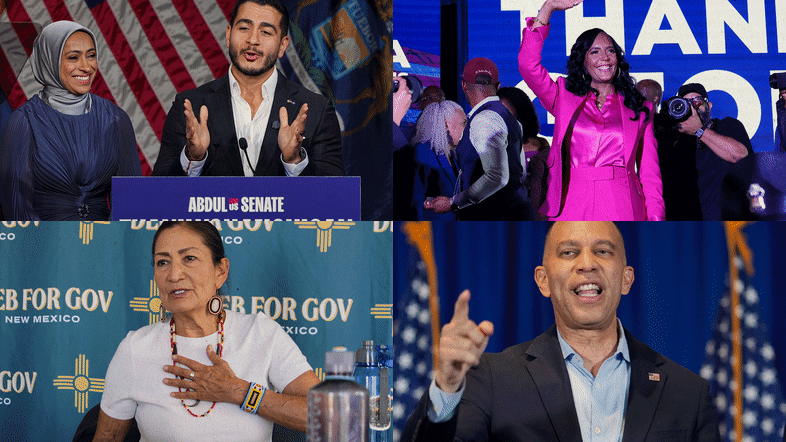
Walk into almost any campaign war room in Washington after the November 2026 midterms and you'll hear the same grim math. While overall female representation in the incoming 120th Congress is hitting a new record high—surpassing the old mark of 152 set in 2024—the number of Republican women heading to Capitol Hill is shrinking fast. Following the Democratic sweep of Congress, Winning for Women Action Fund president Danielle Barrow called the drop a crisis-level decline in Republican women in Congress, warning that the party can't treat candidate recruitment like an emergency bandage slapped on only after a wipeout election.
She isn't exaggerating. Data from Rutgers University's Center for American Women and Politics (CAWP) shows just how sharp the slide is. In the U.S. House, Republican women incumbents lost eight general election seats, five more aren't seeking re-election, and only 20 Republican women have won House races for the next term—down from 30 serving as of Election Day. In the Senate, three Republican women incumbents—Sens. Susan Collins, Darline Graham, and Cindy Hyde-Smith—lost general election bids, leaving GOP women's representation in the upper chamber dropping too.
That's the core story behind the alarm bells. Democrats are setting records for women in Congress. Republicans are going backward.
How a 2020 Surge Turned Into a Pipeline Problem
Six years ago, Republicans looked like they'd finally cracked the code. In 2020, a record wave of GOP women broke into the House, with CAWP tracking 19 newly elected Republican women—ten challengers and nine open-seat winners—who gave conservative women real momentum and visibility. Barrow has pointed out that when the party puts real muscle behind recruiting women, it works: two years later, 11 of the 15 seats Republicans flipped were won by women.
Then the urgency cooled. And that's where political strategists often miss what actually happened.
A record year of nominations doesn't automatically build a durable bench. Political scientist Samantha Pettey, writing for the London School of Economics US Centre in October 2026, noted that even when women run for higher office, those moves can hollow out state-level or lower-tier seats if the party isn't systematically cultivating replacements. Even more telling, CAWP candidate filing numbers for 2026 showed a record 590 women filing for the U.S. House overall, yet Republican women accounted for just 31.9% of that female field—down from roughly 45% in 2022 and about 36% in 2024.
"Republicans cannot only make this investment after a wipeout election and abandon it when things improve. It is time for party leaders to treat this as a permanent strategy, not a crisis response." — Danielle Barrow, president of Winning for Women Action Fund
When you look at candidate filings rather than just incumbent losses, the trouble starts long before Election Day. Fewer women are entering the GOP primary funnel in competitive districts, and women make up under one in five Republican House candidates overall.
Why Republican Women Keep Hitting Headwinds
Ask ten operatives why the GOP keeps losing ground with women candidates, and you'll get a mix of excuses and hard truths. Honestly, the excuses get old fast. Blaming "bad maps" or "national wave environments" only explains so much when Democratic women keep expanding their numbers in the exact same districts.
Tight Ideological Guardrails and Primary Pressure
Running as a Republican woman in the mid-2020s has meant navigating narrow ideological lanes. Analysts and women in GOP politics have repeatedly flagged that stepping away from dominant party orthodoxy—or pushing back against leadership—carries steep internal costs. In a primary environment where loyalty tests dominate, candidates who don't fit a rigid mold often struggle to clear hurdles or keep donor backing.
Double Standards on Readiness and Electability
Women in politics still face unfair scrutiny, and inside a party skeptical of identity-focused recruitment, the friction can be sharper. Political observers have noted that women candidates often feel judged more harshly on day-one readiness than male counterparts who are given room to grow into a role. Polling from The 19th and YouGov in late 2026 also underscored lingering doubts among a chunk of Republicans about whether a woman at the top of the ticket helps or hurts electability.
Infrastructure and Fundraising Gaps
Democrats have long relied on well-funded, centralized candidate pipelines—like EMILY's List—that recruit early, vet carefully, and pour money into primaries. Groups like Winning for Women Action Fund have raised tens of millions over recent cycles and posted strong primary results when they invest heavily, yet outside groups alone can't substitute for year-round party-wide recruitment, campaign training, and general-election protection in swing seats.
High-Profile Exits and Defeats
The 2026 cycle didn't just trim numbers quietly; it took out recognizable names. Alongside longtime Senate figures losing tough races, prominent House figures like Rep. Lauren Boebert fell in a tight contest, while others like Rep. Marjorie Taylor Greene were not returning to Congress after friction with party leadership. When high-profile women exit or lose simultaneously, the remaining cohort feels smaller and less influential overnight.
What This Means Beyond Capitol Hill
Don't make the mistake of treating this purely as an insider Washington headcount issue. Voters notice who sits at the decision-making table.
When one party steadily grows its share of women lawmakers while the other's shrinks, messaging around families, health care, cost of living, and suburban persuasion gets harder to sell. Even when conservative women win tough races, losing experienced incumbents strips the party of seasoned messengers who know how to talk to persuadable women voters without sounding scripted.
There's also a practical governance angle. Committees, leadership tables, and policy caucuses shape legislation long before a bill hits the floor. Fewer Republican women in the House and Senate means fewer voices pushing conservative priorities from a lived perspective inside those rooms.
What Actually Works When Parties Recruit Women Seriously
If you're looking at what separates real recruitment from seasonal PR, the playbook isn't a mystery. It's just unglamorous work that takes patience.
- Start at the local and state house level: Waiting until an open congressional seat pops up is way too late. Strong candidates usually come from school boards, city councils, county offices, and state legislatures—places where women build fundraising lists and learn retail politics.
- Fund candidates before the filing deadline: Endorsements late in a primary don't move nearly as much as early seed money, campaign managers, and polling that helps credible women beat entrenched or under-prepared rivals.
- Protect incumbents in tough districts: Losing sitting women lawmakers in general elections resets the clock every two years. Holding onto battleground incumbents requires steady district investment rather than last-minute triage.
- Keep recruiting during good cycles, not just bad ones: The biggest mistake after 2020 was treating women's recruitment like a one-off surge rather than a permanent operating habit.
If you're working on a campaign, running for local office, or tracking how representation shifts in your own state, start by checking the numbers in your own backyard. Look up candidate filings from the Center for American Women and Politics for your state, see which local seats are open next cycle, and talk directly to women who have already run—they'll tell you in five minutes where the real bottlenecks are.